It's only a suspected case for now, but the discovery in the past week of a single bird with potential avian influenza could mark the realisation of scientists' worst fears.
For months, the highly contagious and deadly H5N1 strain of bird flu has been tearing a path of devastation across South America.
Now there are concerns the disease may have finally reached the tip of the Antarctic Peninsula, on the western side of the continent.
"The impact will potentially be catastrophic," Michelle Wille, a senior research fellow at the Centre for Pathogen Genomics at the University of Melbourne, said.
The suspected case, which is listed on the Antarctic Wildlife Health Network's database, involves a gull-like bird known as a brown skua.
It was observed by researchers on an outcrop called Heroina Island.
Getting confirmation of the case is difficult, as samples cannot always be collected in remote locations.
And even if they are, it can take many days, if not weeks, to analyse them at laboratories thousands of kilometres away.
If the latest suspected case is avian influenza, it would be the closest the disease has been to Antarctica, after previously being detected as near as the Falkland Islands and South Georgia Island.
Preventing its further spread across the frozen continent — including the vast section in the east claimed by Australia — is near impossible.
"In South America, the virus travelled the entire 6,000-kilometre spine in about six months," Dr Wille said.
"So this virus has the capacity to move vast distances, fast.
"We can only hope that it does not reach the Australian Antarctic Territory this austral summer.
"If it does, it will likely do so with a trail of destruction."
Elephant seal pups suffer 70 per cent mortality rate
A study released late last month reaffirmed the devastating impact of the disease.
The report, published in Marine Mammal Science, analysed data from an outbreak among southern elephant seals at Peninsula Valdez in Argentina in early October.
About 70 per cent of the 1,891 seal pups born along a 13-kilometre stretch of coastline during the peak breeding season died.
During the same period a year earlier, the mortality rate was less than 1 per cent.
By extrapolating the results across the region's entire colony, researchers estimate around 17,400 seal pups succumbed to the deadly disease.
Where thousands of weaned pups would normally be expected in late October and early November, only 58 were seen.
The researchers also observed dozens of adult seal carcasses in an area where seeing dead adults is a rare event. Other seals displayed symptoms including head tremors, lack of coordination, and nasal discharges.
But it is not just southern elephant seals that have been affected by avian influenza.
A network of avian influenza experts, known as OFFLU, has reported the deaths of more than half-a-million birds and 50,000 mammals since the disease was first detected in South America.
They include 262,000 cormorants, 62,000 Peruvian pelicans, 32,000 sea lions and 4,000 Humboldt penguins.
"Updates from our Southern American colleagues are consistently distressing given the scale of mortality recorded on the continent," Dr Wille said.
No indication of avian influenza 'slowing down'
As a member for the Antarctic Wildlife Health Network, Dr Wille is bracing for avian influenza's anticipated spread across the vast icy wilderness.
"In the Antarctic, we have a high proportion of species that are found nowhere else in the world.
"So [the] effects could be catastrophic," she said.
The continent is home to 48 bird species and 26 marine mammals, including many that congregate in small areas to breed.
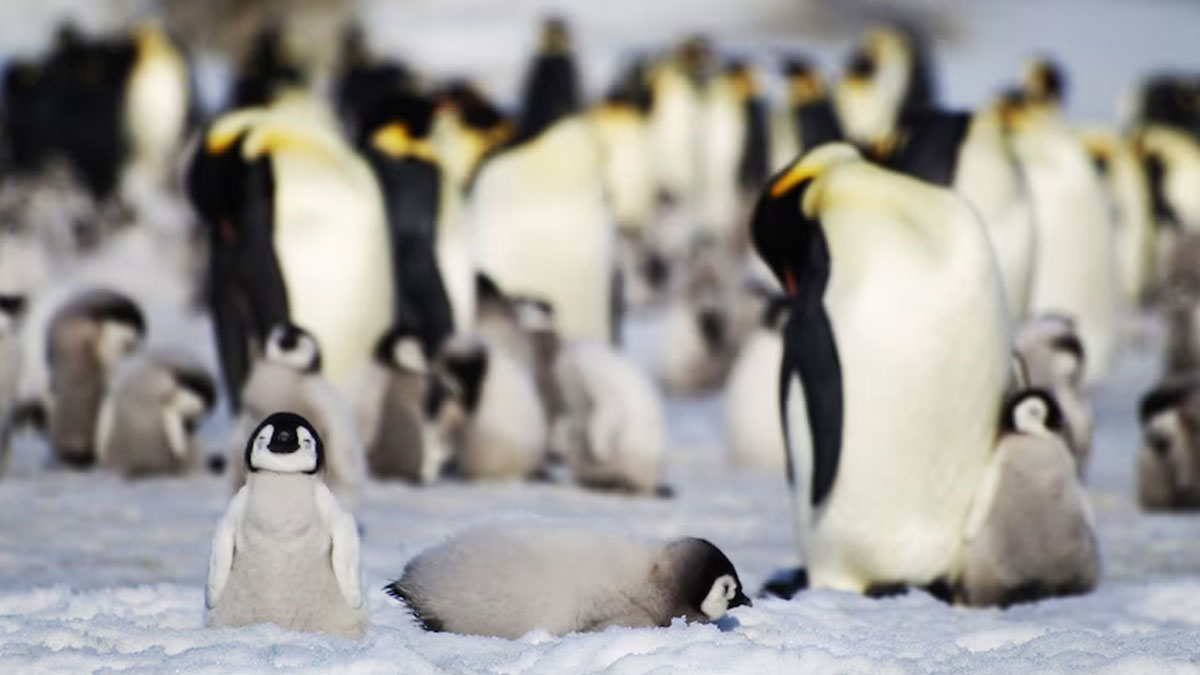
"[The impact] could include not only emblematic species such as Emperor Penguins, but all the incredible marine mammals are at risk as well.
"In addition to direct effects, like mass mortality events, we may also see ecosystem level impacts if so many animals are 'removed' from the ecosystems, which is what we saw following the mass removal of whales due to whaling."
Fears about its spread are not limited to Antarctica.
Scientists expect avian influenza to eventually reach Australia and other areas across the Pacific.
The most likely incursion will come from Asia or North America, but researchers say it is plausible it could arrive from Antarctica.
"There is no indication that this devastation is slowing down anytime soon," Dr Wille said.
"I and all my colleagues are extremely distressed by the situation and the carnage we are observing globally."
Experts working with the Australian Antarctic Program have travelled to Antarctica and the sub-Antarctic this summer to monitor wildlife for signs of the H5N1 strain of the disease.
The Australian Antarctic Division has also implemented precautionary protocols to reduce the risk of spreading avian influenza among birds, marine mammals, or even humans.
As an added protection, Dr Wille is urging anyone who comes across dead birds or marine mammals in Australia not to touch them, and instead report it to the Emergency Animal Disease Hotline.
Story By: Jano Gibson
Original Story link: https://www.abc.net.au/news/2024-01-08/antarctic-bird-flu-h5n1-threat-scientists-fear-worst/103287708

Stay tuned for the latest news on our radio stations