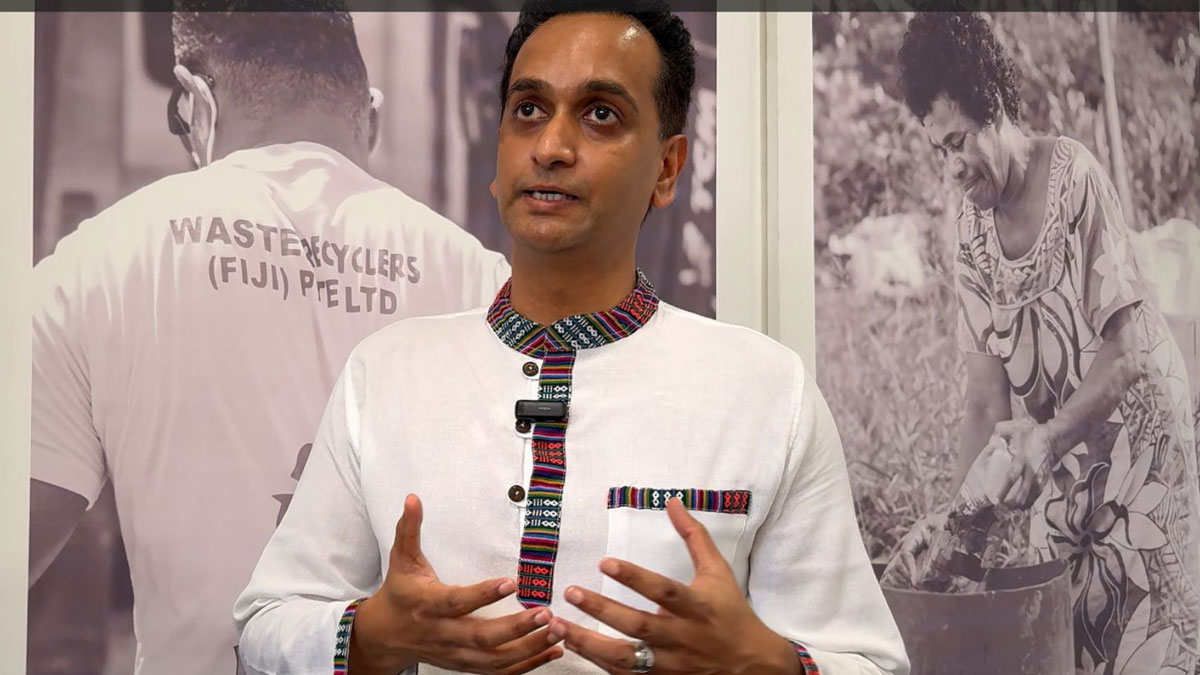
Pacific Recycling Foundation Founder and Waste Recyclers Fiji Limited CEO Amitesh Deo is calling for a stop in using students to clean up waste at public events.
Deo raised serious concerns about the increasing use of school students to clean up waste at public events, particularly sports gatherings.
He says in recent sports events, they have seen school students tasked with cleaning up and are sometimes offered small incentives like tickets in return.
He adds this is a form of disguised exploitation and asks why adults cannot be held responsible for cleaning up after these events.
Deo emphasised that school students should be empowered as advocates for behaviour change and not treated as waste collectors.
He says they were even told by a senior environmental official that this is a cheaper option than hiring cleaning crews.
He asks if this is what we are calling a long-term solution.
According to Deo, the establishment of PRF in 2022 was a direct response to this need for a rights-based, socially inclusive, and environmentally sound framework for waste management in Fiji.
Deo says it is not rocket science because a clean-up is not a waste management system.
He says if we are to move forward, we must stop confusing visibility with effectiveness, and we need accountability, structure, education, and investment, not just gloves and garbage bags.
As Waste Recyclers Fiji Limited marks its 31st anniversary today (4th May), the company is using this milestone not only to reflect on its journey but to call attention to the persistent challenges and misguided approaches in the nation’s waste management systems.
The PRF Founder says this anniversary is a bittersweet victory, and it is a testament to their resilience and perseverance.
He says they are now seeing encouraging signs - greater political will and more partners stepping forward to work with them.
Deo adds how can we truly celebrate when land, creek, and river clean-up campaigns continue to be portrayed as groundbreaking waste management solutions.
He stressed that while clean-up campaigns have their place, they are urging stakeholders not to mistake them for comprehensive or innovative waste management strategies.
Deo says such campaigns, often short-term in nature and media-friendly, are being over-promoted as signs of progress when in reality, they leave the deeper systemic issues unaddressed.
He asks what happens to the waste and recyclables collected during clean-up campaigns and whether they are being recovered and reintegrated into a circular system or end up at dumpsites or the Naboro landfill.
WRFL believes that true innovation in waste management must focus on systemic change, policy reform, recycling advocacy and infrastructure, and inclusion, particularly of the Collection Pillars of Recycling.

Stay tuned for the latest news on our radio stations