Debt and inflation concerns raised at State of the Fijian Economy DialogueBy Nilufa Buksh 11/06/2026
Fiji's public debt is expected to reach around $11.4 billion, equivalent to about 81 percent of GDP by the end of this year, while inflation is projected to exceed 6 percent.
This was highlighted by Dialogue Fiji Executive Director Nilesh Lal during the opening of the State of the Fijian Economy Dialogue 2026.
Lal says the government's own economic assessments and the latest International Monetary Fund (IMF)report show that growth prospects have softened, consumer spending is weakening, business confidence has declined, labour shortages remain severe and inflationary pressures are increasing.
He says the government's pre-election economic and fiscal update warns that public debt is expected to rise significantly while the economy faces slowing growth and rising costs.
Lal says these indicators help explain why many Fijian families are struggling with the cost of living, businesses are facing higher operating costs and skilled workers continue to leave the country in search of opportunities overseas.
He says while much of the national conversation has focused on politics, governance issues and social controversies, major economic challenges have continued to build in the background.
Insert:Lal on IMF 9th June
He also says elevated public debt is constraining fiscal policy space, limiting the governments ability to respond to future economic shocks.
Lal stresses that the dialogue is intended to encourage an honest discussion on Fiji's economic future rather than support or criticise any government.
Meanwhile, IMF Regional Representative for Pacific Islands Dr Giovanni Ganelli says Fiji's economy remained resilient in 2025, supported by tourism, external demand and government spending.
However, he says economic growth is expected to slow to 2.4 percent in 2026 from 3.2 percent last year, while inflation is projected to rise to 3.8 percent.
Ganelli says softer tourism demand, global uncertainty and higher oil prices linked to conflict in the Middle East are expected to affect Fiji's economic outlook.
He adds that the IMF outlook is based on a reference scenario assuming a relatively short-lived conflict and oil prices around US$80 per barrel, but warns that a prolonged conflict could further weaken global growth and affect Fiji through tourism, trade and transport channels.
He adds that Fiji continues to face challenges including labour shortages, infrastructure gaps, outward migration and vulnerability to natural disasters.
Ganelli says investment in infrastructure, climate resilience, skills development and productivity reforms will be important if Fiji is to achieve its goal of becoming a high-income country by 2050.
Meanwhile, Dialogue Fiji Chairman Nemani Buresova says the next two days will provide an opportunity for stakeholders to engage in a timely and important national conversation on the state of Fiji's economy.
He says Dr Ganelli's insights into the global and regional economic landscape, as well as Fiji's economic outlook, have provided a valuable foundation for discussions over the next two days.
Govt expenditure projected to increase by $500M while revenue expected to declineBy Priya Nand 10/06/2026 Government expenditure is projected to increase by about $500 million during the current financial year while revenue is expected to decline, raising concerns about fiscal sustainability and whether increased spending is delivering better outcomes for taxpayers.
Speaking during a panel discussion at the State of the Fijian Economy Dialogue 2026, Acting Head of Strategic Planning at the Ministry of Strategic Planning, Poonam Singh says revenue projections for 2026 are estimated at around $3.9 billion while expenditure is projected at $4.8 billion.
Singh says while revenue is expected to decline slightly from about $4.05 billion to $3.9 billion, expenditure is anticipated to increase by approximately $500 million.
She says government expenditure has increased significantly over the past three years, rising by about 35 percent, reflecting increased spending on public sector wages, social services, infrastructure, debt servicing costs and other development priorities.
She questioned how the increased expenditure would be funded and stressed that the critical issue is whether higher spending is generating corresponding improvements in productivity, economic growth and resilience.
She adds that high spending in itself is not a measure of success, adding that every additional dollar spent must deliver measurable outcomes for citizens, businesses and the economy.
Singh says the issue is not whether government is spending more because it clearly is, but whether taxpayers are receiving better service delivery and stronger economic growth in return.
While acknowledging that some of the expenditure has been necessary to support recovery and rebuild the public service and address development needs, she says it also raises important questions about fiscal sustainability over the medium term.
She says fiscal sustainability is not simply about reducing deficits and debt but about creating sufficient fiscal space to respond to future shocks while continuing to invest in priority areas.
Singh questioned whether Fiji wants to become a debt-driven economy or ensure that economic growth remains sustainable.
She also highlighted recommendations from the IMF, which include rebuilding fiscal buffers, targeting a budget surplus of 2 percent by the 2029-2030 financial year and directing more public spending towards capital investment to support higher economic growth.
Singh says government is currently focused on improving the quality and efficiency of public spending, creating conditions for stronger private sector-led growth and maintaining a credible path towards debt reduction.
She adds that the challenge for Fiji is not simply how to maintain growth, but how to ensure growth is sustainable while managing debt levels and strengthening economic resilience.
Water crisis, debt risks and lack of urgency on reforms - NaiduBy Priya Nand 10/06/2026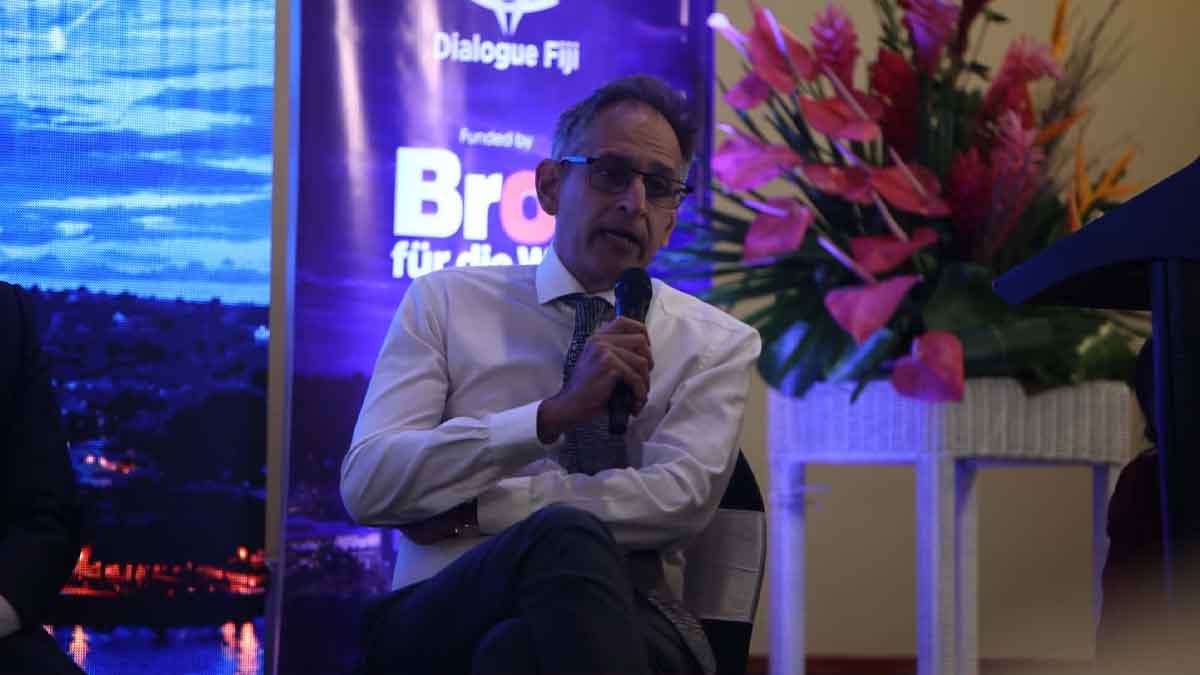
Fiji is facing critical water and sewage infrastructure gaps, rising debt vulnerabilities and slow progress on key economic reforms by the government, according to Fiscal Review Committee Chair Richard Naidu.
Speaking during the State of the Fijian Economy Dialogue 2026, Naidu says there is a clear lack of urgency in addressing Fijis major economic challenges despite the availability of policy advice, technical support and reform options.
He says while multiple solutions exist, what is missing is decisive action at the political level to address long-standing structural issues in the economy.
Naidu says water and sewage infrastructure remain one of Fijis most urgent national priorities and continue to be critically underfunded and underdeveloped.
He says enough has not been done to replicate the transformation of the former Fiji Electricity Authority into Energy Fiji Limited, which he says has become financially sustainable, operates with greater autonomy and has the capacity to invest for future expansion.
In contrast, Naidu says the Water Authority of Fiji remains heavily constrained, lacking financial autonomy and the ability to invest at the scale required to meet national needs.
He highlighted the low cost of water services, saying a person can pour about 1,400 bottles of water down a sink and pay only 15 cents, adding that the current pricing structure is not sufficient to sustain infrastructure upgrades.
Naidu says Fiji is still far from achieving a sustainable funding model for water services, warning that the sector remains one of the most neglected areas of infrastructure planning.
Beyond water, he warned that Fiji faces a broader triple threat of high debt levels, limited fiscal space to respond to shocks, and significant infrastructure demands that require billions in investment.
He says Fijis debt-to-GDP ratio limits the countrys ability to borrow or respond effectively to major crises such as cyclones, earthquakes or future pandemics.
Naidu says Fiji has been fortunate in recent years to avoid major natural disasters, but stressed that the country remains highly exposed and financially unprepared for a major shock.
He also pointed to global comparisons, noting that while Fiji has avoided severe events recently, neighbouring Pacific countries have experienced multiple Category 5 cyclones and earthquakes in the same period.
Naidu says this highlights the importance of building stronger fiscal buffers and ensuring preparedness for future emergencies.
He questioned whether Fijis current economic growth path is sufficient, saying growth below 3 percent is not adequate for long-term development needs and income growth.
Naidu says Fiji must avoid complacency in an increasingly competitive global economy, where stronger-performing countries can affect Fijis exchange rate, imports and overall cost of living.
He also raised concerns about the countrys tax base, saying Fiji has limited options for raising revenue and relies heavily on indirect taxation measures such as VAT.
Naidu says this makes fiscal decisions more constrained and reinforces the importance of economic growth as the main driver of government revenue.
On infrastructure, he says Fiji continues to lag in critical areas such as water, sewage, electricity, roads and bridges, many of which require urgent and large-scale investment.
Naidu also called for faster and more effective immigration reforms to address critical skills shortages that are slowing down major investment projects.
He says the country cannot move its growing investment pipeline forward without the necessary technical expertise.
He says Fiji needs engineers, builders, architects, accountants and other technical professionals to ensure projects are implemented efficiently and on time.
Naidu says reforming immigration settings to allow skilled workers into the country more quickly would help reduce bottlenecks and support private sector growth.
He says that addressing labour and skills constraints is a key part of creating an environment where businesses can invest, expand and create jobs.
Fiji's economic growth revised downwards to 1.5%, RBF says inflation expected to be more than 6%Urgent action needed on Ease of Doing Business in Fiji, the crime rate, drugs and HIV - Ali
By Vijay Narayan 10/06/2026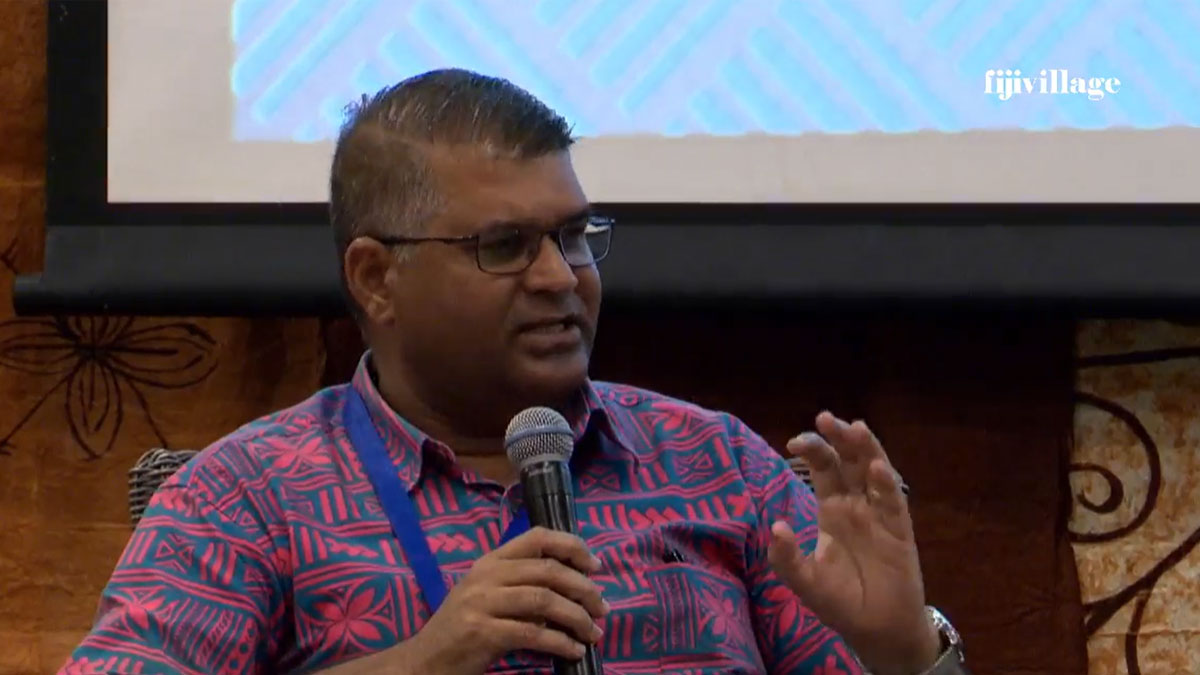 Economic growth for Fiji this year is now revised downwards from the 3 percent forecast at the end of last year to 1.5 percent, with downside risks remaining elevated, and inflation is expected to stand at more than 6 percent.
This assessment of the country's economic growth rate revised downwards, has been made by the Macroeconomic Committee after taking the global and local factors into account.
While speaking at the State of the Fijian Economy Dialogue organised by Dialogue Fiji, Reserve Bank of Fiji Governor and Chairman of the Macroeconomic Committee, Ariff Ali says we are in a period of uncertainty and volatility.
Ali says Fiji's debt to Gross Domestic Product ratio stands at 84 percent, and government expenditure has increased to $4.8 billion.
The RBF Governor says there are many factors that need to be considered urgently that are affecting us, which include the Ease of Doing Business in Fiji, the crime rate, drugs and HIV.
Ali says all these issues affect people and he is also concerned that the driver of the economy, tourism will be affected by some of these factors if nothing is done.
The assessment says that while Government has announced targeted support measures and is expected to maintain these in the 2026-2027 National Budget, given limited fiscal space, the revised growth outlook assumes that Government expenditure will remain at a similar level.
Ali says global risks have risen sharply in recent months, driven by escalated conflict in the Middle East.
As a result, oil prices have climbed steeply since February.
This has added to an already uncertain global environment shaped by shifting trade policies and geopolitical tensions.
In particular, concerns over shipping disruptions through the Strait of Hormuz, a critical route for global oil and fertiliser, have affected economic activity across many sectors.
At the same time, rising global prices for food and fertiliser have intensified inflationary pressures and heightened food security risks, particularly for net importing countries such as Fiji.
For Fiji, the global developments continue to be felt through several channels.
Higher fuel prices increase production and transportation costs, reduce business profits and output, and raise consumer prices, thereby reducing household spending power.
Collectively, these factors are expected to weigh on overall economic activity.
Consumer prices have risen sharply in the past few months.
Latest data indicate that inflation rose to 3.9 percent in May, a significant turnaround from the -3.8 percent in September 2025.
Year-end inflation is now expected to exceed 6 percent, underpinned by high imported inflation, particularly through fuel and food prices and its second-round effects.
While remittances inflows registered strong growth so far, recent data on consumption activity is showing signs of easing as households adopt a more cautious approach to spending as they adjust to higher cost of living and rising economic uncertainty.
This shift is reflected in the latest Reserve Bank of Fiji Retail Sales Survey, where businesses project retail sales to grow by 2 percent in 2026, much lower than the 6.8 percent expected in the August 2025 survey.
While visitor arrivals remain supportive of economic activity, the pace of expansion has slowed, weakening one of the key drivers of growth.
Based on recent trends in arrivals, forward bookings, reduced flight frequencies, heightened concerns around energy security and tighter monetary conditions in key markets, including Australia, visitor arrivals are now expected to grow at a slower pace than previously anticipated.
Looking ahead, the economy is forecast to expand by 2.5 percent in 2027, and to converge to its longer-term trend of around 3 percent in 2028.
Over this period, the services sector, particularly tourism, is still anticipated to remain the main driver of growth, supported by contributions from the industrial and primary sectors.
Ali says the outlook for Fiji's external sector remains closely linked to the current global environment, characterised by elevated imported inflation and heightened uncertainty.
Higher fuel import costs will lead to a widening of the merchandise trade deficit and result in a larger current account deficit over the forecast period.
The current account deficit is forecast to be financed through adequate foreign reserves, supported by Government external loan drawdowns.
As of today, RBFs foreign reserve holdings stood at around $3.4 billion, enough to cover approximately 4.7 months of retained imports and are projected to remain adequate over the near to medium term.
Based on this announcement, some urgent decisions have to be made by the government.
The 2026/2027 National Budget will be delivered on June 26th.
$1B in loans approved for private sector not been drawn down due to pending approvals for projectsBy Vijay Narayan 10/06/2026
As the country comes to terms with the reduced economic growth, rising cost of living, and several global and local economic factors, Reserve Bank of Fiji Governor, Ariff Ali says we need to address the issue of approvals and Ease of Doing Business as he has heard that $1 billion in loans have been approved for the private sector but this has not been drawn down.
While speaking during the State of the Fijian Economy Dialogue organised by Dialogue Fiji, Ali says the reason why these loans have not been drawn down by the private sector is due to pending approvals relating to their projects.
Ali says the private sector has been resilient even during and after COVID.
He says we need to focus growth through and with the private sector.
Ali also touched on the Employment Relations Bill in the current form as most of the private sector has raised concerns about parts of the proposed law.
He also says we need to be mindful of the level of the minimum wage rate.
Education system not producing workforce with critical thinking skills - NaiduBy Priya Nand 11/06/2026
Fiscal Review Committee Chair Richard Naidu says Fiji's education system is not fit for purpose and is failing to produce a workforce with strong literacy and critical thinking skills.
During the question-and-answer session of a panel discussion at the State of the Fijian Economy Dialogue 2026, Social Democratic Liberal Party (SODELPA) General Secretary, Simione Rasova raised concerns about remarks made earlier that the education sector was not fit for purpose.
Rasova says the current government inherited any neglect that existed in the sector when it took office in 2023.
Noting that the election campaign period has now commenced, he asked the panel to clarify what exactly was meant by the statement.
Responding, Naidu acknowledged that he made the comment, explaining that it was based on his experience as an employer and discussions with other employers.
INSERT: Naidu on education sector 10th June
Naidu stressed that the issue is becoming increasingly important as artificial intelligence continues to widen the gap between developed and developing countries.
He says discussions on international competitiveness 20 years ago focused on the digital divide and how countries with stronger digital capabilities would dominate the developing world.
According to Naidu, artificial intelligence has now supercharged that divide.
He warned that Fiji risks falling further behind if it is not prepared for the changes ahead.
He adds that if Fiji wants to participate in an open global economy, it must remain competitive and cannot afford to stand still.
Former Education Minister and Senior Economist at The University of the South Pacific, Dr Mahendra Reddy declined to respond directly to questions about whether the education system is fit for purpose, saying that whoever made the comment should defend it.
However, he addressed comments regarding the previous government's management of the education sector.
INSERT: Reddy on education 10th June
Aiyaz Sayed-Khaiyum says trial and health are his current priorities ahead of deciding on contesting the electionsBy Priya Nand, Vijay Narayan 11/06/2026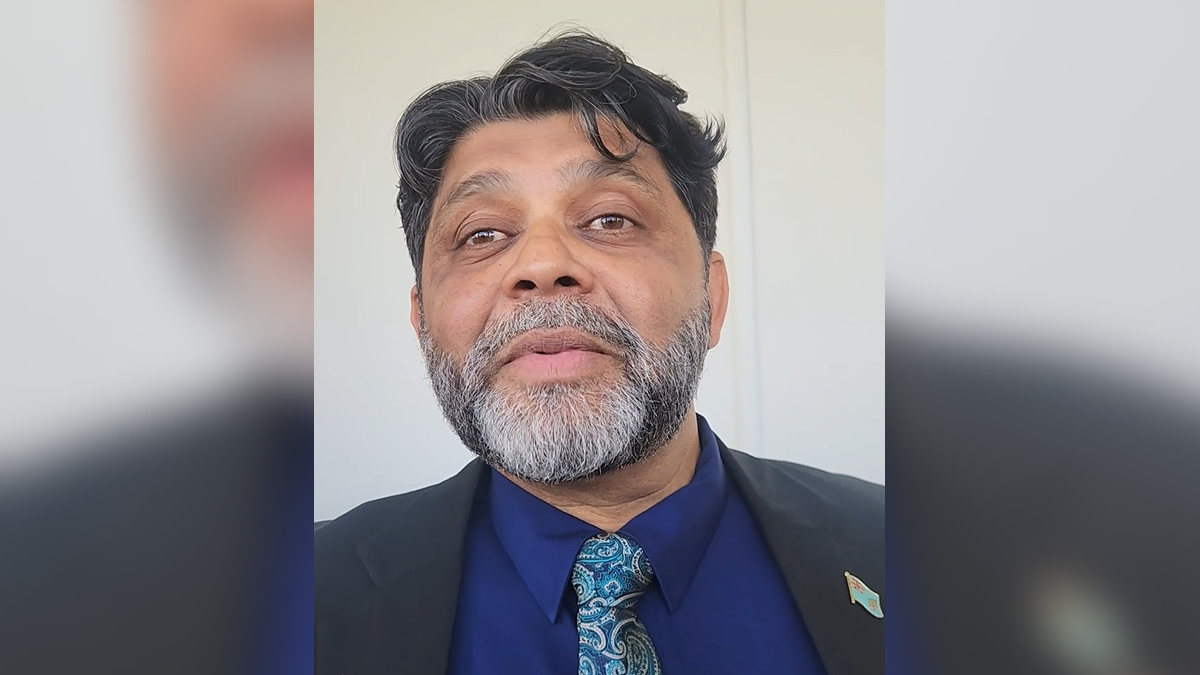 Former Attorney General Aiyaz Sayed-Khaiyum
Former Attorney-General Aiyaz Sayed-Khaiyum says he will make the decision later on whether he will contest the next general elections as his current priorities are his trial and health.
When asked by fijivillage News Director Vijay Narayan whether he plans to contest the next general elections, Sayed-Khaiyum responded that, at the moment, he is contesting his trial and his next priority would be getting his health right.
He says he has been denied permission to go overseas for his treatment.
INSERT: Sayed-Khaiyum on health 10th June
Sayed-Khaiyum stresses that his health is very important, saying that if he is not healthy, then he can't do anything.
He says he needs to be healthy for his wife, kids and his parents.
When asked if he is aligned with any group of people involved in setting up any political parties, he says not at the moment.
When pressed on when he would decide on contesting the elections, Sayed-Khaiyum says let's see what happens, and that he will cross the bridge when he comes to it, or if he comes to it.
Why we still do not have Accountability and Transparency Commission, Code of Conduct and Freedom of Information laws?By Vijay Narayan 11/06/2026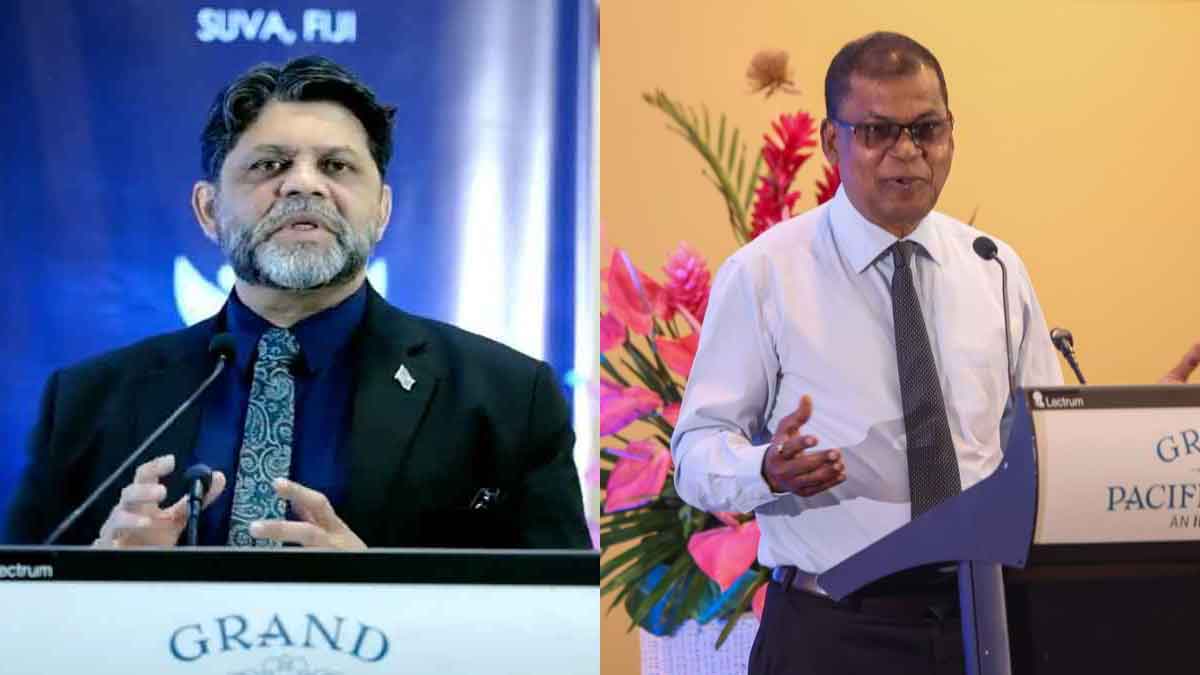
Government MP and National Federation Party Leader, Professor Biman Prasad confirms that they will be ensuring the Accountability and Transparency Commission, Code of Conduct and Freedom of Information laws are enacted after committee discussions.
Professor Prasad confirmed this when he and former Attorney General, Aiyaz Sayed-Khaiyum were questioned during the State of the Economy Dialogue organised by Dialogue Fiji.
Sayed-Khaiyum was questioned on why for 9 years after the 2013 Constitution came in, the FijiFirst Government did not enact the Accountability and Transparency Commission, the Code of Conduct and the Freedom of Information laws, although these laws were supposed to be enacted according to the constitution.
Professor Prasad was also questioned on why the laws have not been enacted in the 3 years that the Coalition Government has been in place.
It was raised to them that we are talking about the economy, but if there is corruption and abuse of office, we know there will be continuous wastage of taxpayers' money.
Professor Prasad says they expected the FijiFirst Government to enact some of those laws.
He says the bill is in parliament before the committee and they are hoping that the law will be enacted soon.
Sayed-Khaiyum says the point is that the government previously enacted the FICAC Act and ratified the UN Convention Against Corruption and also put itself up for a peer review by a developing country and a developed country.
He says they tabled the bill regarding the Accountability and Transparency Commission in 2018 and the committee took its time, and we then had the 2018 elections.
Sayed-Khaiyum says in 2019, we had COVID.
He adds they had enacted the Freedom of Information Act but the Transparency Commission would have helped.
Sayed-Khaiyum says the government needs to bring that bill as it brings about a new level of accountability.
He says the ball is now in the current government's court.
He further says the organisation that was going to implement the Freedom of Information Act was the Accountability and Transparency Commission.
While reacting to this, Unity Fiji Leader, Savenaca Narube says that is exactly what politicians do - they promise us a lot and they do not deliver.
Google data centre, Fiji Water citrus farms, Aitken Spence and BPO key investors - KamikamicaBy Rashika Kumar 11/06/2026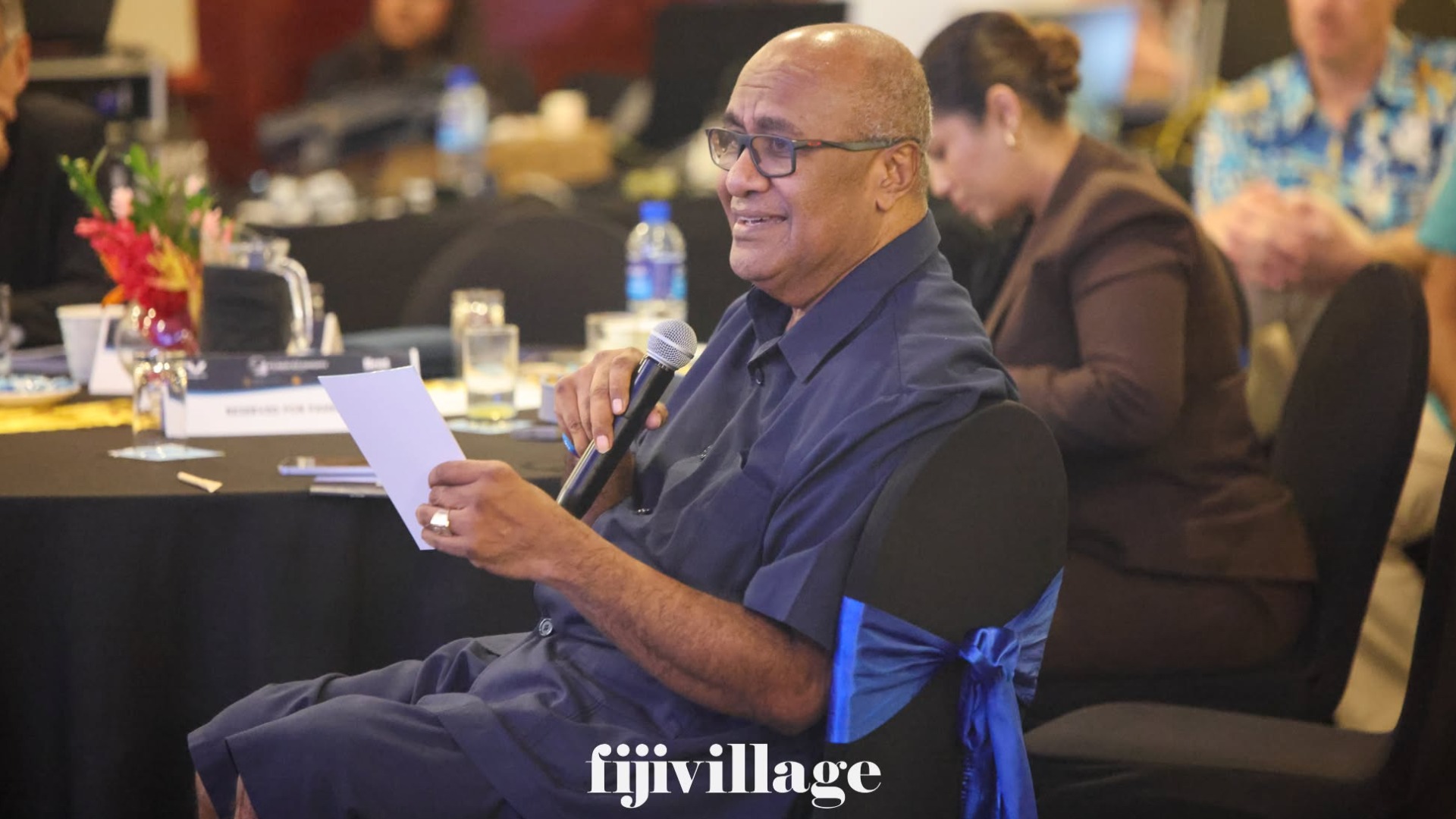 As Fiji seeks to diversify its economy beyond tourism, developments such as Google's data operations centre in Natadola, Fiji Water's plans to establish a citrus industry in Vanua Levu and Aitken Spence's move into commercial agriculture are being seen as major opportunities for growth.
Government MP Manoa Kamikamica says Fiji has become overly dependent on tourism.
While speaking on a State of the Fijian Economy panel discussion, Kamikamica says we have also developed somewhat of a consumer-based economy that does not really lend itself to productivity beyond consumption and has driven many people into urban areas.
He says as a result, Fiji has been looking at ways to rebuild the Fijian economy.
Kamikamica says as work on Google's data centre in Natadola has begun, about 10 businesses have onboarded in the Business Process Outsourcing sector, which generates about $300 million in foreign exchange and employs about 8,000 workers
He says looking ahead, the ICT sector will continue to grow with more BPO and cybersecurity firms basing themselves in Fiji.
While speaking on opportunities in the commercial agriculture sector, Kamikamica says Fiji Water has about 70,000 plants of citrus sitting in Vanua Levu in quarantine, ready to be deployed for experimental agriculture.
The former Deputy Prime Minister and Minister for Trade says he is hoping that they can develop a serious citrus industry in Fiji, and then we can then roll that out and allow the rural communities to start planting.
He further says that Aitken Spence, a major agricultural company in Sri Lanka, is willing to come to Fiji to do commercial agriculture.
Kamikamica says they have already identified land in Nadi, and will be moving ahead.
He says an Israeli company is set to invest in Fiji, while discussions with two other major companies are in their final stages.
He says the next step is to connect private sector investors with rural communities and cooperatives, noting that successful partnership models already exist through companies such as British American Tobacco, Crest Chicken and Rooster Poultry.
While speaking on balancing economic growth, fiscal responsibility, and social protection, Kamikamica says there has been a litany of overspending and abuse in past governments where for instance, $400 million was spent on Fiji's film rebate programme without being accounted for in the national budget, creating a significant fiscal gap.
He further says the government is trying to be disciplined in its spending while managing key economic indicators such as the debt-to-GDP ratio, the balance between operational and capital expenditure, revenue collection, and whether the economy is being overtaxed.
Kamikamica also admits that they need to closely look at is the size of government.
He says one of the government's key policy reforms was the repeal of Media Industry Development Act, which he believes has significantly changed the country's dynamics by allowing people to speak more freely and enabling greater interaction and openness from the private sector.
The former Deputy Prime Minister says the level of discussion and debate seen on social media today is a result of that change.
He says the mahogany industry, which currently brings in about $20 million a year, also has significant potential, saying it has remained largely untapped despite being a billion-dollar industry.
Kamikamica says the recently passed Mahogany Bill could help unlock that potential and create a major industry within the next few years.
He further says Fiji should consider establishing a sovereign wealth fund to help cushion the country against future economic shocks.
Kamikami notes that Fiji has faced challenges such as COVID-19 and the conflict in the Middle East, and says a sovereign wealth fund could provide financial security during similar crises in the future.
On the sugar industry, he says too much money is being spent on subsidies compared to the returns being generated and believes the industry needs restructuring.
He says many farmers have already started diversifying into other crops and that government support through the right policy settings is needed to help drive further change.
He has also highlighted the potential of the iTaukei economy, saying Fiji is missing out on significant opportunities.
Drawing comparisons with New Zealand's economy, which contributes about $120 billion to that country's economy, he says reforms and better utilisation of resources such as mahogany could increase incomes for landowners and create new economic opportunities.
INSERT: Kamikamica on pipeline 11 jun
Fiji's public debt is expected to reach around $11.4 billion, equivalent to about 81 percent of GDP by the end of this year, while inflation is projected to exceed 6 percent.
This was highlighted by Dialogue Fiji Executive Director Nilesh Lal during the opening of the State of the Fijian Economy Dialogue 2026.
Lal says the government's own economic assessments and the latest International Monetary Fund (IMF)report show that growth prospects have softened, consumer spending is weakening, business confidence has declined, labour shortages remain severe and inflationary pressures are increasing.
He says the government's pre-election economic and fiscal update warns that public debt is expected to rise significantly while the economy faces slowing growth and rising costs.
Lal says these indicators help explain why many Fijian families are struggling with the cost of living, businesses are facing higher operating costs and skilled workers continue to leave the country in search of opportunities overseas.
He says while much of the national conversation has focused on politics, governance issues and social controversies, major economic challenges have continued to build in the background.
Insert:Lal on IMF 9th June
He also says elevated public debt is constraining fiscal policy space, limiting the governments ability to respond to future economic shocks.
Lal stresses that the dialogue is intended to encourage an honest discussion on Fiji's economic future rather than support or criticise any government.
Meanwhile, IMF Regional Representative for Pacific Islands Dr Giovanni Ganelli says Fiji's economy remained resilient in 2025, supported by tourism, external demand and government spending.
However, he says economic growth is expected to slow to 2.4 percent in 2026 from 3.2 percent last year, while inflation is projected to rise to 3.8 percent.
Ganelli says softer tourism demand, global uncertainty and higher oil prices linked to conflict in the Middle East are expected to affect Fiji's economic outlook.
He adds that the IMF outlook is based on a reference scenario assuming a relatively short-lived conflict and oil prices around US$80 per barrel, but warns that a prolonged conflict could further weaken global growth and affect Fiji through tourism, trade and transport channels.
He adds that Fiji continues to face challenges including labour shortages, infrastructure gaps, outward migration and vulnerability to natural disasters.
Ganelli says investment in infrastructure, climate resilience, skills development and productivity reforms will be important if Fiji is to achieve its goal of becoming a high-income country by 2050.
Meanwhile, Dialogue Fiji Chairman Nemani Buresova says the next two days will provide an opportunity for stakeholders to engage in a timely and important national conversation on the state of Fiji's economy.
He says Dr Ganelli's insights into the global and regional economic landscape, as well as Fiji's economic outlook, have provided a valuable foundation for discussions over the next two days.
Water crisis, debt risks and lack of urgency on reforms - NaiduBy Priya Nand 10/06/2026Fiji is facing critical water and sewage infrastructure gaps, rising debt vulnerabilities and slow progress on key economic reforms by the government, according to Fiscal Review Committee Chair Richard Naidu.
Speaking during the State of the Fijian Economy Dialogue 2026, Naidu says there is a clear lack of urgency in addressing Fijis major economic challenges despite the availability of policy advice, technical support and reform options.
He says while multiple solutions exist, what is missing is decisive action at the political level to address long-standing structural issues in the economy.
Naidu says water and sewage infrastructure remain one of Fijis most urgent national priorities and continue to be critically underfunded and underdeveloped.
He says enough has not been done to replicate the transformation of the former Fiji Electricity Authority into Energy Fiji Limited, which he says has become financially sustainable, operates with greater autonomy and has the capacity to invest for future expansion.
In contrast, Naidu says the Water Authority of Fiji remains heavily constrained, lacking financial autonomy and the ability to invest at the scale required to meet national needs.
He highlighted the low cost of water services, saying a person can pour about 1,400 bottles of water down a sink and pay only 15 cents, adding that the current pricing structure is not sufficient to sustain infrastructure upgrades.
Naidu says Fiji is still far from achieving a sustainable funding model for water services, warning that the sector remains one of the most neglected areas of infrastructure planning.
Beyond water, he warned that Fiji faces a broader triple threat of high debt levels, limited fiscal space to respond to shocks, and significant infrastructure demands that require billions in investment.
He says Fijis debt-to-GDP ratio limits the countrys ability to borrow or respond effectively to major crises such as cyclones, earthquakes or future pandemics.
Naidu says Fiji has been fortunate in recent years to avoid major natural disasters, but stressed that the country remains highly exposed and financially unprepared for a major shock.
He also pointed to global comparisons, noting that while Fiji has avoided severe events recently, neighbouring Pacific countries have experienced multiple Category 5 cyclones and earthquakes in the same period.
Naidu says this highlights the importance of building stronger fiscal buffers and ensuring preparedness for future emergencies.
He questioned whether Fijis current economic growth path is sufficient, saying growth below 3 percent is not adequate for long-term development needs and income growth.
Naidu says Fiji must avoid complacency in an increasingly competitive global economy, where stronger-performing countries can affect Fijis exchange rate, imports and overall cost of living.
He also raised concerns about the countrys tax base, saying Fiji has limited options for raising revenue and relies heavily on indirect taxation measures such as VAT.
Naidu says this makes fiscal decisions more constrained and reinforces the importance of economic growth as the main driver of government revenue.
On infrastructure, he says Fiji continues to lag in critical areas such as water, sewage, electricity, roads and bridges, many of which require urgent and large-scale investment.
Naidu also called for faster and more effective immigration reforms to address critical skills shortages that are slowing down major investment projects.
He says the country cannot move its growing investment pipeline forward without the necessary technical expertise.
He says Fiji needs engineers, builders, architects, accountants and other technical professionals to ensure projects are implemented efficiently and on time.
Naidu says reforming immigration settings to allow skilled workers into the country more quickly would help reduce bottlenecks and support private sector growth.
He says that addressing labour and skills constraints is a key part of creating an environment where businesses can invest, expand and create jobs.
Fiji's economic growth revised downwards to 1.5%, RBF says inflation expected to be more than 6%Urgent action needed on Ease of Doing Business in Fiji, the crime rate, drugs and HIV - Ali
By Vijay Narayan 10/06/2026Economic growth for Fiji this year is now revised downwards from the 3 percent forecast at the end of last year to 1.5 percent, with downside risks remaining elevated, and inflation is expected to stand at more than 6 percent.
This assessment of the country's economic growth rate revised downwards, has been made by the Macroeconomic Committee after taking the global and local factors into account.
While speaking at the State of the Fijian Economy Dialogue organised by Dialogue Fiji, Reserve Bank of Fiji Governor and Chairman of the Macroeconomic Committee, Ariff Ali says we are in a period of uncertainty and volatility.
Ali says Fiji's debt to Gross Domestic Product ratio stands at 84 percent, and government expenditure has increased to $4.8 billion.
The RBF Governor says there are many factors that need to be considered urgently that are affecting us, which include the Ease of Doing Business in Fiji, the crime rate, drugs and HIV.
Ali says all these issues affect people and he is also concerned that the driver of the economy, tourism will be affected by some of these factors if nothing is done.
The assessment says that while Government has announced targeted support measures and is expected to maintain these in the 2026-2027 National Budget, given limited fiscal space, the revised growth outlook assumes that Government expenditure will remain at a similar level.
Ali says global risks have risen sharply in recent months, driven by escalated conflict in the Middle East.
As a result, oil prices have climbed steeply since February.
This has added to an already uncertain global environment shaped by shifting trade policies and geopolitical tensions.
In particular, concerns over shipping disruptions through the Strait of Hormuz, a critical route for global oil and fertiliser, have affected economic activity across many sectors.
At the same time, rising global prices for food and fertiliser have intensified inflationary pressures and heightened food security risks, particularly for net importing countries such as Fiji.
For Fiji, the global developments continue to be felt through several channels.
Higher fuel prices increase production and transportation costs, reduce business profits and output, and raise consumer prices, thereby reducing household spending power.
Collectively, these factors are expected to weigh on overall economic activity.
Consumer prices have risen sharply in the past few months.
Latest data indicate that inflation rose to 3.9 percent in May, a significant turnaround from the -3.8 percent in September 2025.
Year-end inflation is now expected to exceed 6 percent, underpinned by high imported inflation, particularly through fuel and food prices and its second-round effects.
While remittances inflows registered strong growth so far, recent data on consumption activity is showing signs of easing as households adopt a more cautious approach to spending as they adjust to higher cost of living and rising economic uncertainty.
This shift is reflected in the latest Reserve Bank of Fiji Retail Sales Survey, where businesses project retail sales to grow by 2 percent in 2026, much lower than the 6.8 percent expected in the August 2025 survey.
While visitor arrivals remain supportive of economic activity, the pace of expansion has slowed, weakening one of the key drivers of growth.
Based on recent trends in arrivals, forward bookings, reduced flight frequencies, heightened concerns around energy security and tighter monetary conditions in key markets, including Australia, visitor arrivals are now expected to grow at a slower pace than previously anticipated.
Looking ahead, the economy is forecast to expand by 2.5 percent in 2027, and to converge to its longer-term trend of around 3 percent in 2028.
Over this period, the services sector, particularly tourism, is still anticipated to remain the main driver of growth, supported by contributions from the industrial and primary sectors.
Ali says the outlook for Fiji's external sector remains closely linked to the current global environment, characterised by elevated imported inflation and heightened uncertainty.
Higher fuel import costs will lead to a widening of the merchandise trade deficit and result in a larger current account deficit over the forecast period.
The current account deficit is forecast to be financed through adequate foreign reserves, supported by Government external loan drawdowns.
As of today, RBFs foreign reserve holdings stood at around $3.4 billion, enough to cover approximately 4.7 months of retained imports and are projected to remain adequate over the near to medium term.
Based on this announcement, some urgent decisions have to be made by the government.
The 2026/2027 National Budget will be delivered on June 26th.
$1B in loans approved for private sector not been drawn down due to pending approvals for projectsBy Vijay Narayan 10/06/2026As the country comes to terms with the reduced economic growth, rising cost of living, and several global and local economic factors, Reserve Bank of Fiji Governor, Ariff Ali says we need to address the issue of approvals and Ease of Doing Business as he has heard that $1 billion in loans have been approved for the private sector but this has not been drawn down.
While speaking during the State of the Fijian Economy Dialogue organised by Dialogue Fiji, Ali says the reason why these loans have not been drawn down by the private sector is due to pending approvals relating to their projects.
Ali says the private sector has been resilient even during and after COVID.
He says we need to focus growth through and with the private sector.
Ali also touched on the Employment Relations Bill in the current form as most of the private sector has raised concerns about parts of the proposed law.
He also says we need to be mindful of the level of the minimum wage rate.
Education system not producing workforce with critical thinking skills - NaiduBy Priya Nand 11/06/2026Fiscal Review Committee Chair Richard Naidu says Fiji's education system is not fit for purpose and is failing to produce a workforce with strong literacy and critical thinking skills.
During the question-and-answer session of a panel discussion at the State of the Fijian Economy Dialogue 2026, Social Democratic Liberal Party (SODELPA) General Secretary, Simione Rasova raised concerns about remarks made earlier that the education sector was not fit for purpose.
Rasova says the current government inherited any neglect that existed in the sector when it took office in 2023.
Noting that the election campaign period has now commenced, he asked the panel to clarify what exactly was meant by the statement.
Responding, Naidu acknowledged that he made the comment, explaining that it was based on his experience as an employer and discussions with other employers.
INSERT: Naidu on education sector 10th June
Naidu stressed that the issue is becoming increasingly important as artificial intelligence continues to widen the gap between developed and developing countries.
He says discussions on international competitiveness 20 years ago focused on the digital divide and how countries with stronger digital capabilities would dominate the developing world.
According to Naidu, artificial intelligence has now supercharged that divide.
He warned that Fiji risks falling further behind if it is not prepared for the changes ahead.
He adds that if Fiji wants to participate in an open global economy, it must remain competitive and cannot afford to stand still.
Former Education Minister and Senior Economist at The University of the South Pacific, Dr Mahendra Reddy declined to respond directly to questions about whether the education system is fit for purpose, saying that whoever made the comment should defend it.
However, he addressed comments regarding the previous government's management of the education sector.
INSERT: Reddy on education 10th June
Aiyaz Sayed-Khaiyum says trial and health are his current priorities ahead of deciding on contesting the electionsBy Priya Nand, Vijay Narayan 11/06/2026Former Attorney General Aiyaz Sayed-KhaiyumFormer Attorney-General Aiyaz Sayed-Khaiyum says he will make the decision later on whether he will contest the next general elections as his current priorities are his trial and health.
When asked by fijivillage News Director Vijay Narayan whether he plans to contest the next general elections, Sayed-Khaiyum responded that, at the moment, he is contesting his trial and his next priority would be getting his health right.
He says he has been denied permission to go overseas for his treatment.
INSERT: Sayed-Khaiyum on health 10th June
Sayed-Khaiyum stresses that his health is very important, saying that if he is not healthy, then he can't do anything.
He says he needs to be healthy for his wife, kids and his parents.
When asked if he is aligned with any group of people involved in setting up any political parties, he says not at the moment.
When pressed on when he would decide on contesting the elections, Sayed-Khaiyum says let's see what happens, and that he will cross the bridge when he comes to it, or if he comes to it.
Why we still do not have Accountability and Transparency Commission, Code of Conduct and Freedom of Information laws?By Vijay Narayan 11/06/2026Government MP and National Federation Party Leader, Professor Biman Prasad confirms that they will be ensuring the Accountability and Transparency Commission, Code of Conduct and Freedom of Information laws are enacted after committee discussions.
Professor Prasad confirmed this when he and former Attorney General, Aiyaz Sayed-Khaiyum were questioned during the State of the Economy Dialogue organised by Dialogue Fiji.
Sayed-Khaiyum was questioned on why for 9 years after the 2013 Constitution came in, the FijiFirst Government did not enact the Accountability and Transparency Commission, the Code of Conduct and the Freedom of Information laws, although these laws were supposed to be enacted according to the constitution.
Professor Prasad was also questioned on why the laws have not been enacted in the 3 years that the Coalition Government has been in place.
It was raised to them that we are talking about the economy, but if there is corruption and abuse of office, we know there will be continuous wastage of taxpayers' money.
Professor Prasad says they expected the FijiFirst Government to enact some of those laws.
He says the bill is in parliament before the committee and they are hoping that the law will be enacted soon.
Sayed-Khaiyum says the point is that the government previously enacted the FICAC Act and ratified the UN Convention Against Corruption and also put itself up for a peer review by a developing country and a developed country.
He says they tabled the bill regarding the Accountability and Transparency Commission in 2018 and the committee took its time, and we then had the 2018 elections.
Sayed-Khaiyum says in 2019, we had COVID.
He adds they had enacted the Freedom of Information Act but the Transparency Commission would have helped.
Sayed-Khaiyum says the government needs to bring that bill as it brings about a new level of accountability.
He says the ball is now in the current government's court.
He further says the organisation that was going to implement the Freedom of Information Act was the Accountability and Transparency Commission.
While reacting to this, Unity Fiji Leader, Savenaca Narube says that is exactly what politicians do - they promise us a lot and they do not deliver.
Google data centre, Fiji Water citrus farms, Aitken Spence and BPO key investors - KamikamicaBy Rashika Kumar 11/06/2026As Fiji seeks to diversify its economy beyond tourism, developments such as Google's data operations centre in Natadola, Fiji Water's plans to establish a citrus industry in Vanua Levu and Aitken Spence's move into commercial agriculture are being seen as major opportunities for growth.
Government MP Manoa Kamikamica says Fiji has become overly dependent on tourism.
While speaking on a State of the Fijian Economy panel discussion, Kamikamica says we have also developed somewhat of a consumer-based economy that does not really lend itself to productivity beyond consumption and has driven many people into urban areas.
He says as a result, Fiji has been looking at ways to rebuild the Fijian economy.
Kamikamica says as work on Google's data centre in Natadola has begun, about 10 businesses have onboarded in the Business Process Outsourcing sector, which generates about $300 million in foreign exchange and employs about 8,000 workers
He says looking ahead, the ICT sector will continue to grow with more BPO and cybersecurity firms basing themselves in Fiji.
While speaking on opportunities in the commercial agriculture sector, Kamikamica says Fiji Water has about 70,000 plants of citrus sitting in Vanua Levu in quarantine, ready to be deployed for experimental agriculture.
The former Deputy Prime Minister and Minister for Trade says he is hoping that they can develop a serious citrus industry in Fiji, and then we can then roll that out and allow the rural communities to start planting.
He further says that Aitken Spence, a major agricultural company in Sri Lanka, is willing to come to Fiji to do commercial agriculture.
Kamikamica says they have already identified land in Nadi, and will be moving ahead.
He says an Israeli company is set to invest in Fiji, while discussions with two other major companies are in their final stages.
He says the next step is to connect private sector investors with rural communities and cooperatives, noting that successful partnership models already exist through companies such as British American Tobacco, Crest Chicken and Rooster Poultry.
While speaking on balancing economic growth, fiscal responsibility, and social protection, Kamikamica says there has been a litany of overspending and abuse in past governments where for instance, $400 million was spent on Fiji's film rebate programme without being accounted for in the national budget, creating a significant fiscal gap.
He further says the government is trying to be disciplined in its spending while managing key economic indicators such as the debt-to-GDP ratio, the balance between operational and capital expenditure, revenue collection, and whether the economy is being overtaxed.
Kamikamica also admits that they need to closely look at is the size of government.
He says one of the government's key policy reforms was the repeal of Media Industry Development Act, which he believes has significantly changed the country's dynamics by allowing people to speak more freely and enabling greater interaction and openness from the private sector.
The former Deputy Prime Minister says the level of discussion and debate seen on social media today is a result of that change.
He says the mahogany industry, which currently brings in about $20 million a year, also has significant potential, saying it has remained largely untapped despite being a billion-dollar industry.
Kamikamica says the recently passed Mahogany Bill could help unlock that potential and create a major industry within the next few years.
He further says Fiji should consider establishing a sovereign wealth fund to help cushion the country against future economic shocks.
Kamikami notes that Fiji has faced challenges such as COVID-19 and the conflict in the Middle East, and says a sovereign wealth fund could provide financial security during similar crises in the future.
On the sugar industry, he says too much money is being spent on subsidies compared to the returns being generated and believes the industry needs restructuring.
He says many farmers have already started diversifying into other crops and that government support through the right policy settings is needed to help drive further change.
He has also highlighted the potential of the iTaukei economy, saying Fiji is missing out on significant opportunities.
Drawing comparisons with New Zealand's economy, which contributes about $120 billion to that country's economy, he says reforms and better utilisation of resources such as mahogany could increase incomes for landowners and create new economic opportunities.
INSERT: Kamikamica on pipeline 11 jun
Fiji is facing critical water and sewage infrastructure gaps, rising debt vulnerabilities and slow progress on key economic reforms by the government, according to Fiscal Review Committee Chair Richard Naidu.
Speaking during the State of the Fijian Economy Dialogue 2026, Naidu says there is a clear lack of urgency in addressing Fijis major economic challenges despite the availability of policy advice, technical support and reform options.
He says while multiple solutions exist, what is missing is decisive action at the political level to address long-standing structural issues in the economy.
Naidu says water and sewage infrastructure remain one of Fijis most urgent national priorities and continue to be critically underfunded and underdeveloped.
He says enough has not been done to replicate the transformation of the former Fiji Electricity Authority into Energy Fiji Limited, which he says has become financially sustainable, operates with greater autonomy and has the capacity to invest for future expansion.
In contrast, Naidu says the Water Authority of Fiji remains heavily constrained, lacking financial autonomy and the ability to invest at the scale required to meet national needs.
He highlighted the low cost of water services, saying a person can pour about 1,400 bottles of water down a sink and pay only 15 cents, adding that the current pricing structure is not sufficient to sustain infrastructure upgrades.
Naidu says Fiji is still far from achieving a sustainable funding model for water services, warning that the sector remains one of the most neglected areas of infrastructure planning.
Beyond water, he warned that Fiji faces a broader triple threat of high debt levels, limited fiscal space to respond to shocks, and significant infrastructure demands that require billions in investment.
He says Fijis debt-to-GDP ratio limits the countrys ability to borrow or respond effectively to major crises such as cyclones, earthquakes or future pandemics.
Naidu says Fiji has been fortunate in recent years to avoid major natural disasters, but stressed that the country remains highly exposed and financially unprepared for a major shock.
He also pointed to global comparisons, noting that while Fiji has avoided severe events recently, neighbouring Pacific countries have experienced multiple Category 5 cyclones and earthquakes in the same period.
Naidu says this highlights the importance of building stronger fiscal buffers and ensuring preparedness for future emergencies.
He questioned whether Fijis current economic growth path is sufficient, saying growth below 3 percent is not adequate for long-term development needs and income growth.
Naidu says Fiji must avoid complacency in an increasingly competitive global economy, where stronger-performing countries can affect Fijis exchange rate, imports and overall cost of living.
He also raised concerns about the countrys tax base, saying Fiji has limited options for raising revenue and relies heavily on indirect taxation measures such as VAT.
Naidu says this makes fiscal decisions more constrained and reinforces the importance of economic growth as the main driver of government revenue.
On infrastructure, he says Fiji continues to lag in critical areas such as water, sewage, electricity, roads and bridges, many of which require urgent and large-scale investment.
Naidu also called for faster and more effective immigration reforms to address critical skills shortages that are slowing down major investment projects.
He says the country cannot move its growing investment pipeline forward without the necessary technical expertise.
He says Fiji needs engineers, builders, architects, accountants and other technical professionals to ensure projects are implemented efficiently and on time.
Naidu says reforming immigration settings to allow skilled workers into the country more quickly would help reduce bottlenecks and support private sector growth.
He says that addressing labour and skills constraints is a key part of creating an environment where businesses can invest, expand and create jobs.
Urgent action needed on Ease of Doing Business in Fiji, the crime rate, drugs and HIV - Ali
By Vijay Narayan 10/06/2026$1B in loans approved for private sector not been drawn down due to pending approvals for projectsBy Vijay Narayan 10/06/2026As the country comes to terms with the reduced economic growth, rising cost of living, and several global and local economic factors, Reserve Bank of Fiji Governor, Ariff Ali says we need to address the issue of approvals and Ease of Doing Business as he has heard that $1 billion in loans have been approved for the private sector but this has not been drawn down.
While speaking during the State of the Fijian Economy Dialogue organised by Dialogue Fiji, Ali says the reason why these loans have not been drawn down by the private sector is due to pending approvals relating to their projects.
Ali says the private sector has been resilient even during and after COVID.
He says we need to focus growth through and with the private sector.
Ali also touched on the Employment Relations Bill in the current form as most of the private sector has raised concerns about parts of the proposed law.
He also says we need to be mindful of the level of the minimum wage rate.
Education system not producing workforce with critical thinking skills - NaiduBy Priya Nand 11/06/2026Fiscal Review Committee Chair Richard Naidu says Fiji's education system is not fit for purpose and is failing to produce a workforce with strong literacy and critical thinking skills.
During the question-and-answer session of a panel discussion at the State of the Fijian Economy Dialogue 2026, Social Democratic Liberal Party (SODELPA) General Secretary, Simione Rasova raised concerns about remarks made earlier that the education sector was not fit for purpose.
Rasova says the current government inherited any neglect that existed in the sector when it took office in 2023.
Noting that the election campaign period has now commenced, he asked the panel to clarify what exactly was meant by the statement.
Responding, Naidu acknowledged that he made the comment, explaining that it was based on his experience as an employer and discussions with other employers.
INSERT: Naidu on education sector 10th June
Naidu stressed that the issue is becoming increasingly important as artificial intelligence continues to widen the gap between developed and developing countries.
He says discussions on international competitiveness 20 years ago focused on the digital divide and how countries with stronger digital capabilities would dominate the developing world.
According to Naidu, artificial intelligence has now supercharged that divide.
He warned that Fiji risks falling further behind if it is not prepared for the changes ahead.
He adds that if Fiji wants to participate in an open global economy, it must remain competitive and cannot afford to stand still.
Former Education Minister and Senior Economist at The University of the South Pacific, Dr Mahendra Reddy declined to respond directly to questions about whether the education system is fit for purpose, saying that whoever made the comment should defend it.
However, he addressed comments regarding the previous government's management of the education sector.
INSERT: Reddy on education 10th June
Aiyaz Sayed-Khaiyum says trial and health are his current priorities ahead of deciding on contesting the electionsBy Priya Nand, Vijay Narayan 11/06/2026Former Attorney General Aiyaz Sayed-KhaiyumFormer Attorney-General Aiyaz Sayed-Khaiyum says he will make the decision later on whether he will contest the next general elections as his current priorities are his trial and health.
When asked by fijivillage News Director Vijay Narayan whether he plans to contest the next general elections, Sayed-Khaiyum responded that, at the moment, he is contesting his trial and his next priority would be getting his health right.
He says he has been denied permission to go overseas for his treatment.
INSERT: Sayed-Khaiyum on health 10th June
Sayed-Khaiyum stresses that his health is very important, saying that if he is not healthy, then he can't do anything.
He says he needs to be healthy for his wife, kids and his parents.
When asked if he is aligned with any group of people involved in setting up any political parties, he says not at the moment.
When pressed on when he would decide on contesting the elections, Sayed-Khaiyum says let's see what happens, and that he will cross the bridge when he comes to it, or if he comes to it.
Why we still do not have Accountability and Transparency Commission, Code of Conduct and Freedom of Information laws?By Vijay Narayan 11/06/2026Government MP and National Federation Party Leader, Professor Biman Prasad confirms that they will be ensuring the Accountability and Transparency Commission, Code of Conduct and Freedom of Information laws are enacted after committee discussions.
Professor Prasad confirmed this when he and former Attorney General, Aiyaz Sayed-Khaiyum were questioned during the State of the Economy Dialogue organised by Dialogue Fiji.
Sayed-Khaiyum was questioned on why for 9 years after the 2013 Constitution came in, the FijiFirst Government did not enact the Accountability and Transparency Commission, the Code of Conduct and the Freedom of Information laws, although these laws were supposed to be enacted according to the constitution.
Professor Prasad was also questioned on why the laws have not been enacted in the 3 years that the Coalition Government has been in place.
It was raised to them that we are talking about the economy, but if there is corruption and abuse of office, we know there will be continuous wastage of taxpayers' money.
Professor Prasad says they expected the FijiFirst Government to enact some of those laws.
He says the bill is in parliament before the committee and they are hoping that the law will be enacted soon.
Sayed-Khaiyum says the point is that the government previously enacted the FICAC Act and ratified the UN Convention Against Corruption and also put itself up for a peer review by a developing country and a developed country.
He says they tabled the bill regarding the Accountability and Transparency Commission in 2018 and the committee took its time, and we then had the 2018 elections.
Sayed-Khaiyum says in 2019, we had COVID.
He adds they had enacted the Freedom of Information Act but the Transparency Commission would have helped.
Sayed-Khaiyum says the government needs to bring that bill as it brings about a new level of accountability.
He says the ball is now in the current government's court.
He further says the organisation that was going to implement the Freedom of Information Act was the Accountability and Transparency Commission.
While reacting to this, Unity Fiji Leader, Savenaca Narube says that is exactly what politicians do - they promise us a lot and they do not deliver.
Google data centre, Fiji Water citrus farms, Aitken Spence and BPO key investors - KamikamicaBy Rashika Kumar 11/06/2026As Fiji seeks to diversify its economy beyond tourism, developments such as Google's data operations centre in Natadola, Fiji Water's plans to establish a citrus industry in Vanua Levu and Aitken Spence's move into commercial agriculture are being seen as major opportunities for growth.
Government MP Manoa Kamikamica says Fiji has become overly dependent on tourism.
While speaking on a State of the Fijian Economy panel discussion, Kamikamica says we have also developed somewhat of a consumer-based economy that does not really lend itself to productivity beyond consumption and has driven many people into urban areas.
He says as a result, Fiji has been looking at ways to rebuild the Fijian economy.
Kamikamica says as work on Google's data centre in Natadola has begun, about 10 businesses have onboarded in the Business Process Outsourcing sector, which generates about $300 million in foreign exchange and employs about 8,000 workers
He says looking ahead, the ICT sector will continue to grow with more BPO and cybersecurity firms basing themselves in Fiji.
While speaking on opportunities in the commercial agriculture sector, Kamikamica says Fiji Water has about 70,000 plants of citrus sitting in Vanua Levu in quarantine, ready to be deployed for experimental agriculture.
The former Deputy Prime Minister and Minister for Trade says he is hoping that they can develop a serious citrus industry in Fiji, and then we can then roll that out and allow the rural communities to start planting.
He further says that Aitken Spence, a major agricultural company in Sri Lanka, is willing to come to Fiji to do commercial agriculture.
Kamikamica says they have already identified land in Nadi, and will be moving ahead.
He says an Israeli company is set to invest in Fiji, while discussions with two other major companies are in their final stages.
He says the next step is to connect private sector investors with rural communities and cooperatives, noting that successful partnership models already exist through companies such as British American Tobacco, Crest Chicken and Rooster Poultry.
While speaking on balancing economic growth, fiscal responsibility, and social protection, Kamikamica says there has been a litany of overspending and abuse in past governments where for instance, $400 million was spent on Fiji's film rebate programme without being accounted for in the national budget, creating a significant fiscal gap.
He further says the government is trying to be disciplined in its spending while managing key economic indicators such as the debt-to-GDP ratio, the balance between operational and capital expenditure, revenue collection, and whether the economy is being overtaxed.
Kamikamica also admits that they need to closely look at is the size of government.
He says one of the government's key policy reforms was the repeal of Media Industry Development Act, which he believes has significantly changed the country's dynamics by allowing people to speak more freely and enabling greater interaction and openness from the private sector.
The former Deputy Prime Minister says the level of discussion and debate seen on social media today is a result of that change.
He says the mahogany industry, which currently brings in about $20 million a year, also has significant potential, saying it has remained largely untapped despite being a billion-dollar industry.
Kamikamica says the recently passed Mahogany Bill could help unlock that potential and create a major industry within the next few years.
He further says Fiji should consider establishing a sovereign wealth fund to help cushion the country against future economic shocks.
Kamikami notes that Fiji has faced challenges such as COVID-19 and the conflict in the Middle East, and says a sovereign wealth fund could provide financial security during similar crises in the future.
On the sugar industry, he says too much money is being spent on subsidies compared to the returns being generated and believes the industry needs restructuring.
He says many farmers have already started diversifying into other crops and that government support through the right policy settings is needed to help drive further change.
He has also highlighted the potential of the iTaukei economy, saying Fiji is missing out on significant opportunities.
Drawing comparisons with New Zealand's economy, which contributes about $120 billion to that country's economy, he says reforms and better utilisation of resources such as mahogany could increase incomes for landowners and create new economic opportunities.
INSERT: Kamikamica on pipeline 11 jun
As the country comes to terms with the reduced economic growth, rising cost of living, and several global and local economic factors, Reserve Bank of Fiji Governor, Ariff Ali says we need to address the issue of approvals and Ease of Doing Business as he has heard that $1 billion in loans have been approved for the private sector but this has not been drawn down.
While speaking during the State of the Fijian Economy Dialogue organised by Dialogue Fiji, Ali says the reason why these loans have not been drawn down by the private sector is due to pending approvals relating to their projects.
Ali says the private sector has been resilient even during and after COVID.
He says we need to focus growth through and with the private sector.
Ali also touched on the Employment Relations Bill in the current form as most of the private sector has raised concerns about parts of the proposed law.
He also says we need to be mindful of the level of the minimum wage rate.
Fiscal Review Committee Chair Richard Naidu says Fiji's education system is not fit for purpose and is failing to produce a workforce with strong literacy and critical thinking skills.
During the question-and-answer session of a panel discussion at the State of the Fijian Economy Dialogue 2026, Social Democratic Liberal Party (SODELPA) General Secretary, Simione Rasova raised concerns about remarks made earlier that the education sector was not fit for purpose.
Rasova says the current government inherited any neglect that existed in the sector when it took office in 2023.
Noting that the election campaign period has now commenced, he asked the panel to clarify what exactly was meant by the statement.
Responding, Naidu acknowledged that he made the comment, explaining that it was based on his experience as an employer and discussions with other employers.
INSERT: Naidu on education sector 10th June
Naidu stressed that the issue is becoming increasingly important as artificial intelligence continues to widen the gap between developed and developing countries.
He says discussions on international competitiveness 20 years ago focused on the digital divide and how countries with stronger digital capabilities would dominate the developing world.
According to Naidu, artificial intelligence has now supercharged that divide.
He warned that Fiji risks falling further behind if it is not prepared for the changes ahead.
He adds that if Fiji wants to participate in an open global economy, it must remain competitive and cannot afford to stand still.
Former Education Minister and Senior Economist at The University of the South Pacific, Dr Mahendra Reddy declined to respond directly to questions about whether the education system is fit for purpose, saying that whoever made the comment should defend it.
However, he addressed comments regarding the previous government's management of the education sector.
INSERT: Reddy on education 10th June
Aiyaz Sayed-Khaiyum says trial and health are his current priorities ahead of deciding on contesting the electionsBy Priya Nand, Vijay Narayan 11/06/2026Former Attorney General Aiyaz Sayed-KhaiyumFormer Attorney-General Aiyaz Sayed-Khaiyum says he will make the decision later on whether he will contest the next general elections as his current priorities are his trial and health.
When asked by fijivillage News Director Vijay Narayan whether he plans to contest the next general elections, Sayed-Khaiyum responded that, at the moment, he is contesting his trial and his next priority would be getting his health right.
He says he has been denied permission to go overseas for his treatment.
INSERT: Sayed-Khaiyum on health 10th June
Sayed-Khaiyum stresses that his health is very important, saying that if he is not healthy, then he can't do anything.
He says he needs to be healthy for his wife, kids and his parents.
When asked if he is aligned with any group of people involved in setting up any political parties, he says not at the moment.
When pressed on when he would decide on contesting the elections, Sayed-Khaiyum says let's see what happens, and that he will cross the bridge when he comes to it, or if he comes to it.
Why we still do not have Accountability and Transparency Commission, Code of Conduct and Freedom of Information laws?By Vijay Narayan 11/06/2026Government MP and National Federation Party Leader, Professor Biman Prasad confirms that they will be ensuring the Accountability and Transparency Commission, Code of Conduct and Freedom of Information laws are enacted after committee discussions.
Professor Prasad confirmed this when he and former Attorney General, Aiyaz Sayed-Khaiyum were questioned during the State of the Economy Dialogue organised by Dialogue Fiji.
Sayed-Khaiyum was questioned on why for 9 years after the 2013 Constitution came in, the FijiFirst Government did not enact the Accountability and Transparency Commission, the Code of Conduct and the Freedom of Information laws, although these laws were supposed to be enacted according to the constitution.
Professor Prasad was also questioned on why the laws have not been enacted in the 3 years that the Coalition Government has been in place.
It was raised to them that we are talking about the economy, but if there is corruption and abuse of office, we know there will be continuous wastage of taxpayers' money.
Professor Prasad says they expected the FijiFirst Government to enact some of those laws.
He says the bill is in parliament before the committee and they are hoping that the law will be enacted soon.
Sayed-Khaiyum says the point is that the government previously enacted the FICAC Act and ratified the UN Convention Against Corruption and also put itself up for a peer review by a developing country and a developed country.
He says they tabled the bill regarding the Accountability and Transparency Commission in 2018 and the committee took its time, and we then had the 2018 elections.
Sayed-Khaiyum says in 2019, we had COVID.
He adds they had enacted the Freedom of Information Act but the Transparency Commission would have helped.
Sayed-Khaiyum says the government needs to bring that bill as it brings about a new level of accountability.
He says the ball is now in the current government's court.
He further says the organisation that was going to implement the Freedom of Information Act was the Accountability and Transparency Commission.
While reacting to this, Unity Fiji Leader, Savenaca Narube says that is exactly what politicians do - they promise us a lot and they do not deliver.
Google data centre, Fiji Water citrus farms, Aitken Spence and BPO key investors - KamikamicaBy Rashika Kumar 11/06/2026As Fiji seeks to diversify its economy beyond tourism, developments such as Google's data operations centre in Natadola, Fiji Water's plans to establish a citrus industry in Vanua Levu and Aitken Spence's move into commercial agriculture are being seen as major opportunities for growth.
Government MP Manoa Kamikamica says Fiji has become overly dependent on tourism.
While speaking on a State of the Fijian Economy panel discussion, Kamikamica says we have also developed somewhat of a consumer-based economy that does not really lend itself to productivity beyond consumption and has driven many people into urban areas.
He says as a result, Fiji has been looking at ways to rebuild the Fijian economy.
Kamikamica says as work on Google's data centre in Natadola has begun, about 10 businesses have onboarded in the Business Process Outsourcing sector, which generates about $300 million in foreign exchange and employs about 8,000 workers
He says looking ahead, the ICT sector will continue to grow with more BPO and cybersecurity firms basing themselves in Fiji.
While speaking on opportunities in the commercial agriculture sector, Kamikamica says Fiji Water has about 70,000 plants of citrus sitting in Vanua Levu in quarantine, ready to be deployed for experimental agriculture.
The former Deputy Prime Minister and Minister for Trade says he is hoping that they can develop a serious citrus industry in Fiji, and then we can then roll that out and allow the rural communities to start planting.
He further says that Aitken Spence, a major agricultural company in Sri Lanka, is willing to come to Fiji to do commercial agriculture.
Kamikamica says they have already identified land in Nadi, and will be moving ahead.
He says an Israeli company is set to invest in Fiji, while discussions with two other major companies are in their final stages.
He says the next step is to connect private sector investors with rural communities and cooperatives, noting that successful partnership models already exist through companies such as British American Tobacco, Crest Chicken and Rooster Poultry.
While speaking on balancing economic growth, fiscal responsibility, and social protection, Kamikamica says there has been a litany of overspending and abuse in past governments where for instance, $400 million was spent on Fiji's film rebate programme without being accounted for in the national budget, creating a significant fiscal gap.
He further says the government is trying to be disciplined in its spending while managing key economic indicators such as the debt-to-GDP ratio, the balance between operational and capital expenditure, revenue collection, and whether the economy is being overtaxed.
Kamikamica also admits that they need to closely look at is the size of government.
He says one of the government's key policy reforms was the repeal of Media Industry Development Act, which he believes has significantly changed the country's dynamics by allowing people to speak more freely and enabling greater interaction and openness from the private sector.
The former Deputy Prime Minister says the level of discussion and debate seen on social media today is a result of that change.
He says the mahogany industry, which currently brings in about $20 million a year, also has significant potential, saying it has remained largely untapped despite being a billion-dollar industry.
Kamikamica says the recently passed Mahogany Bill could help unlock that potential and create a major industry within the next few years.
He further says Fiji should consider establishing a sovereign wealth fund to help cushion the country against future economic shocks.
Kamikami notes that Fiji has faced challenges such as COVID-19 and the conflict in the Middle East, and says a sovereign wealth fund could provide financial security during similar crises in the future.
On the sugar industry, he says too much money is being spent on subsidies compared to the returns being generated and believes the industry needs restructuring.
He says many farmers have already started diversifying into other crops and that government support through the right policy settings is needed to help drive further change.
He has also highlighted the potential of the iTaukei economy, saying Fiji is missing out on significant opportunities.
Drawing comparisons with New Zealand's economy, which contributes about $120 billion to that country's economy, he says reforms and better utilisation of resources such as mahogany could increase incomes for landowners and create new economic opportunities.
INSERT: Kamikamica on pipeline 11 jun
Former Attorney-General Aiyaz Sayed-Khaiyum says he will make the decision later on whether he will contest the next general elections as his current priorities are his trial and health.
When asked by fijivillage News Director Vijay Narayan whether he plans to contest the next general elections, Sayed-Khaiyum responded that, at the moment, he is contesting his trial and his next priority would be getting his health right.
He says he has been denied permission to go overseas for his treatment.
INSERT: Sayed-Khaiyum on health 10th June
Sayed-Khaiyum stresses that his health is very important, saying that if he is not healthy, then he can't do anything.
He says he needs to be healthy for his wife, kids and his parents.
When asked if he is aligned with any group of people involved in setting up any political parties, he says not at the moment.
When pressed on when he would decide on contesting the elections, Sayed-Khaiyum says let's see what happens, and that he will cross the bridge when he comes to it, or if he comes to it.
Government MP and National Federation Party Leader, Professor Biman Prasad confirms that they will be ensuring the Accountability and Transparency Commission, Code of Conduct and Freedom of Information laws are enacted after committee discussions.
Professor Prasad confirmed this when he and former Attorney General, Aiyaz Sayed-Khaiyum were questioned during the State of the Economy Dialogue organised by Dialogue Fiji.
Sayed-Khaiyum was questioned on why for 9 years after the 2013 Constitution came in, the FijiFirst Government did not enact the Accountability and Transparency Commission, the Code of Conduct and the Freedom of Information laws, although these laws were supposed to be enacted according to the constitution.
Professor Prasad was also questioned on why the laws have not been enacted in the 3 years that the Coalition Government has been in place.
It was raised to them that we are talking about the economy, but if there is corruption and abuse of office, we know there will be continuous wastage of taxpayers' money.
Professor Prasad says they expected the FijiFirst Government to enact some of those laws.
He says the bill is in parliament before the committee and they are hoping that the law will be enacted soon.
Sayed-Khaiyum says the point is that the government previously enacted the FICAC Act and ratified the UN Convention Against Corruption and also put itself up for a peer review by a developing country and a developed country.
He says they tabled the bill regarding the Accountability and Transparency Commission in 2018 and the committee took its time, and we then had the 2018 elections.
Sayed-Khaiyum says in 2019, we had COVID.
He adds they had enacted the Freedom of Information Act but the Transparency Commission would have helped.
Sayed-Khaiyum says the government needs to bring that bill as it brings about a new level of accountability.
He says the ball is now in the current government's court.
He further says the organisation that was going to implement the Freedom of Information Act was the Accountability and Transparency Commission.
While reacting to this, Unity Fiji Leader, Savenaca Narube says that is exactly what politicians do - they promise us a lot and they do not deliver.
Google data centre, Fiji Water citrus farms, Aitken Spence and BPO key investors - KamikamicaBy Rashika Kumar 11/06/2026As Fiji seeks to diversify its economy beyond tourism, developments such as Google's data operations centre in Natadola, Fiji Water's plans to establish a citrus industry in Vanua Levu and Aitken Spence's move into commercial agriculture are being seen as major opportunities for growth.
Government MP Manoa Kamikamica says Fiji has become overly dependent on tourism.
While speaking on a State of the Fijian Economy panel discussion, Kamikamica says we have also developed somewhat of a consumer-based economy that does not really lend itself to productivity beyond consumption and has driven many people into urban areas.
He says as a result, Fiji has been looking at ways to rebuild the Fijian economy.
Kamikamica says as work on Google's data centre in Natadola has begun, about 10 businesses have onboarded in the Business Process Outsourcing sector, which generates about $300 million in foreign exchange and employs about 8,000 workers
He says looking ahead, the ICT sector will continue to grow with more BPO and cybersecurity firms basing themselves in Fiji.
While speaking on opportunities in the commercial agriculture sector, Kamikamica says Fiji Water has about 70,000 plants of citrus sitting in Vanua Levu in quarantine, ready to be deployed for experimental agriculture.
The former Deputy Prime Minister and Minister for Trade says he is hoping that they can develop a serious citrus industry in Fiji, and then we can then roll that out and allow the rural communities to start planting.
He further says that Aitken Spence, a major agricultural company in Sri Lanka, is willing to come to Fiji to do commercial agriculture.
Kamikamica says they have already identified land in Nadi, and will be moving ahead.
He says an Israeli company is set to invest in Fiji, while discussions with two other major companies are in their final stages.
He says the next step is to connect private sector investors with rural communities and cooperatives, noting that successful partnership models already exist through companies such as British American Tobacco, Crest Chicken and Rooster Poultry.
While speaking on balancing economic growth, fiscal responsibility, and social protection, Kamikamica says there has been a litany of overspending and abuse in past governments where for instance, $400 million was spent on Fiji's film rebate programme without being accounted for in the national budget, creating a significant fiscal gap.
He further says the government is trying to be disciplined in its spending while managing key economic indicators such as the debt-to-GDP ratio, the balance between operational and capital expenditure, revenue collection, and whether the economy is being overtaxed.
Kamikamica also admits that they need to closely look at is the size of government.
He says one of the government's key policy reforms was the repeal of Media Industry Development Act, which he believes has significantly changed the country's dynamics by allowing people to speak more freely and enabling greater interaction and openness from the private sector.
The former Deputy Prime Minister says the level of discussion and debate seen on social media today is a result of that change.
He says the mahogany industry, which currently brings in about $20 million a year, also has significant potential, saying it has remained largely untapped despite being a billion-dollar industry.
Kamikamica says the recently passed Mahogany Bill could help unlock that potential and create a major industry within the next few years.
He further says Fiji should consider establishing a sovereign wealth fund to help cushion the country against future economic shocks.
Kamikami notes that Fiji has faced challenges such as COVID-19 and the conflict in the Middle East, and says a sovereign wealth fund could provide financial security during similar crises in the future.
On the sugar industry, he says too much money is being spent on subsidies compared to the returns being generated and believes the industry needs restructuring.
He says many farmers have already started diversifying into other crops and that government support through the right policy settings is needed to help drive further change.
He has also highlighted the potential of the iTaukei economy, saying Fiji is missing out on significant opportunities.
Drawing comparisons with New Zealand's economy, which contributes about $120 billion to that country's economy, he says reforms and better utilisation of resources such as mahogany could increase incomes for landowners and create new economic opportunities.
INSERT: Kamikamica on pipeline 11 jun
He says one of the government's key policy reforms was the repeal of Media Industry Development Act, which he believes has significantly changed the country's dynamics by allowing people to speak more freely and enabling greater interaction and openness from the private sector.
The former Deputy Prime Minister says the level of discussion and debate seen on social media today is a result of that change.
He says the mahogany industry, which currently brings in about $20 million a year, also has significant potential, saying it has remained largely untapped despite being a billion-dollar industry.
Kamikamica says the recently passed Mahogany Bill could help unlock that potential and create a major industry within the next few years.
He further says Fiji should consider establishing a sovereign wealth fund to help cushion the country against future economic shocks.
Kamikami notes that Fiji has faced challenges such as COVID-19 and the conflict in the Middle East, and says a sovereign wealth fund could provide financial security during similar crises in the future.
On the sugar industry, he says too much money is being spent on subsidies compared to the returns being generated and believes the industry needs restructuring.
He says many farmers have already started diversifying into other crops and that government support through the right policy settings is needed to help drive further change.
He has also highlighted the potential of the iTaukei economy, saying Fiji is missing out on significant opportunities.
Drawing comparisons with New Zealand's economy, which contributes about $120 billion to that country's economy, he says reforms and better utilisation of resources such as mahogany could increase incomes for landowners and create new economic opportunities.