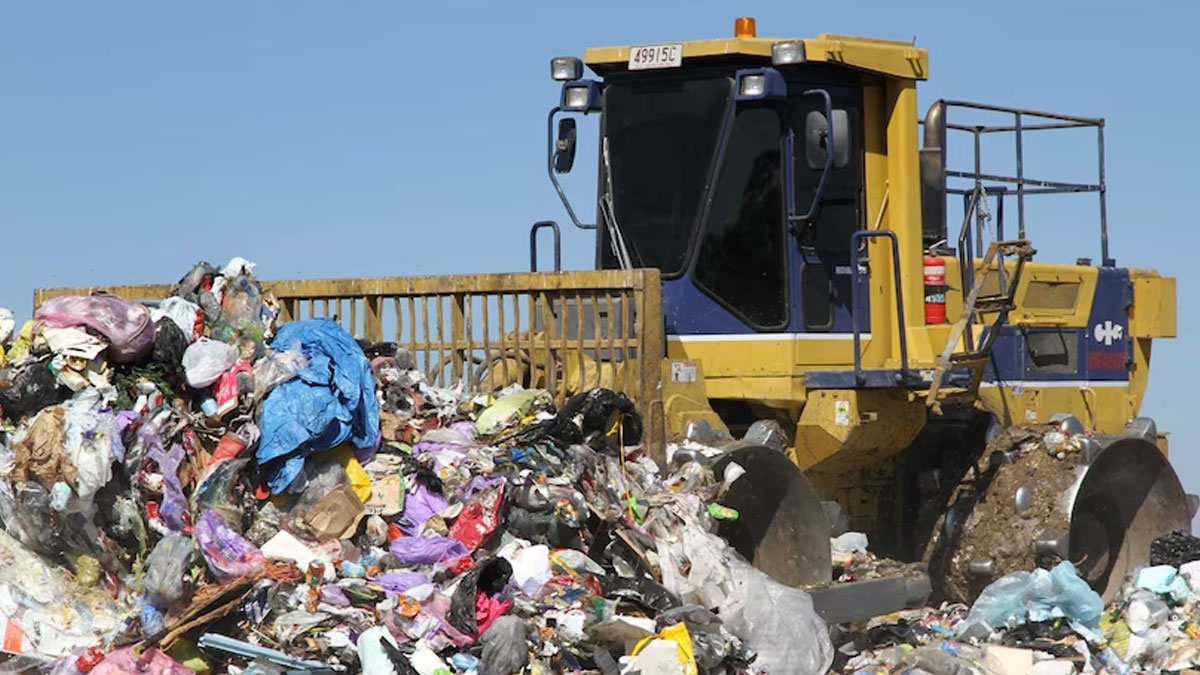
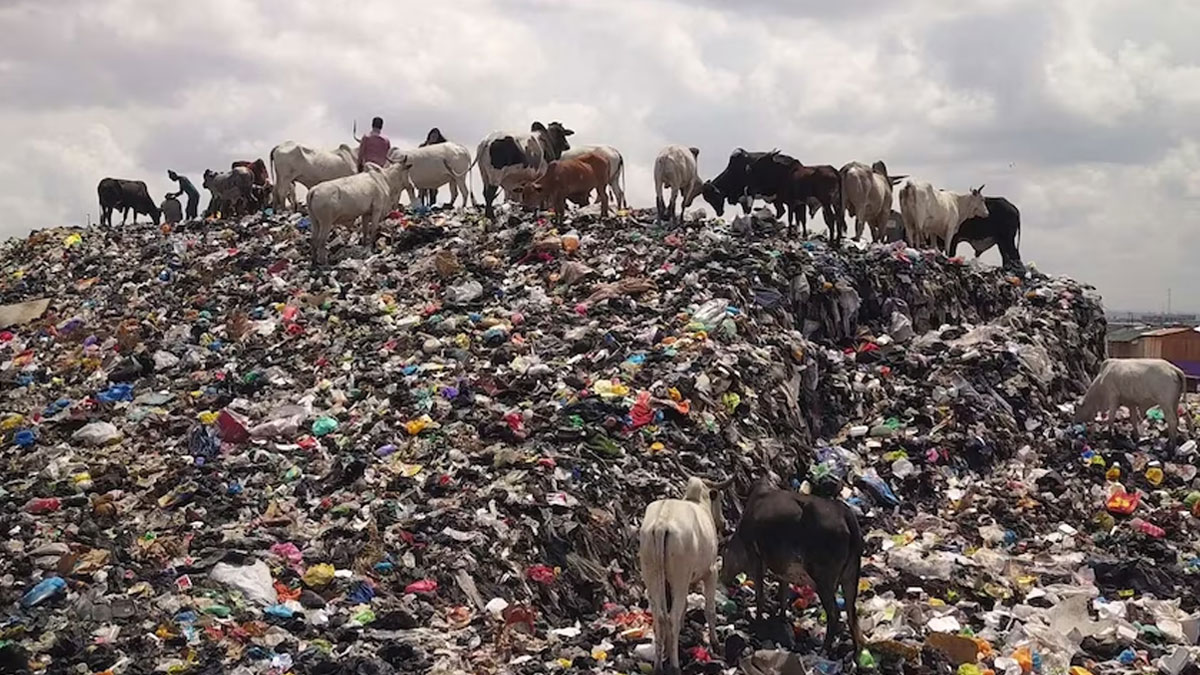
Australia's biggest fashion retailers are being threatened with a mandatory levy on garment sales, after many big names failed to sign up to a new scheme to tackle the 200,000 tonnes of old clothes going into landfill every year.
Key points: The voluntary scheme aims to raise $36 million each year to improve the industry's sustainability Of 30 major Australian brands approached to be founding members, only six signed up Tanya Plibersek has told the rest of the fashion industry to join the scheme or face regulation The Seamless scheme launches today and is being led by the industry's peak body, the Australian Fashion Council (AFC), which received $1 million from the previous federal government to set up the scheme.
The AFC confirmed it directly approached 30 major Australian clothing retailers to be founding members.
Signing up is voluntary and imposes a 4 cent per garment levy on the signatories' sales, with the money to be put towards initiatives such as sustainable design, the resale of used items, and textile recycling.
So far only six brands have signed up: Big W, David Jones, Lorna Jane, Rip Curl, RM Williams and The Iconic.
The AFC says it needs 60 per cent market adoption to raise $36 million per year, making its current membership far below what is needed.
In a speech delivered today at the launch of Seamless in Sydney, which had been sent exclusively to the ABC, Environment Minister Tanya Plibersek told tell the rest of the fashion industry it had 12 months to sign up or else face regulation directly.
"That is a drop dead date. No excuses, no extensions," Ms Plibersek said.
"I will impose a system and I will set the levy."
Do you know more about this story? Contact Specialist.Team@abc.net.au.
If its target is reached, the AFC estimates the scheme will divert 60 per cent of old clothing away from landfill by 2027.
Seamless is being implemented under the federal product stewardship act, which can see waste-stream management enforced on industries through voluntary, co-regulatory or mandatory schemes.
Other mass-produced items being targeted include batteries, solar panels, baby car seats, mattresses, and e-waste.
Why do we need to tackle fashion waste? Globally, the fashion industry is coming to grips with its environmental impact.
While it is difficult to find concrete numbers, global firms like McKinsey say the industry is responsible for 4 per cent of global greenhouse gas emissions.
A report by the UK government in 2019 concluded textile production contributed "more to climate change than international aviation and shipping combined", consumed "lake-sized volumes of fresh water", and created chemical and plastic pollution.
"Synthetic fibres are being found in the deep sea, in Arctic sea ice, in fish and shellfish," it said.
"The way we make, use and throw away our clothes is unsustainable." In Australia, the industry's impact is wide-ranging, from its use of water to produce cotton, through to petrochemicals used to make synthetic fabrics, Monash Sustainable Development Institute's fashion sustainability expert Aleasha McCallion said.
"We are directly supporting the fossil fuel industry by supporting things like polyester," she told the ABC.
"It is environmentally extremely costly."
Australia's fashion waste in numbers: 373,000 tonnes of new clothes are imported each year 10,000 tonnes of clothes are made in Australia each year 210,000 tonnes a year go to clothing bins or charities 200,000 tonnes of clothes end up in landfill each year Just 2 per cent of old clothing gets recycled Source: AFC/Sustainable Resource Use
On average, each Australian buys about 56 items every year, much of it polyester and cotton, according to research Sustainable Resource Use conducted for the AFC.
Second-hand or resale fashion is a growing sector in Australia, but clearly not large enough to keep items out of landfill.
Of 373,000 tonnes of new clothing imported into Australia each year, an estimated 200,000 tonnes will eventually wind up in landfill, the research says.
Ms McCallion adds that it is difficult to know exactly what is happening to Australian clothes and accessories when they're sent offshore for donation, with there being "some ethical offshore recyclers" and "some that are less transparent".
"We need to act now," AFC's chief executive Leila Naja Hibri said.
"Our industry, and most importantly our planet, depends on it."
Australia 'overflowing' with unwanted old clothing Australian textile recyclers are hoping the crackdown on fashion waste will lead to more investment in existing programs locally.
Ben Kaminsky, the co-founder of a textiles recycler in Australia, says his business can barely keep up with the amount of clothing flowing in.
Two photos showing staff wearing high vis vests, posing in front of massive bags of textiles stacked up in a warehouse. Ben Kaminsky's company receives about 150 tonnes of textiles a month.(Supplied: Textile Recyclers Australia) His company, Textiles Recyclers Australia (TRA), receives about 150 tonnes a month from a range of fee-paying sources, including charities that cannot re-sell used goods, through to brand-new pieces from companies that have discontinued uniform designs.
"We all need to visualise a tap with clothing coming out of it, and there's a bucket that gets reused, repaired," he said.
"That bucket here in Australia is full. It's overflowing. And you've got a few recyclers at the bottom pulling out what they can."
TRA shreds unworn items that it receives into filler for local industry, which can go into things such as mattresses or couches.
However, anything that has been worn is generally baled up and shipped to India for a textile recycler there to handle.
Read more: How one fashion label is trying to keep its clothes out of landfill 'Dead white man's clothes': Fast fashion contributing to toxic landfill What happens to your online shopping when you return it? The recycler even has to send some things to landfill itself, including when items from mining sites come in so dirty "that they can stand on their own".
"We need more investment to build infrastructure recycling in this country," Mr Kaminsky said.
While he welcomed the AFC's voluntary code for fashion brands, Mr Kaminsky said he was concerned too few of the worst offenders, such as "cheap and cheerful online" retailers, had signed up.
Source: ABC News
Story by: Emilia Terzon
Origional Story:https://www.abc.net.au/news/2023-06-07/big-w-david-jones-iconic-sign-up-to-tackle-fashion-waste/102444772

Stay tuned for the latest news on our radio stations