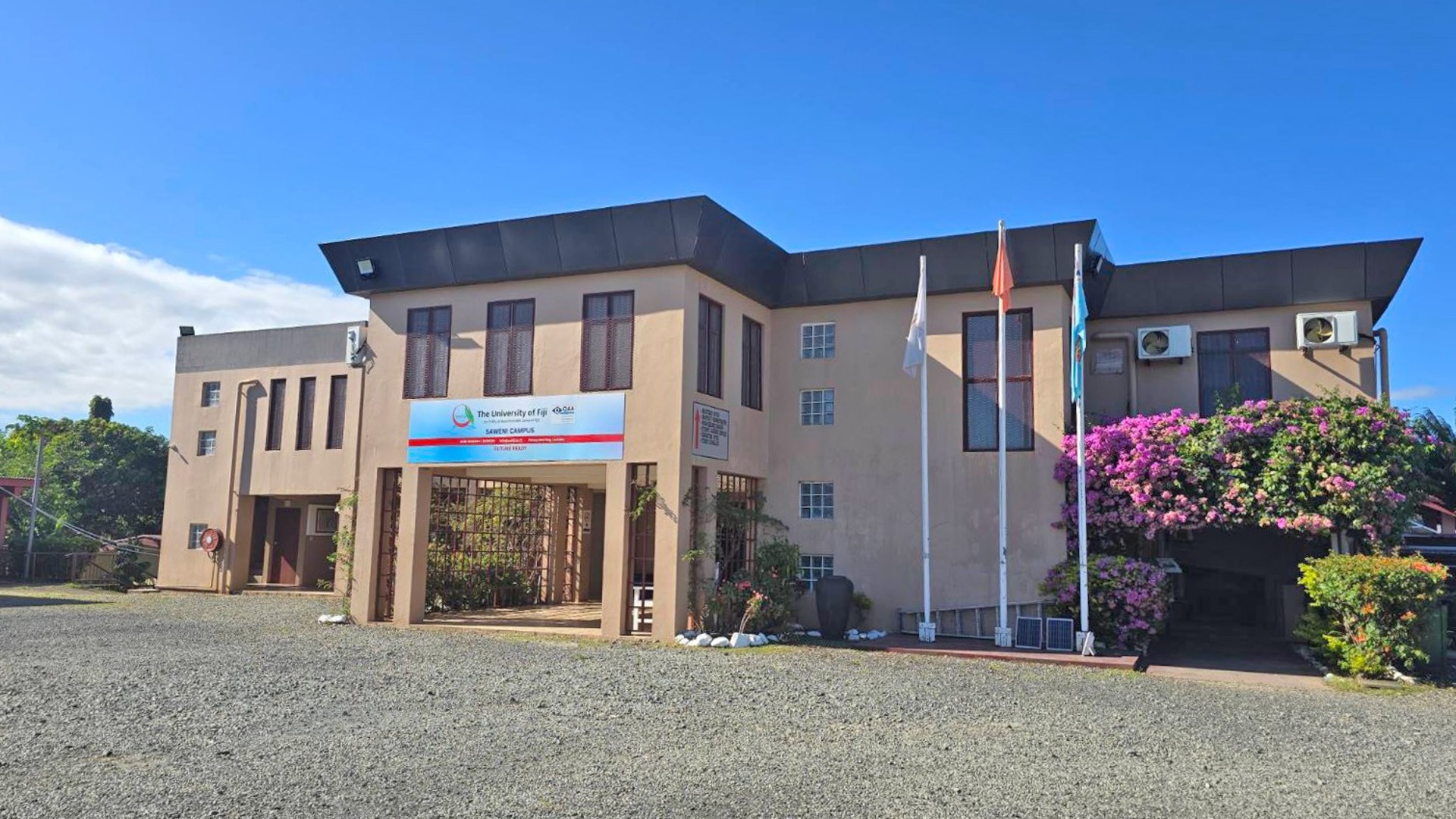
The University of Fiji is set to host a Tertiary Teaching Symposium for its academic staff as part of its continued efforts to improve the quality of teaching and learning at the tertiary level.
Vice-Chancellor Professor Shaista Shameem says tertiary-level lecturing is very different from primary or secondary teaching because, at university, students are expected to spend time on independent work and self-learning; this is called 'heutagogy' or self-directed learning.
She adds that it allows students, who are usually adults, to follow their own rhythms when it comes to absorbing knowledge.
Professor Shameem says they find heutagogy most effective at the tertiary level, and through the symposium, they are providing their academic staff with the opportunity to learn the techniques of university lecturing.
She adds that, following a trial run, the university hopes to extend its tertiary learning programme to other higher education institutions in Fiji and the Pacific.
The symposium will be held on February 12th for full-time staff, with a separate session scheduled for this Saturday for part-time staff.
Chair of the university’s Learning and Teaching Committee and Associate Professor of Education, Dr Wahab Ali says that while academic staff are highly skilled in their respective disciplines and often possess strong research backgrounds, many have had limited formal exposure to teaching at the tertiary level.
He says the symposium is intended to equip teaching staff with heutagogical knowledge and a sound understanding of adult learning principles, enabling them to engage students more effectively in a tertiary education environment.
Dr Ali says tertiary education has become increasingly significant on both national and global agendas, particularly as economies transition towards knowledge-driven development.
He says countries must raise higher-level employment skills, sustain a globally competitive research base, and improve knowledge dissemination for the benefit of society.
He also emphasised the importance of reflective teaching practice in delivering quality tertiary education.
Dr Ali says excellent teachers are reflective practitioners who can evaluate and adapt their teaching approaches to maximise learning opportunities.
He says they demonstrate care, respect, and responsiveness towards learners and are themselves committed to continuous learning.
He further highlighted the transformative role of tertiary education in shaping students’ lives, saying it is life-changing and empowering, and that they hope staff will find the symposium both enlightening and rewarding, for themselves and for the students they will be teaching this semester.