I believe our national identity should reflect the biblical principle that we are one people, without partiality. Just as Scripture teaches that there is neither Jew nor Greek, I believe ‘Fijian’ can be a name that includes all of us equally.
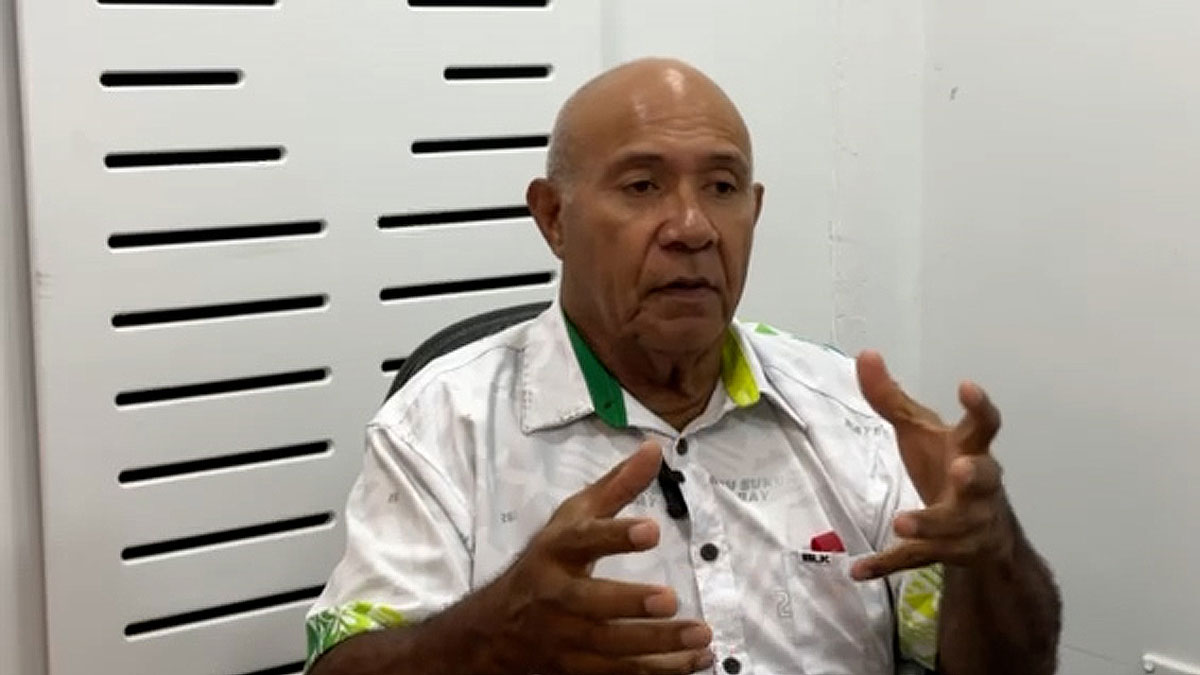
Those are the words of Roko Tui Bau, Ratu Timoci Tavanavanua who says obviously others may beg to differ with him but we are all entitled to our thoughts and views.
Ratu Timoci says the recommendation by the Great Council of Chiefs to reserve the term “Fijian” exclusively for iTaukei reflects a deeply rooted cultural perspective, but it also raises important questions about inclusion and the direction of Fiji’s national identity.
The Bau chief says this is a sensitive issue because it sits at the intersection of identity, history, law, and nation-building in Fiji.
He highlights Niko Naiwaikula’s comments where he is saying this label ‘Fijian” or identity was stolen from the iTaukei which he describes as identity theft by the FijiFirst Government and the need to correct and restore that to the iTaukei as a matter of restorative justice.
Ratu Timoci says this is basically similar to the situation we are in regarding the amendments to the constitution.
He says we are stuck between a rock and a hard place.
Ratu Timoci says Fiji is hostage to it's history, and because of that our sense of nationhood is limited.
He says we tend to identify ourselves with the respective ethnic communities to which we belong, and our collective sense of nationhood of being labelled as Fijians only manifests itself on the occasion of great sporting victories or national tragedies.
The Roko Tui Bau says in between we carry on as a collection of different ethnic communities whose interests cross paths at various points but never quite come together.
He says subsequently our sense of nationhood, that sense of belonging to place and to each other as one people has never really developed.
Ratu Timoci says we have lived side by side rather than with each other.
The Roko Tui Bau says bridge building plays a crucial role.
He says the iTaukei make up 60 percent of the population, they own 83 percent of the land and they are the indigenous people of this country.
He adds unless one understands the perspectives held by the largest portion of the population, developing our nationhood will be made that much more harder.
Ratu Timoci says those who support the GCC recommendation typically argue protection of indigenous identity, global parallels, and fear of dilution.
He says this perspective is not inherently exclusionary, it is often about preservation rather than exclusion.
Ratu Timoci says modern states often define identity by citizenship rather than ethnicity.
He says calling all citizens “Fijians” promotes unity across ethnic lines, reduces institutionalized division and encourages a shared sense of belonging.
The Roko Tui Bau says Fiji’s history shows how quickly ethnic distinctions can become politicized.
He says a shared national identity can lower ethnic tension, strengthen democratic cohesion and reduce “us vs them” narratives
He stresses using “Fijian” for all citizens does not eliminate iTaukei identity.
Ratu Timoci says in fact “iTaukei” is now a clearly defined and respected term, cultural identity (language, customs, chiefly systems) remains intact, and legal protections for iTaukei land and institutions are unchanged.
He says the argument is that identity can be both shared and specific at the same time.
Ratu Timoci says this debate is not about a word, it’s about what kind of nation Fiji wants to be.
He says reserving “Fijian” only for iTaukei may strengthen cultural clarity but risk reinforcing ethnic boundaries in a multi-ethnic society.
Ratu Timoci says keeping “Fijian” as a national identity for all citizens, while strengthening iTaukei identity explicitly, is likely the more sustainable path.
He says instead of choosing one over the other, “Fijian” can be citizenship / national identity and “iTaukei” indigenous identity with full cultural and legal recognition.
Ratu Timoci says this model or framework respects the GCC’s concern about preservation while maintaining constitutional equality and unity.
He says if handled carefully, this moment could actually strengthen Fiji by clarifying that indigenous identity is protected, and national identity is shared.

Stay tuned for the latest news on our radio stations