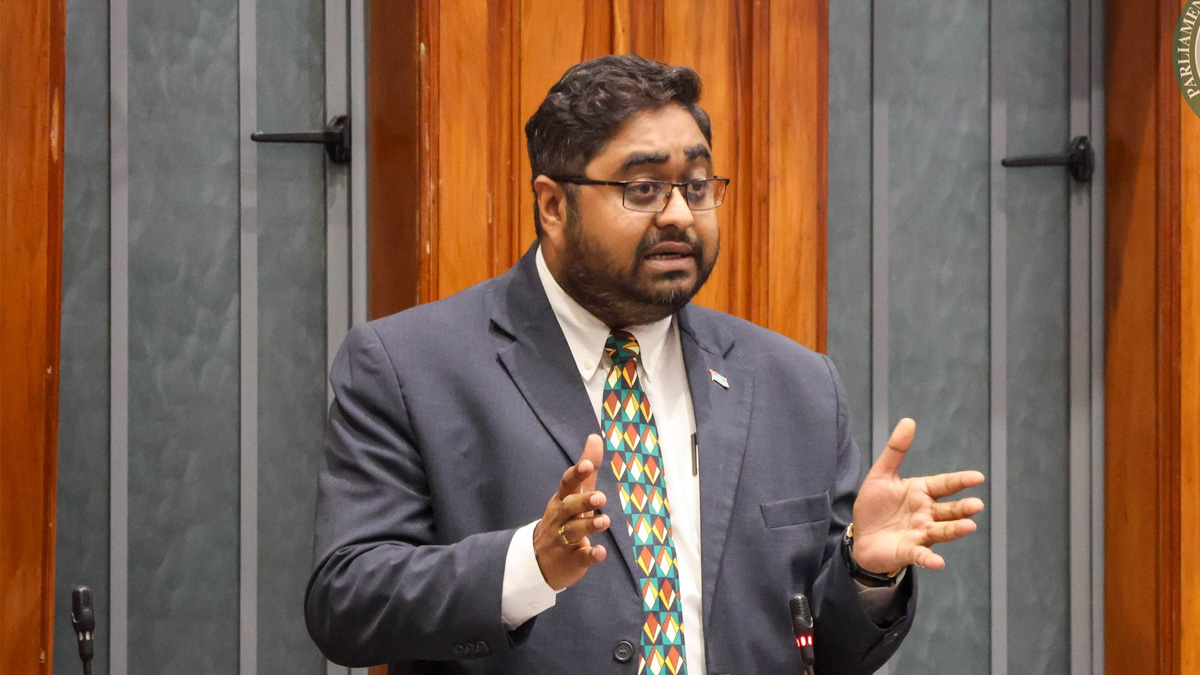
Opposition MP Ketan Lal is urging the Government to reduce VAT to 9 percent and also remove 20c tax on fuel as the war in the Middle East will have great impact on the livelihoods of our Fijians.
While responding to the President’s opening address in Parliament, Lal says nightclub owners across the country are still waiting for the trading hours to be revised back to 5am.
He says restoring those hours will not only support the hospitality sector but will also stimulate our night-time economy.
Lal says when nightlife thrives, taxi drivers earn more, small food vendors and BBQ stalls do better, and many ordinary Fijians find opportunities to earn an honest living late into the night.
The MP stresses this is not just about entertainment; it is about economic activity and livelihoods.
He is also calling for solutions for the traffic congestion issue and says they have already suggested that police presence on the roads between 6am and 9am could significantly improve traffic flow during peak hours.
Lal says instead of experimenting with poorly designed road humps everywhere, we should be looking at smarter infrastructure solutions where in areas like Tamavua near the Wailoku junction, overhead pedestrian walkways would help reduce congestion and improve safety.
He says similarly, in Waimalika in Sabeto, unnecessary road humps have been constructed near schools that now cause massive traffic build-ups.
The Opposition MP says while safety is important, poorly planned infrastructure should not punish hardworking Fijians trying to get to work on time.
Lal also says increasing flooding is now affecting areas that historically never flooded due to poor drain cleaning and lack of regular river dredging, meaning even normal rainfall now causes flooding, while the government remains silent on the issue.
He also says the copra industry in Vanua Levu should be revived with more eloquent government support and subsidy for machineries including bore holes and copra dryers.
The MP says instead of addressing all these major these pressing issues, the new Minister for Finance has decided to blame Fijians for drinking too much grog as the reason our kava exports are not growing.
He says Fijians are already struggling with the cost of living, traffic congestion, flooding, and failing infrastructure and grog and other exports are not growing.
Lal stresses the last thing they need is to be told that their problems exist because they drink too much grog.
He also says that many Fijians are not asking for poetry or drama but are instead asking for prices to come down, wages to stretch, roads to be safe, hospitals to function, and for leaders to follow the rule of law.
INSERT: History will judge 10 mar
Lal further says Fijians are frustrated about the various allegations against various institutions such the Fiji Sports Council, FICAC, JSC, our Fiji Police Force, FNU and while allegations surface over social media about our institution, our people struggle daily, mothers and fathers who form the backbone of Fiji, trying to make a better life for their families.
He highlights that GDP figures do not cook dinner, press releases by this government does not pay rent and slogans by these Ministers do not reduce school expenses.
Lal says after three years in government and heading into an election year, people are asking where the promised change is, arguing the government promised things would be better but instead life has become harder through rising grocery costs, policy uncertainty for businesses, questioned institutional independence, and selective accountability, leaving people tired and disillusioned.
He further says that when the public sees confusion, inconsistency, or a “two-speed” approach to accountability, one standard for ordinary citizens and another for the powerful, trust collapses.
Lal says when trust collapses, the nation pays a price where investors hesitate, public servants become cautious, communities become cynical, and young people learn the wrong lesson, that connections matter more than rules.
He has emphasised that independent institutions must be independent in reality, not only in name and oversight bodies must function without fear or favour.
The MP says investigations must be timely and credible and appointments must be based on merit, not political convenience because when institutions bend, citizens break, they lose faith, and when faith is lost, division grows.
INSERT: Lal's message 10 mar