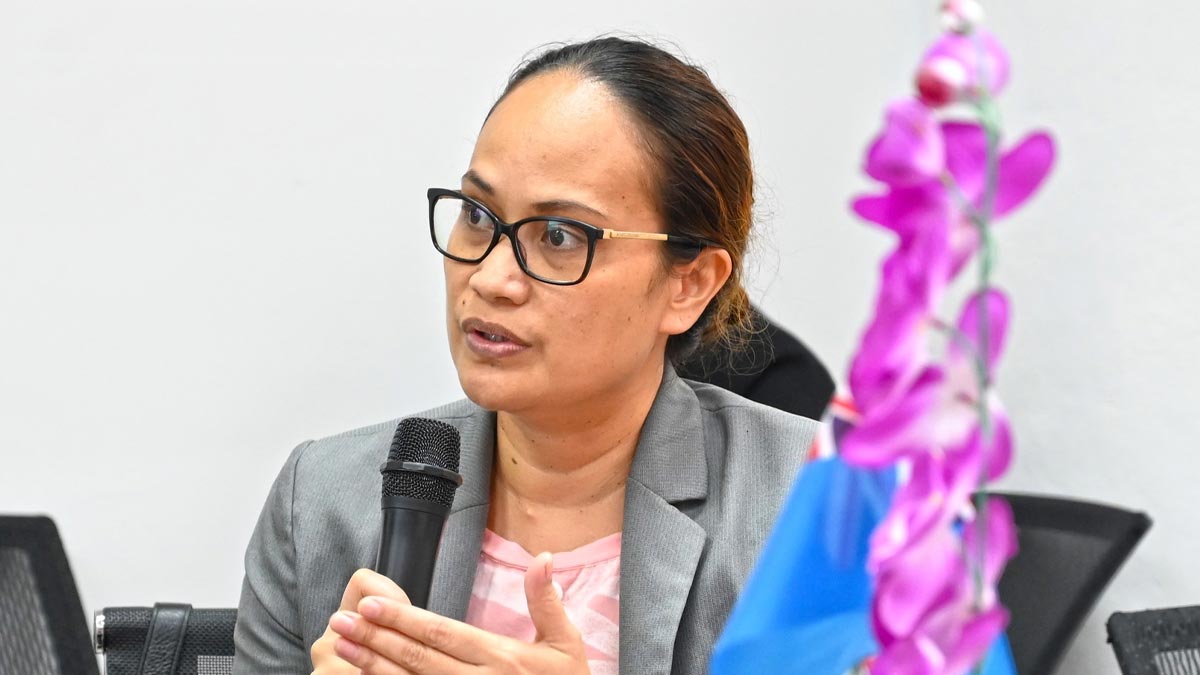
Human rights must not be traded off in the pursuit of renewable energy and large-scale development projects.
This has been highlighted by the Director of Fiji Human Rights and Anti-Discrimination Commission Loukinikini Lewaravu during the Climate Change Fallout – Development Transitions and Community Resilience: An International Talanoa on Transition Mineral Mining and Development Justice at Fiji National University’s Nasinu Campus.
Lewaravu says justice in development must be measured by how well the most vulnerable are protected.
Insert: Lewaravu - Justice not an abstract concept April 11
She says there is a need for a human rights-based approach in all development planning, particularly for hydropower and renewable energy projects, noting that communities must be treated as rights holders rather than passive beneficiaries.
Lewaravu says such an approach requires genuine participation, accountability, non-discrimination, empowerment and alignment with legal human rights standards at every stage of a project.
Central to her address was the right to a clean, healthy and sustainable environment, which she says must be upheld equally for both national development goals and local communities.
She also underscored the importance of free, prior and informed consent, urging that it be embedded in Fiji’s legal framework rather than treated as a procedural formality.
Among her recommendations were the establishment of independent oversight bodies involving community representatives, stronger grievance mechanisms, and stricter conditions for development financing to ensure ongoing community consent.
Lewaravu says Fiji, as a signatory to key international human rights conventions and with constitutional protections for environmental rights, must ensure that the transition to renewable energy does not come at the expense of community dignity and survival.

Stay tuned for the latest news on our radio stations