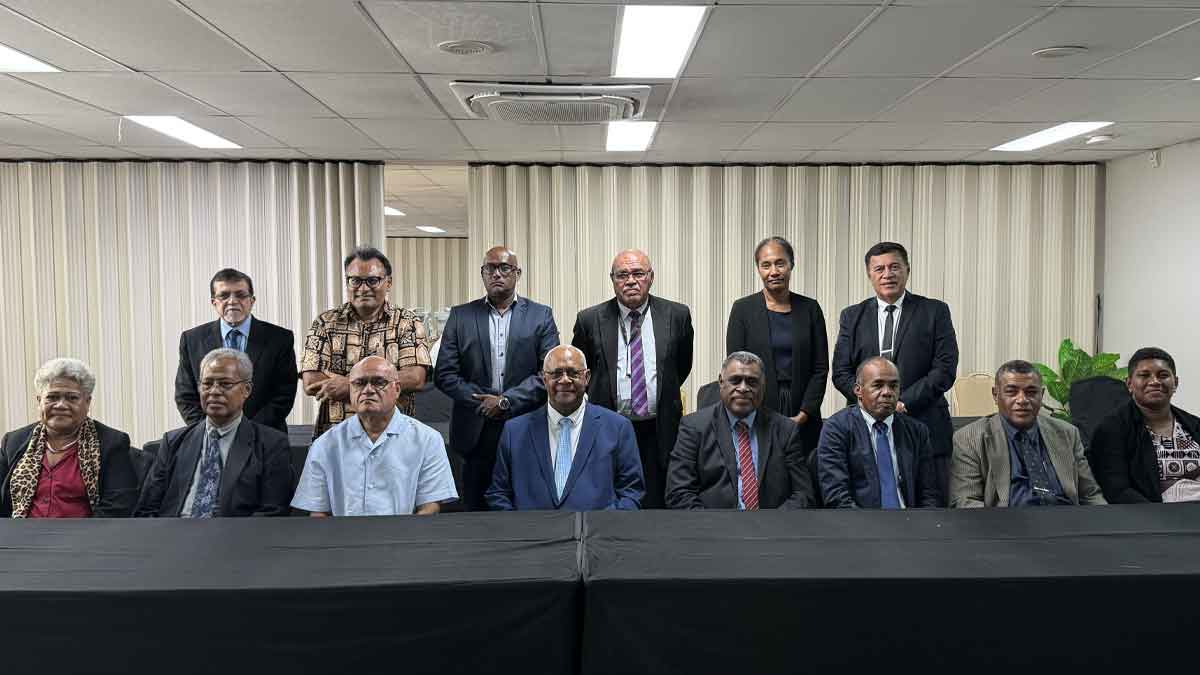
The Great Council of Chiefs does not accept the legitimacy of the 2013 Constitution and believes Fiji should ultimately move towards a new, genuinely consultative and autonomous constitution, one developed by the people, for the people.
This was revealed by the GCC Chair Ratu Viliame Seruvakula while presenting their submission to the Constitution Review Commission.
Ratu Viliame says their submission is made in good faith and it is not intended to diminish the rights of any community but to strengthen constitutional legitimacy, democratic governance, national unity, and respect for the rule of law, while ensuring proper recognition of the indigenous foundations of our nation.
He says at the heart of their submission is one central principle where Fiji's constitution must protect equal citizenship for all, while also recognizing the distinct identity, rights, institutions, land, language, and customary system of the indigenous iTaukei and Rotuman people.
He adds that true national unity cannot be built by erasing difference, it must be built through mutual respect, legal clarity, democratic accountability, and substantive equity.
The GCC Chair further adds that their submission is therefore recommending a shift away from forced constitutional uniformity and towards a more honest and stable pluralism.
Ratu Viliame says true national stability cannot be achieved by keeping the largest segment of the population economically marginalized or structurally restricted from the fruits of commercial development.
He says when indigenous people are provided with the correct constitutionalized platform, the proper legal safeguards and targeted institutional support to become genuine wealth creators utilizing their own resources, it will not divide this country but will unite it.
He further says when the iTaukei thrive economically, transitioning from resource rich but cash poor land owners into exporters, entrepreneurs and a stable middle class, the entire national economy expands.
He adds that economic security eliminates the anxieties that have historically fueled political instability.
The GCC also recommends that Na Vosa Vakaviti be made a compulsory core subject in all primary schools and conventional Fiji Hindi and other languages should remain available as elective subjects based on community demand and school capacity.
They recommend that on early childhood medium of instruction, from early childhood education to year three, the main medium of instruction should be the indigenous vernacular or mother tongue of the majority student cohort.
The Chair says early learning in the mother tongue supports literacy, numeracy, confidence, cognitive development, especially in rural and maritime schools.
Ratu Viliame says they also recommend the restoration of the 1997 constitutional governance framework where appropriate and this includes reinstating Chapter 2 of the 1997 Constitution.
He says it would protect iTaukei and Rotuman lands, customs, and cultural rights, while also affirming the equal rights of all citizens to democratic participation and protection under the law.
He adds that on the recognition of the GCC, historically, they played an important constitutional and advisory role in matters affecting indigenous affairs.
Ratu Viliame says its omission from the current constitution has weakened traditional governance and reduced indigenous participation in national decision-making.