Many Fijians being asked to make submissions to the Constitution Review Commission do not even understand what a constitution is, what it is supposed to contain or how it affects their lives, raising concerns about how people can meaningfully participate in deciding Fiji’s constitutional future.
Dialogue Fiji Executive Director Nilesh Lal says this is not the fault of ordinary Fijians but the result of the country not investing enough in constitutional literacy and civic education.
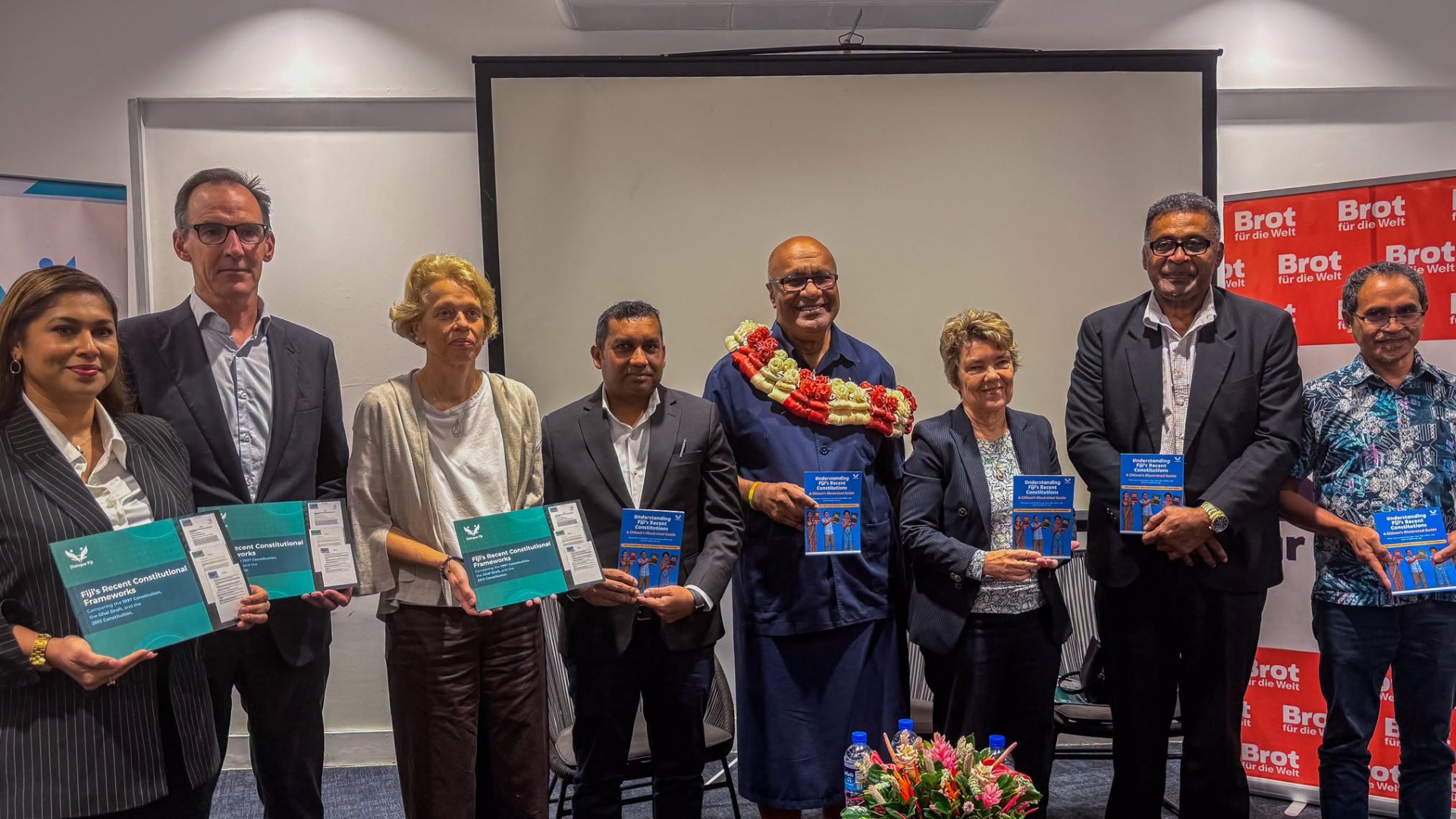
Lal highlighted this during the launch of two constitutional literacy publications by Dialogue Fiji at Tanoa Plaza in Suva.
He says constitutions have largely remained documents for lawyers, politicians and academics and are often written in complicated legal language that is not clearly explained to ordinary citizens.
Lal says people cannot simply be asked what kind of constitution they want without first being given the information they need to make an informed assessment.
He says another concern is that many people have strong views about whether a particular constitution is good or bad, but when asked which provisions they support or oppose, they often do not know.
Lal says in many cases, people have never read the constitution they feel strongly about, and their views are instead shaped by the politicians they support.
He says people should examine what a constitution actually provides, including how it distributes power, protects rights, establishes Parliament, controls the Executive, provides for the appointment of independent institutions and can be amended.
Lal says a constitution should not be treated like a political party manifesto, a tribal badge or a test of loyalty to one political camp because it belongs to the entire country.
He says constitutional discussions should be based on what the actual texts provide rather than political slogans, misinformation and blind loyalty to political leaders.
Dialogue Fiji has launched Fiji’s Recent Constitutional Frameworks: Comparing the 1997 Constitution, the Ghai Draft, and the 2013 Constitution, which places the major provisions of the three frameworks side by side.
The publication compares areas including the Bills of Rights, electoral systems, Parliament, the Executive, the Judiciary, state services, accountability institutions, constitutional amendment procedures and the role of the Bose Levu Vakaturaga.
A second publication, Understanding Fiji’s Recent Constitutions: A Citizen’s Illustrated Guide, uses illustrations, comparative tables and plain language to make constitutional issues easier for ordinary Fijians to understand.
Lal says the publications do not tell people which constitution they should support but allow them to examine individual provisions and decide for themselves what they believe is best suited for Fiji.
Lal says for Fiji, constitutional literacy is not simply an academic exercise but is essential to the protection and survival of democracy.
While launching the books, Deputy Prime Minister Manoa Kamikamica says an informed citizenry is better equipped to participate constructively in national discussions and to exercise democratic rights responsibly.
Kamikamica says one of the greatest strengths of the publications is that they do not tell readers which constitution is best or advocate for the retention, amendment or replacement of any constitution, but instead provide information and leave the evaluation to readers.
He says Fiji's history shows that the legitimacy of a constitution and public trust in it are inseparable from the openness of the process through which it is produced or reviewed.
Kamikamica says constitutional discussions should be informed by facts, conducted respectfully and guided by a shared commitment to the national interest.
He says as Fiji moves forward, the Government is guided by the principle that the constitutional process must belong to the people of Fiji and not to any one office, political party or individual.
Kamikamica also encouraged young Fijians to read and understand the publications, saying the future of Fiji's democracy belongs to the next generation.
Associate Professor Dr Sandra Tarte from the University of the South Pacific's School of Law and Social Sciences says Fiji's constitutional journey has been long and, at times, difficult.
Tarte says in Fiji's relatively short history as an independent state, there have been fewer than three elected governments per constitution, and none of the country's constitutions has yet withstood the test of time, political turmoil, elections and authoritarian rule.
She highlighted how Fiji's constitutional arrangements have changed over the years, including the move from ethnically based electoral rolls under earlier constitutions to the common roll contained in the Ghai Draft and the 2013 Constitution.
Tarte also highlighted the changing role of the Bose Levu Vakaturaga or Great Council of Chiefs, from having certain legislative and executive powers under the 1997 Constitution to a proposed advisory role under the Ghai Draft and being absent from the 2013 Constitution.
