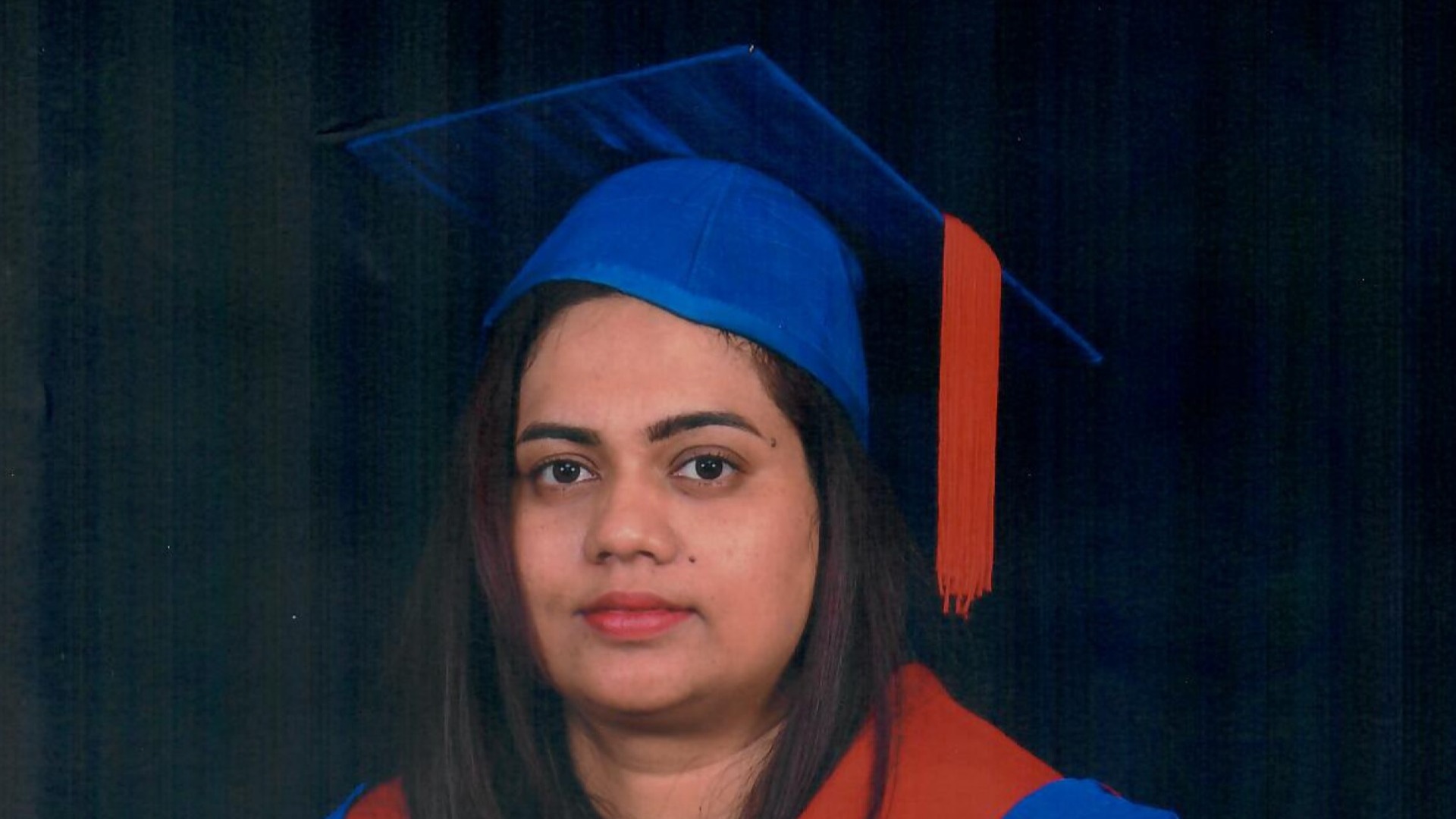
Balancing motherhood, sacrifice, and years of hard work, Dr Reema Alpana has achieved a major milestone for herself and her family, graduating with a PhD in Education from the University of the South Pacific, while raising her son and pushing for more inclusive schools in Fiji.
Dr Alpana’s journey began in Nausori in Fiji and led to her earning a Doctorate in Education from the University of the South Pacific.
Her PhD research, titled “Examining the Readiness of the Ministry of Education in Implementing its Disability Inclusive Education Policy,” was a multiple-case study that explored policy implementation across five schools in the Suva District.
The study offers insights for stakeholders, including parents, on understanding inclusion and how it can be strategically applied in all schools.
Dr Alpana’s achievement adds to a proud family tradition, with her older brother, Dr Edward Narayan, also having earned his PhD from USP; Dr Nitik Ram serving as an obstetrician and gynaecologist at CWM Hospital; and Dr Ricky Ram practising as a dentist in Savusavu.
Education has always been a passion for Dr Alpana, as she often questioned how teaching and learning could be uplifted to transform lives.
She stresses that after enrolling in her PhD in 2017, she realised very few people were pursuing research in inclusive education — an area she believed needed greater attention and advocacy.
Dr Alpana secured support from USP’s Pacific Scholarship for Excellence in Research & Innovation (PSERI), which meant resigning from her teaching job to pursue full-time studies.
Dr Alpana says that when she received the scholarship in 2018, she was eight months pregnant, stressing that despite this, she continued to meet with her supervisor, Professor Ann Armstrong, and worked on her research until the early stages of labour.
After giving birth, her responsibilities increased, and balancing postpartum recovery, motherhood, and PhD work became one of her hardest challenges — yet just a week later, she returned to campus, driven by a strong sense of duty.
She shares that after a year and a half, her in-laws stepped in to care for her son in Rakiraki while she remained in Suva—a difficult period in her life when every Friday evening became her motivation, as it meant travelling to see her child.
To meet her goals, she often stayed awake for two or more days, analysing data or rewriting parts of her thesis.
When COVID-19 hit in 2020, visits to Rakiraki stopped, and they could only send food and supplies across the border.
This, she says, was emotionally devastating and slowed her progress due to separation, heartbreak, and anxiety over her child's safety during the pandemic.
In 2021, after completing her scholarship term, she faced a dilemma; return to teaching or finish her nearly completed PhD.
Though unemployed, she and her husband decided not to give up.
That year, she joined a university in Fiji as a lecturer and remained committed to completing her research. With only one supervisor, she says she developed a strong professional and personal bond.
She says life tested her again when her child began school and she stepped into the role of a parent of a school-aged child, where—despite her research background—she found herself advocating for meaningful inclusive practices, an experience she says made her more resilient, disciplined, and determined.
Her journey also revealed the gaps between policy and practice in inclusive education, further motivating her to complete her research.
Later, her family moved to New Zealand, where she had to rebuild her career while finalising a PhD that had taken over half a decade.
She says she chose to complete her thesis as a full-time mum, setting small daily goals and sometimes writing from her car after dropping her son off at school, and says it felt surreal to finally receive examiner feedback.
Dr Alpana emphasises that USP staff played an influential role in shaping her, from her undergraduate studies in 2009 to her Master of Arts adding she built a strong network with passionate researchers while remaining close to home and loved ones.
Reflecting on her journey, she hopes educational support for women in academia will become more flexible and individualised, as every woman’s journey is unique.
Now 35 and living in New Zealand, Dr Alpana says her greatest motivation was her family sharing her father worked as a watchman at the Public Works Department until retirement, also grazing cows and selling milk in their village. Her mother raised ducks and chickens to earn extra income.
She says her parents always placed high value on education and encouraged her to break gender norms, proving that even as the youngest and only sister among three brothers, she was just as capable of achieving success.
She also acknowledges her husband, who supported her through the darkest moments, and her son, Reyansh, who continues to inspire her to advocate for inclusion.
To those considering or currently on the PhD journey, Dr Alpana says it involves facing many storms adding these may come in various forms and attempt to pull you down, but she believes each person has the strength to overcome them and emerge stronger.

Stay tuned for the latest news on our radio stations