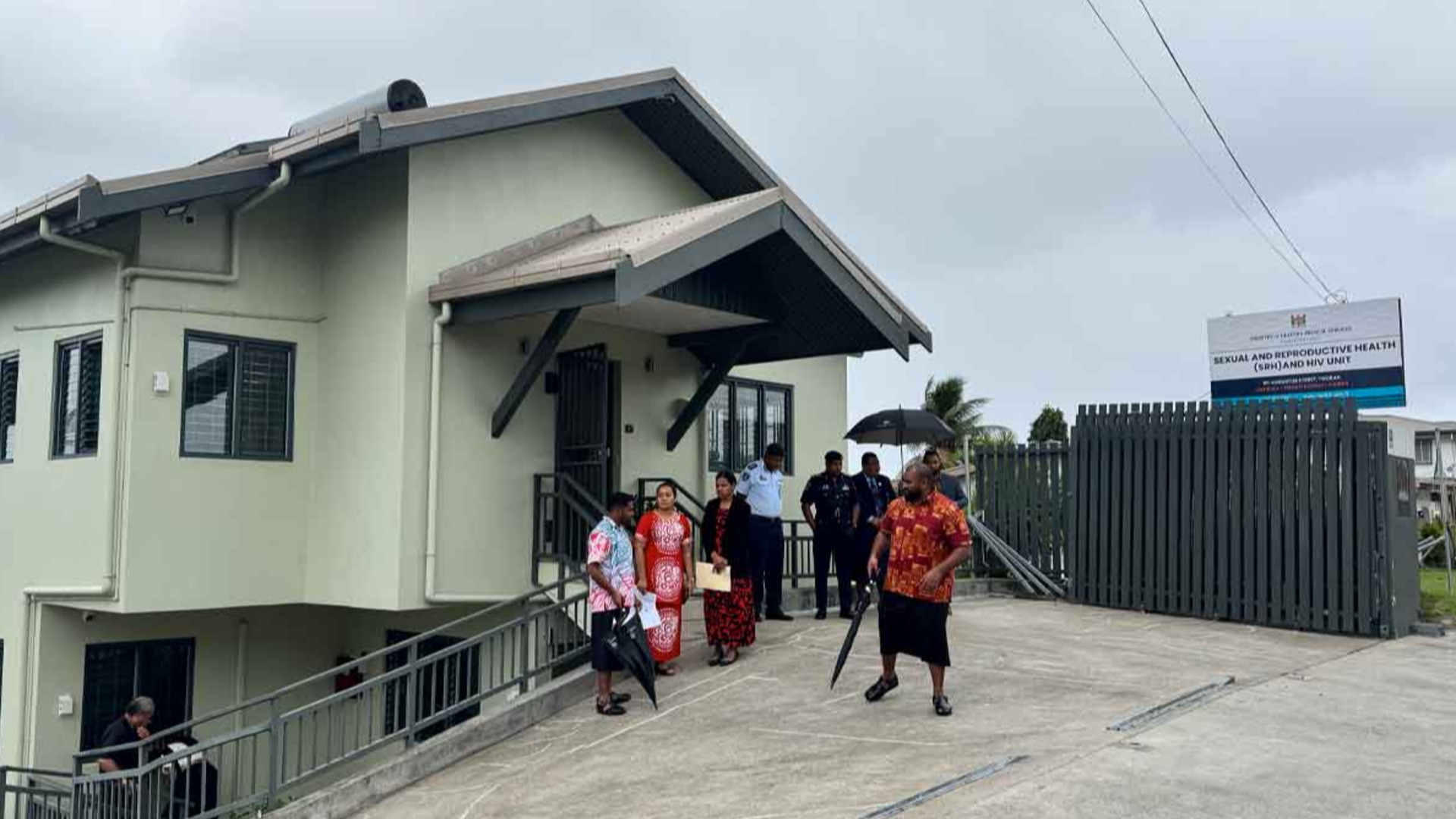
This has been highlighted by Australia's Minister for Foreign Affairs, Penny Wong during the opening of the new National Sexual and Reproductive Health and HIV Office, located in Augustus Street, Toorak.
Wong says the funding will be provided as part of the Vuvale Partnership for Health.
She says Australia shares Fiji's deep concerns about the impacts of HIV and stands alongside Fiji in responding to the challenge.
Wong says a strong and effective HIV response in Fiji helps build a healthier and more resilient country and a healthier and more resilient Pacific.
She says by preventing new infections, strengthening health systems and improving access to treatment, Fiji and its partners are strengthening the health security of Fiji, Australia and the wider Pacific family.
Wong says responding to HIV is not just a health challenge but a community challenge, noting that community groups are helping reduce stigma and connect people with services, while faith leaders are supporting inclusion and understanding for those affected by HIV.
She says Australia is committed to working with cultural and faith-based leaders to respond to shared challenges.
Wong further says the opening of the new headquarters is more than a new premises from which Fiji can manage its HIV response, describing it as a symbol of Fiji's leadership, the dedication of its health workers and communities, and the power of partnership and collective action.
Meanwhile, Minister for Health Dr Atonio Lalabalavu says Fiji is facing a generalized HIV epidemic, with HIV prevalence standing at 1.6 percent among adults aged 15 to 49 and around 2 percent among pregnant women.
Dr Lalabalavu says Fiji chose to act by establishing the National HIV Outbreak and Cluster Response Task Force and the Sexual and Reproductive Health and HIV Unit, strengthening national and divisional structures, expanding testing, treatment and prevention, and bringing government, communities, technical partners and resources together behind a national response.
He says the office is the home of Fiji’s national response to HIV, where work will be coordinated to prevent new infections, find and treat people living with HIV, support health workers and communities, strengthen data and ensure responses reach every part of the country.