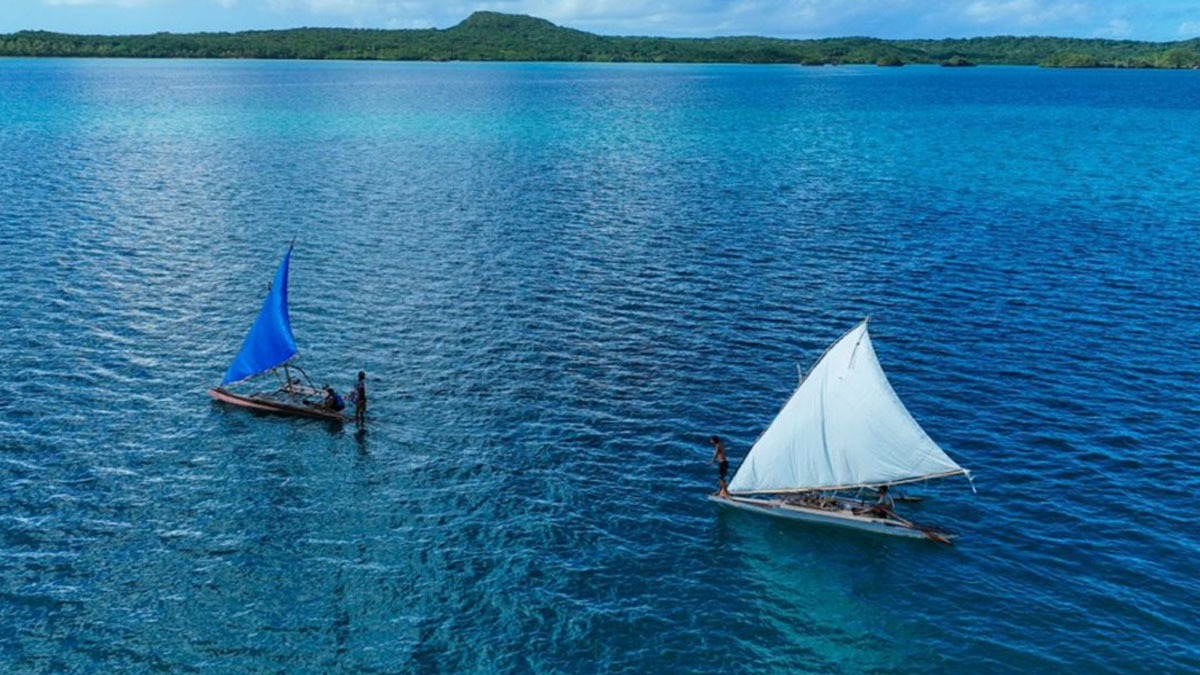
The Camakau Race, a cherished cultural tradition of Fulaga Island in the Lau Group, is making a triumphant return after a 20-year hiatus.
Set to take place tomorrow on New Year's Day, the historic event promises not only to rekindle a centuries-old tradition but also to ignite a renewed sense of pride and unity among the people of Fulaga.
Laisenia Seru, the facilitator of the Camakau Revival, says the event holds deep personal significance.
Seru says when he had returned to Fulaga nine years ago, he saw that the use of the Camakau was dying out.
He says it became one of his major goals since then to revive the tradition.
Seru explains that one of the most important goals is to pass on the traditional craft of Camakau boat-building to younger generations, a skill that had largely been lost.
Insert: Camakau Seru Dec 31
Meanwhile, Camakau Revival's marketing officer Talei Draunibaka, and passionate advocate for passing on knowledge, says the revival of the Camakau race holds an emotional connection.
Draunibaka says she had received a video of her grandson learning how to do the Saubulu, which is the traditional building of boats, and was amazed.
She says if this initiative hadn’t happened, her grandson would never have had the chance to learn the Saubulu.
Insert: Revive Talei Dec 31
The Camakau, a traditional Fijian canoe, is crafted using selected wood sourced deep within Fulaga’s forests, connecting the community with the land and their heritage.
The boats are entirely eco-friendly, relying on human skill and natural materials rather than fuel and engines.
The Camakau does not harm the qoliqoli (fishing grounds), unlike modern boats that rely on diesel or fuel.
The event will not only showcase traditional boat-building techniques but will also highlight traditional sailing skills, fostering a sense of community resilience.
In addition to preserving and promoting traditional practices, the Camakau race will serve as a key initiative in attracting tourism to Fulaga Island, offering a unique glimpse into Fijian heritage and sustainable living.
Draunibaka believes this will not only help preserve cultural traditions but will also provide a source of income for the community.

Stay tuned for the latest news on our radio stations