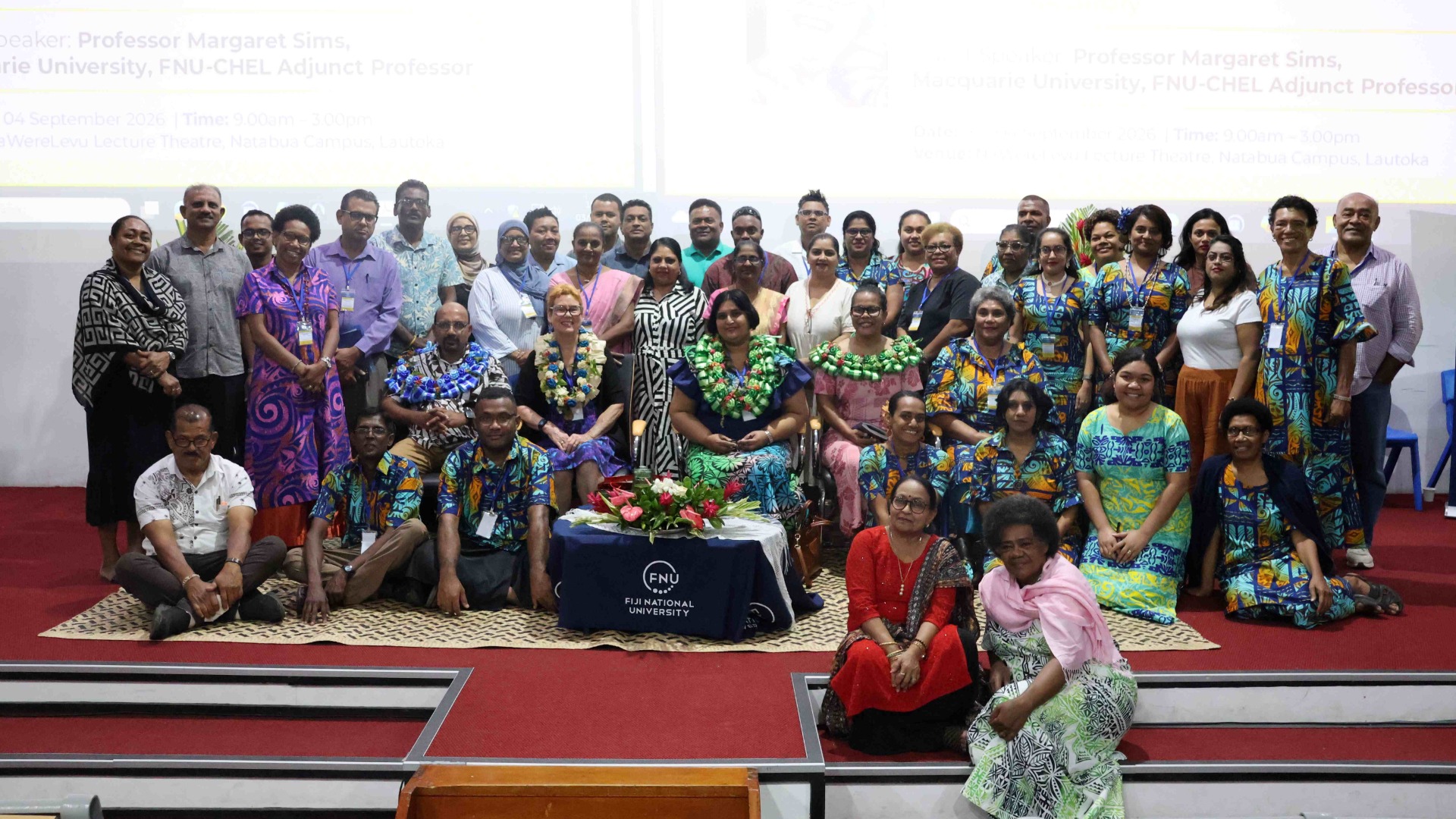
Educators, teachers and teacher trainees are exploring new and meaningful ways of teaching literature to children and young people through an inaugural Literature Teaching Workshop held at Fiji National University’s (FNU) Natabua Campus in Lautoka.
The two-day workshop, which began on Thursday, was hosted by the Office of the Dean of the College of Humanities, Education and Law (CHEL), through the School of Communication, Language and Literature (SCLL).
Held under the theme, “Transforming the Teaching of Literature (ECE–Primary–Secondary),” the workshop brought together academics, pre-service teachers and students from across CHEL.
The programme focused on innovative approaches to literature teaching across early childhood, primary and secondary education, while encouraging educators to consider how literature can help children better understand themselves and the world around them.
Chief Guest Professor Margaret Sims of Macquarie University, who is also an Adjunct Professor with FNU’s CHEL, highlighted the importance of carefully selecting literature that helps children develop knowledge, values and perspectives.
She says meaningful literature does not always have to come from glossy, published books, but could also come from children’s own experiences, families and communities.
She also stressed the importance of considering the emotional impact of literature on children and exposing them to stories that reflect a range of lives and experiences.
Professor Sims says literature can help children consider what it might feel like to live in another person’s circumstances, allowing them to develop a deeper understanding of different experiences.
Head of the School of Communication, Language and Literature Suzie Aziz says the workshop encouraged educators to reflect on how literature could be taught in ways that go beyond simply reading texts.
She says educators should consider how they could encourage students to experience, question and connect with literature while discovering meaning through texts.
Aziz says educators must continue adapting their teaching approaches to meet the needs of today's learners, while preserving the richness and value of literature.
She adds that literature play an important role in shaping how children experience reading, storytelling and learning throughout their lives.