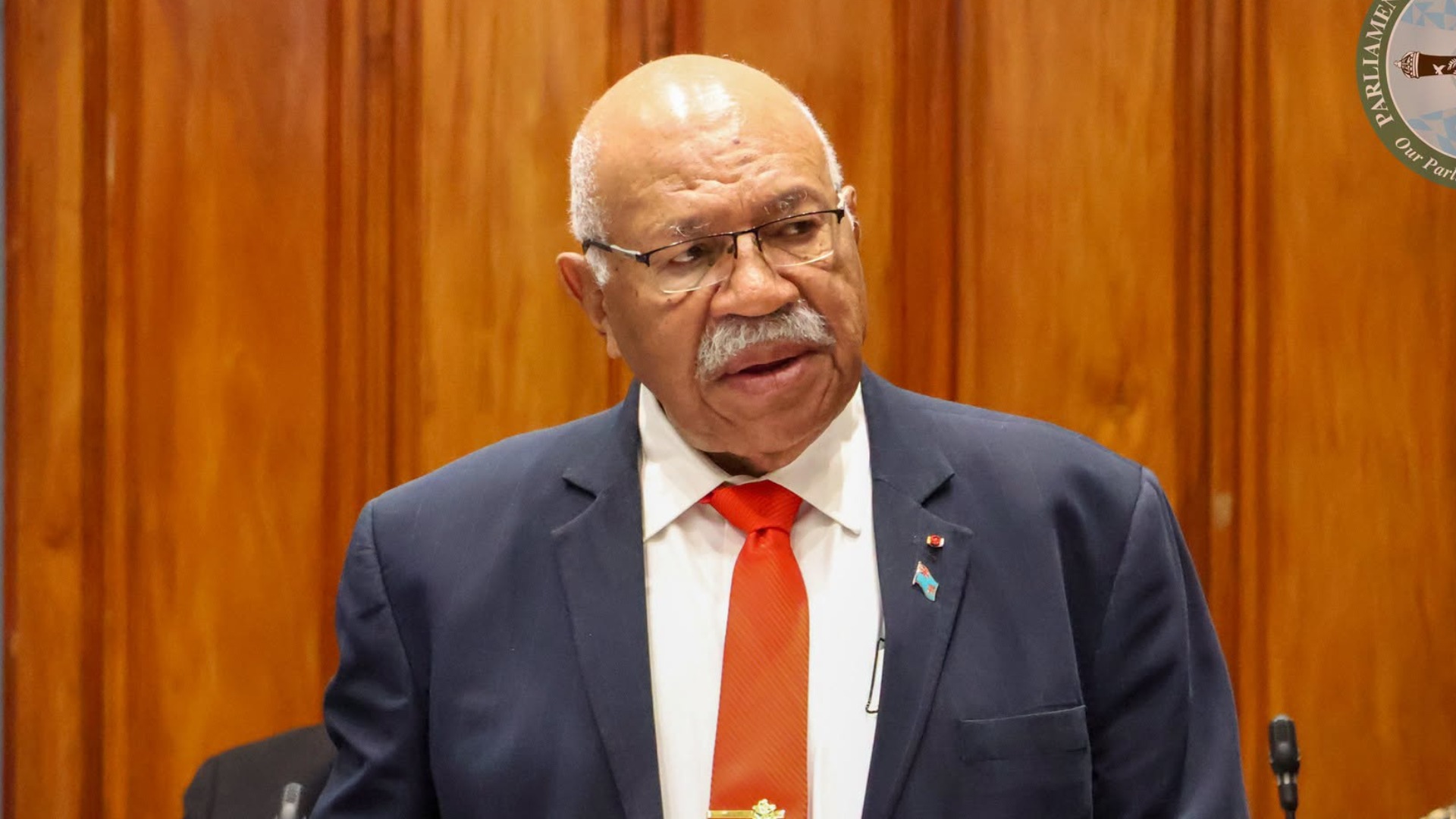
Prime Minister Sitiveni Rabuka says the 2026-2027 National Budget is for discipline, as we must learn to live within our means and the government recognises that the road ahead will not be easy.
While contributing to the budget debate, Rabuka says the budget is also about compassion because families should not face global shocks alone, adding the is for growth because jobs and investment are the foundation of lasting prosperity.
He says it sees the world as it is, protects people where needed and reforms where Government must do better, adding they always try to improve on what they receive.
Rabuka stresses that it is for fairness because the tax system must protect those with less and ask more of those with greater capacities.
INSERT: Rabuka on budget 13 Jul
He says Opposition Leader Inia Seruiratu highlighted the growth in Fiji's debt but failed to mention its relationship to GDP, adding that the country's development on the ground reflects how the borrowed funds have been used.
Rabuka explains that the budget provides targeted support to assist households through measures such as fuel duty concessions, electricity subsidies, transport assistance, zero-rate VAT on essential items, free water concessions for eligible households, and targeted duty reductions.
He says relief is necessary, but relief alone is not a development strategy and Fiji must grow and invest.
The Prime Minister highlights that Fiji must produce and create jobs where investment Fiji is facilitating 254 active projects worth $8.6 billion and of those, 107 are under construction and expected to become operational within three years, with a further 95 percent in advanced pre-development.
He says a Task Force on Investment Approval Process comprising ministries and agencies and headed by the Office of the Prime Minister is facilitating projects to help them start.
Rabuka confirms significant investments are currently underway with consultations and preliminary feasibility studies being carried out to determine their economic viability, structural design and long-term benefits.
He says these projects include major port developments, maritime infrastructure, aimed at supporting Fiji's regional maritime hub status.
Rabuka says these mega-investment projects will significantly improve trade efficiency, enhance logistics capability, and support the growth of the blue economy.
He says it is envisioned that these projects will create thousands of employment opportunities, attract billions in foreign investment and greatly boost our investment-to-GDP ratio.
He says these are necessary investments to inject liquidity into critical sectors across our economy.
Rabuka further says national development must ensure every community participates meaningfully in economic growth, including greater iTaukei participation and socio-economic development.
He says as custodians of the country's largest land and cultural assets, iTaukei communities must be empowered to turn ownership into sustainable economic opportunities, employment and prosperity for future generations.
The Prime Minister says the Government has directed its legislation subcommittee to fast-track laws incorporating the United Nations Declaration on the Rights of Indigenous Peoples and ILO Convention 169.
He says the budget also introduces tax incentives for companies with at least 30 percent iTaukei shareholding investing in ecotourism, culture and arts businesses, including a seven-year tax holiday for investments between $5 million and $10 million, and a 13-year tax holiday for investments above that amount.
Rabuka says this is more than a tax measure, describing it as a commitment to ensuring indigenous participation is built into national development rather than treated as an afterthought.
He says when iTaukei communities become economically stronger, Fiji becomes stronger, adding that empowering landowners to become entrepreneurs will strengthen tourism and boost confidence in the economy.
Rabuka also highlights that public safety remains a priority, with the budget supporting duty reductions on surveillance cameras for the Suva to Nausori CCTV corridor and providing additional funding for specialised police drug operations.
He says tackling the drug crisis will require stronger law enforcement, international cooperation, rehabilitation and closer partnerships with families, churches, schools, traditional leaders and communities.
Rabuka adds Fiji has faced difficult times before and its people have always shown resilience, but the country must continue to plan, reform, invest and act with discipline to build a stronger future.