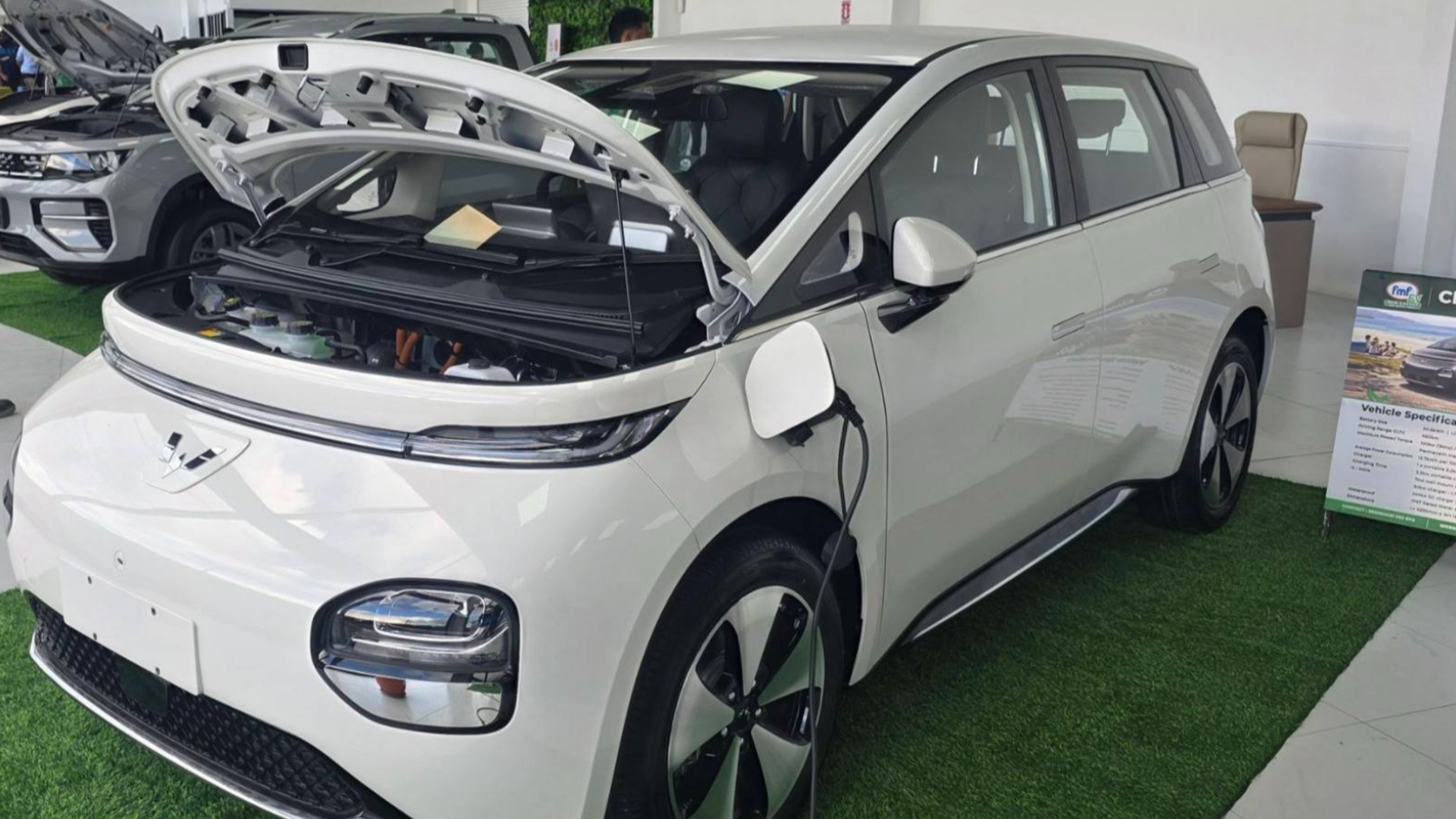
Fijians could see more electric vehicles and charging stations as the Government works to reduce the country’s dependence on imported fuel and accelerate the shift towards renewable energy.
This was highlighted during the meet and greet hosted by FMF EV and representatives from China’s Yunnan Province Delegates.

Minister for Infrastructure and Transport Ro Filipe Tuisawau says the introduction of electric vehicles is a significant development in Fiji’s journey towards renewable energy, with the decarbonisation of transport identified as a key objective under the National Development Plan.
Insert:Ro Filipe on EV 8th July
He says the Government is developing policies, regulations and incentives to encourage the shift from fossil fuel-powered vehicles to electric vehicles.
Ro Filipe says the Government is also working closely with Energy Fiji Limited on renewable energy programmes to support electric vehicle infrastructure, including charging stations and other facilities.

The Minister says legislative amendments and regulatory frameworks are also being developed to support the growth of the electric vehicle sector.
Responding to questions on budget allocations for charging stations, Tuisawau says the new budget includes concessions to support the development of electric vehicle charging stations.

He says reducing Fiji’s dependence on imported fuel is one of the reasons behind the push towards electric vehicles.
Ro Filipe says Fiji’s progress on renewable energy has been slow, with renewable energy currently accounting for about 58 percent of the country’s energy mix.
He says recent fuel challenges have highlighted the need to accelerate the move away from fossil fuels.

He adds that collaboration between the Government, private sector investors and international partners will be important, particularly as businesses look to invest in renewable energy projects such as solar farms.
Meanwhile, FMF Managing Director and CEO Sanjay Punja says the company has invested around $3 million in its move into the electric vehicle market, including the development of a showroom and related facilities.
Punja says the move into electric vehicles reflects global trends, with EV uptake continuing to grow in major markets including China, Europe, Australia and New Zealand.
He says FMF sees an opportunity for more people in Fiji to transition to electric vehicles and confirms the company also plans to gradually transition its own vehicle fleet to EVs.
He says the company also has its own garage and personnel from China, while local staff are sent to China for training to ensure servicing support is available.
Punja says he hopes to see more electric vehicles on Fiji’s roads, adding that EVs can travel up to 400 to 500 kilometres and can be charged at home.
He says servicing and running costs are lower because electric vehicles do not have conventional engines, adding that there are also benefits in fuel savings and safety features.
Punja says EVs can provide an alternative amid fuel-related concerns and adds that FMF would not have entered the market if it was not confident in the future of electric vehicles.
He says FMF is also partnering with China’s Yunnan Province to support its EV initiative, with further vehicle imports dependent on market demand.
Yunnan Overseas Chinese Federation Vice Chairman Wan Yanjuan says the relationship between Yunnan and Fiji has continued to grow through cooperation in trade, investment, agriculture, cultural tourism and people-to-people exchanges.
Wan says although Yunnan and Fiji are separated by thousands of miles, the two sides have remained closely connected through high-level visits and strong bilateral cooperation.
She highlights Prime Minister Sitiveni Rabuka’s visit to Yunnan in 2024, followed by a Yunnan Provincial Government delegation’s visit to Fiji in August 2025.
Wan says nearly two months after the delegation’s visit, the first batch of 180 new energy vehicles was shipped from Kunming to Fiji.
She says exporting new energy vehicles to Fiji and other Pacific Island countries supports global efforts towards low-carbon development and provides solutions to local transport needs.
Wan says the initiative is a practical example of Fiji and Yunnan working together to implement development goals and address climate change challenges.
