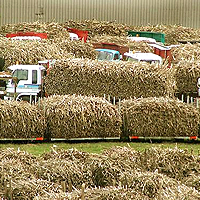
The Fiji Sugar Corporation believes cane farmers who are descendants of the Girmit system still make huge contributions to the sugar industry.
FSC Chairman Abdul Khan says like the past, these people play an important role.
The largest Hindu organisation in the country has also stressed that people whose fore-fathers came as indentured labourers from India should continue to work hard for the progress of our country.
National President of the Shree Sanatan Dharam Pratinidhi Sabha Sarju Prasad said people have a very strong future in Fiji.
On this day, 134 years ago, the first group of indentured labourers arrived in Fiji from India to work in the sugar cane plantations.
This boosted Fiji's earnings for a long time as the sugar industry was the top income earner for the country.
The first indentured labourers arrive in Fiji aboard the Leonidas.
The ship set sail in Calcutta on March 3rd and arrived in Fiji on May 14th, with 373 male and 149 female labourers.
17 labourers succumbed to various diseases.
A tragic incident occurred in 1884 when the fifth emigrant ship to Fiji, Syria was wrecked on the Nasilai reef, off Nausori on May 11th killing fifty six Indian immigrants and three sailors.
In 1916, the indenture system was officially abolished by Britain.
The contracts of the indentured labourers, which they called Girmit or agreements, required them to work in Fiji for a certain period of time as specified in their agreements.
After 5 years of Girmit they were free to return to India at their own expense. After 10 years of girmit, the colonial government was compelled to provide free passage back to India to every Girmitiyas and their children.
In the case of Fiji, 25,000 Girmitiyas returned to India, many even before 5 years of indenture.
However, the majority of the remaining 35,000 Fiji Girmitiyas remained in Fiji and continued to work in the industry as they did not want to return to India.