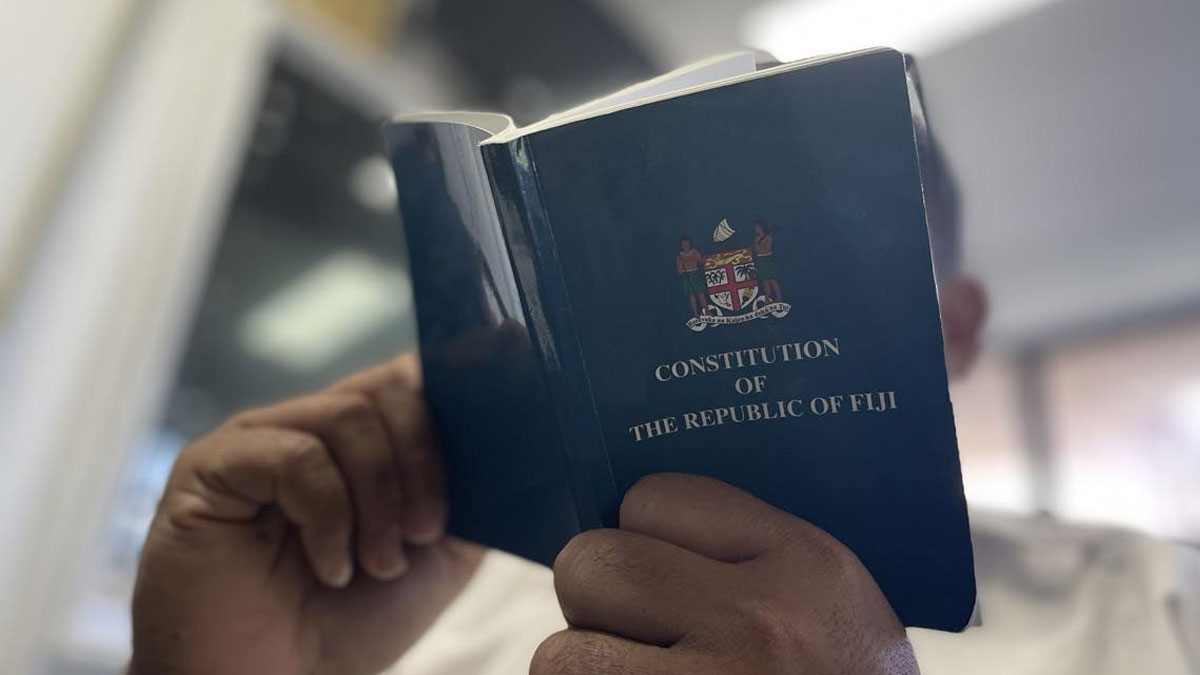
Click here to find the Constitution Review Commission report.
Constitution Review Commission Report made publicBy Rashika Kumar, Vijay Narayan 22/09/2026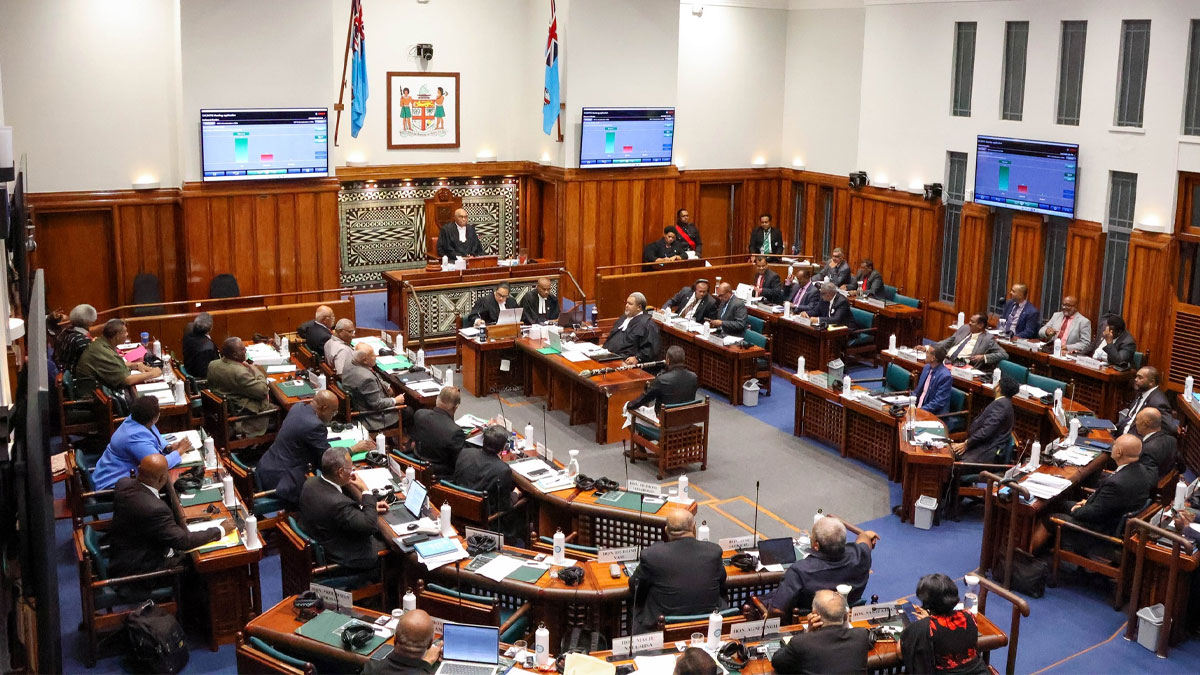
The Constitution Review Commission Report has been tabled during a special sitting of Parliament.
Cabinet has said the tabling of the report does not constitute acceptance or adoption of all the Commission’s recommendations.
Meanwhile, Speaker of Parliament Filimone Jitoko says the report is tabled for information only and will not be referred to any Parliamentary Committee.
He also paid tribute to the late Minister for Employment, Agni Deo Singh, who passed away earlier this month.
The Parliament also held a moment of silence to honour the late Minister.
Click here to find the Constitution Review Commission report.
More to follow.
The Constitution Review Commission Report has been tabled during a special sitting of Parliament.
Cabinet has said the tabling of the report does not constitute acceptance or adoption of all the Commission’s recommendations.
Meanwhile, Speaker of Parliament Filimone Jitoko says the report is tabled for information only and will not be referred to any Parliamentary Committee.
He also paid tribute to the late Minister for Employment, Agni Deo Singh, who passed away earlier this month.
The Parliament also held a moment of silence to honour the late Minister.
Click here to find the Constitution Review Commission report.
More to follow.
Religious freedom guaranteed, all citizens of Fiji shall continue to be known as Fijians until consensus is reachedBy Vijay Narayan 22/09/2026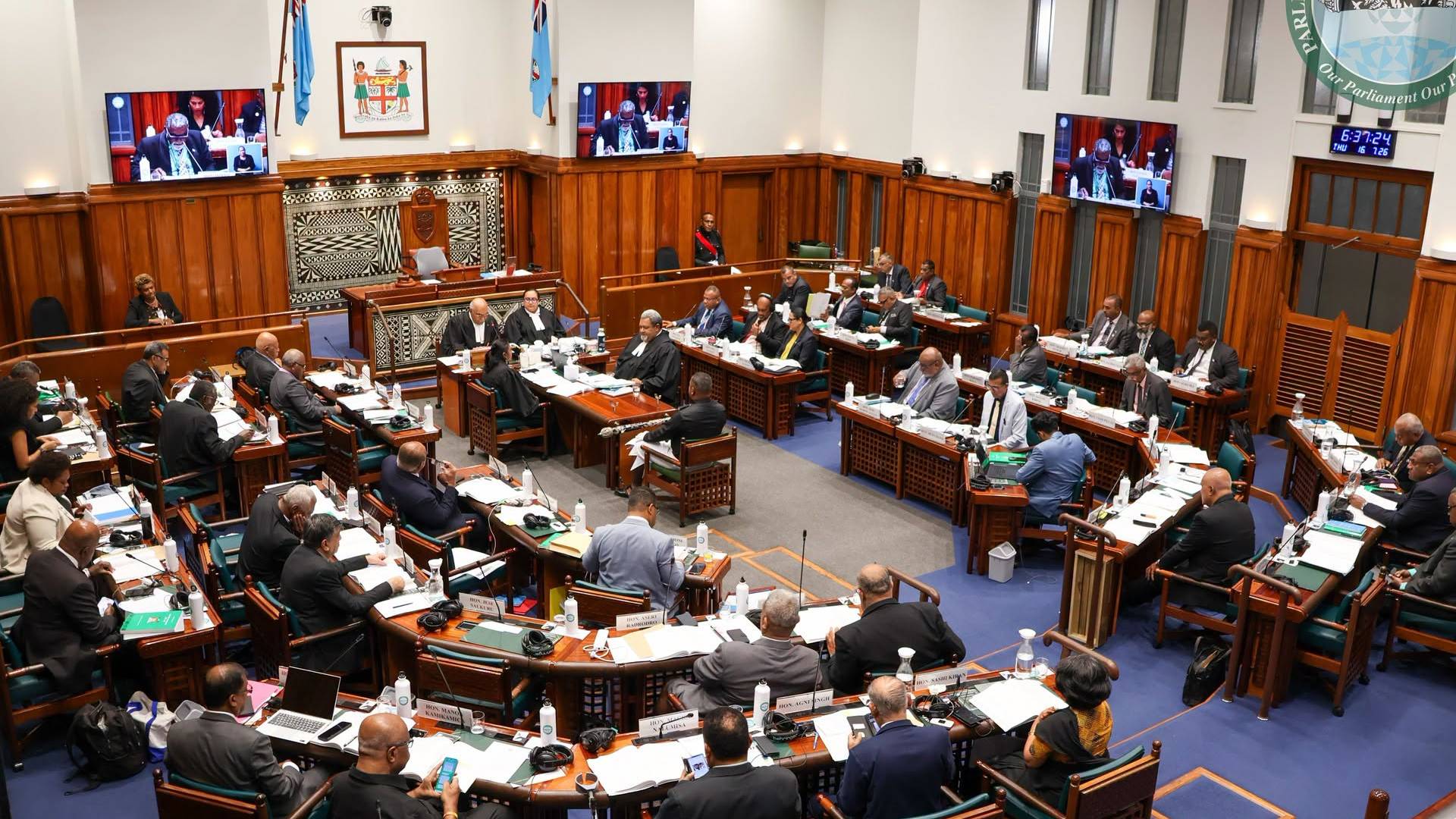 The Draft Constitution which is part of the Constitution Review Commission Report states that all citizens of Fiji shall continue to be known as Fijians until consensus has been reached or a final decision made in accordance with the process set out and any written law.
It recommends that during an initial interim period of a maximum of 12 months a broad-based and culturally appropriate consultative process shall be conducted with all Fiji‘s communities in relation to the use of the term Fijian to refer to all citizens of Fiji.
The Draft says if, at the end of the interim period, national consensus has not been achieved on the question of the most appropriate term for the national identity of citizens of Fiji, a referendum shall be conducted within 12 months to determine the majority view of the citizens of Fiji on the most appropriate common term by which citizens of Fiji should be known.
Parliament shall enact written law providing for the conduct of the consultation process and, if necessary, the method for determining a majority view.
The Draft Constitution states that the Republic of Fiji is a sovereign democratic State founded on the values of common and equal citizenry and national unity; respect for human rights, freedom and the rule of law; an independent, impartial, competent and accessible system of justice; equality for all and care for the less fortunate based on the values in the Bill of Rights; human dignity, respect for the individual, personal integrity and responsibility, civic involvement and mutual support; good governance, including the limitation and separation of powers; transparency and accountability; and a prudent, efficient and sustainable relationship with nature.
Religious freedom is guaranteed as it says that the State and all persons holding public office must treat all religions equally; the State and all persons holding public office must not dictate any religious belief; the State and all persons holding public office must not prefer or advance, by any means, any particular religion, religious denomination, religious belief, or religious practice over another, or over any non religious belief; no person shall assert any religious belief as a legal reason to disregard the Constitution or any other law; and no person shall impose any religious practices or control over another other than in accordance with law.
Citizens of Fiji may also hold multiple citizenship, which means that upon accepting the citizenship of a foreign country, a person remains a citizen of Fiji unless he or she renounces that status; a former citizen of Fiji, who lost that citizenship upon acquiring foreign citizenship, may regain citizenship of Fiji, while retaining that foreign citizenship unless the laws of that foreign country provide otherwise; andupon becoming a citizen of Fiji, a foreign person may retain his or her existing citizenship unless the laws of that foreign country provide otherwise.
Commission recommends two-term limit for PM, removal of coup immunity and 60-seat ParliamentBy Rashika Kumar 22/09/2026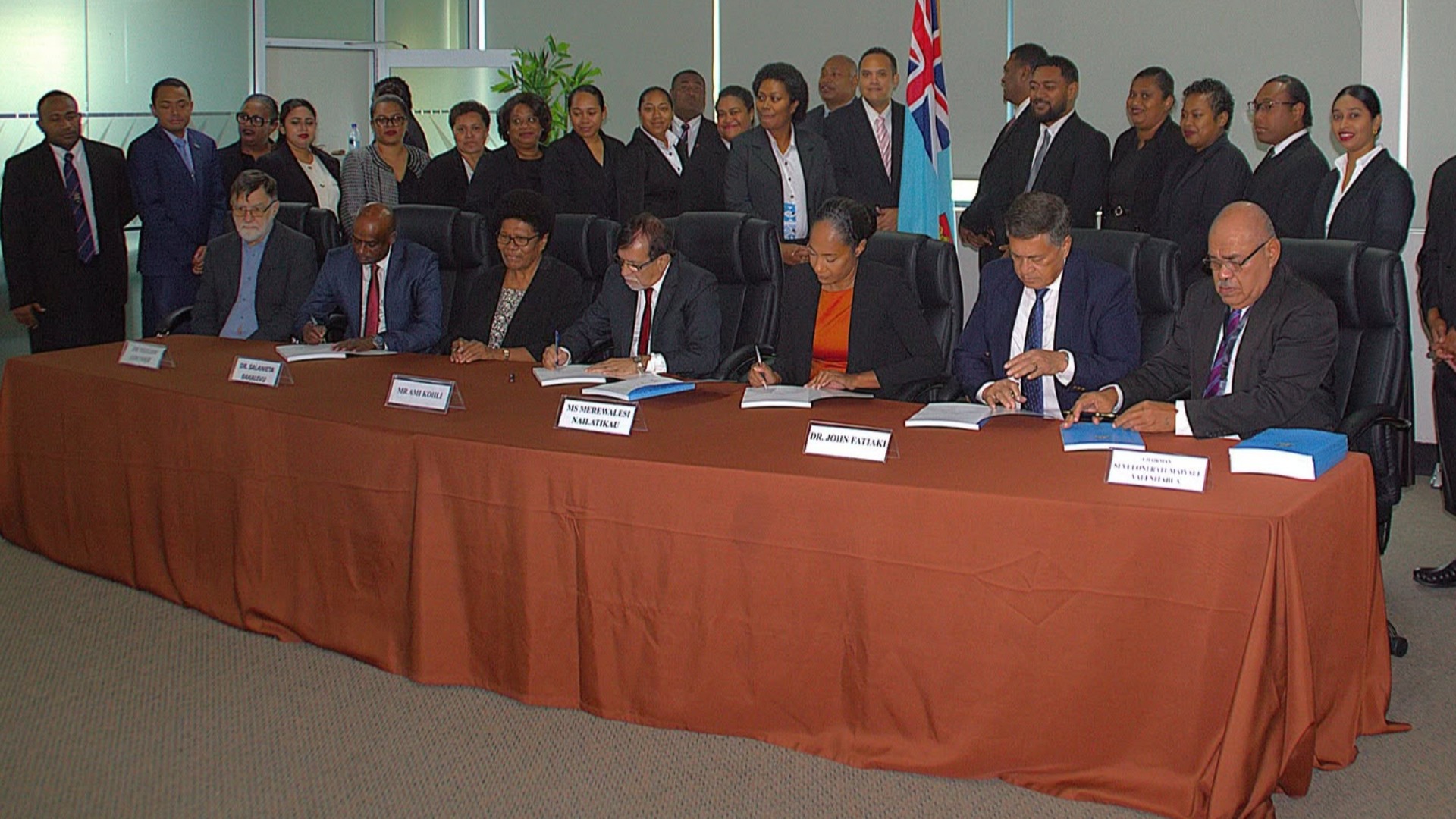 The Constitution Review Commission is recommending the removal of coup-related immunity, a 60-seat Parliament, changes to the constitutional role of the military to focus on external defence, and the Prime Minister to only serve two terms in Government and Cabinet to have 15 members.
The Commission’s recommendations include repealing Chapter 10 of the 2013 Constitution, which provides immunity from criminal, civil and professional liability for certain past actions.
The Commission recommends that the Government could seek another Supreme Court determination on whether Section 159 can be repealed, particularly in relation to the permanent entrenchment of the immunity and preservation provisions.
If the immunity and preservation provisions remain, the Commission recommends an adapted Oath of Reconciliation and Allegiance for immunity beneficiaries, drawing on the Ghai Commission draft, as a harm-reduction measure.
The Commission also recommends prohibiting any future immunity for a person in relation to actions taken or omitted in furtherance of an attempt to establish a government other than in compliance with the Constitution.
It proposes amendments to establish that any such attempt is unlawful and cannot be protected by immunity.
The Commission further recommends changes to FICAC by separating its investigative and prosecutorial powers.
Under the proposal, FICAC would have investigative powers only, while the authority to prosecute would rest exclusively with the Director of Public Prosecutions.
The FICAC Commissioner would be appointed by the Judicial Services Commission.
The Commission proposes that State-related corruption and maladministration could be investigated by the Ombudsman, while FICAC would investigate non-State corruption and maladministration.
The Commission also recommends amendments to the constitutional role of the military, to affirm the primacy of democratic civilian authority and clarify that the military’s focus is external defence.
Any military assistance to civil authorities, including during natural disasters or emergencies, would be subject to written law and confirmation by Parliament.
The Commission further proposes clarifying birthright citizenship by requiring at least one parent to be a citizen or permanent resident, while permanent residency would also serve as a pathway to citizenship.
The Commission also recommends recognising Rotumans as an indigenous community of Fiji through a separate constitutional chapter on Rotuma.
They recommend constitutionally establishing a seven-member Presidential Appointment Commission to appoint the President.
The proposed commission would comprise the Prime Minister, Leader of the Opposition, three representatives from the Boselevu Vakaturaga, one representative from the Fiji Council of Churches and one representative from interfaith religions.
They would also have to be free from political party office or candidacy for at least eight years, equivalent to two parliamentary terms.
The Speaker of Parliament would serve as Acting President if the President is absent or the office is vacant, with a two-term limit for the President and each term lasting three years.
The Prime Minister would also be limited to two terms, with each term lasting four years.
Cabinet would comprise 15 members, including the Prime Minister and up to 14 Ministers.
Under the bicameral Parliament, the Attorney-General could be appointed from either the Lower or Upper House, but would not have voting powers when appearing in a House of which they are not a member.
The Commission recommends that responsibility for providing independent legal advice to the Government be vested in the Solicitor-General as a civil servant, while the Attorney-General would serve in a ministerial role overseeing matters of justice.
The Commission recommends vesting legislative authority in a bicameral Parliament comprising a House of Representatives and a Senate.
The Commission proposes a smaller 60-seat Parliament, comprising 41 members in the House of Representatives and 19 members in the Senate.
It recommends introducing a Mixed Member Proportional electoral system, combining 26 constituency-based first-past-the-post seats and 15 proportional party-list seats.
Under the proposal, constituency seats would account for 63 percent of the seats and proportional party-list seats for 37 percent.
The Commission recommends reducing partisan appointments to the Senate by reducing political appointments and nominations from the Prime Minister and Leader of the Opposition, including the BLV.
It also recommends that Senate appointees be non-partisan, respected individuals drawn from across Fiji society and reflect the country’s diversity, including women and youth.
An independent Constituency Boundaries Commission would be established to consider whether boundaries need to be redrawn after every census.
The Commission also recommends merging the offices of the Supervisor of Elections and the Electoral Commission into a single structure.
Under the proposed structure, the Supervisor of Elections would serve as Chief Executive Officer and report to a five-member Electoral Commission, with the Supervisor serving as an ex officio, non-voting member.
The combined Electoral Commission, rather than the Supervisor alone, would have authority to register, suspend or deregister political parties, while registry and polling functions would remain separate.
The Commission recommends introducing constitutional provisions for a caretaker government.
It also proposes making election dates more predictable by specifying the term of Parliament and restricting major changes to electoral laws within nine months before the end of a parliamentary term.
The Speaker’s role would be reaffirmed, including providing that the Speaker acts as President when the President is absent, as was the case under the 1997 Constitution.
A President and Vice-President of the Senate would be elected from within the Senate.
The Commission recommends replacing the Parliamentary Emoluments Committee with an independent Salaries and Benefits Commission, to be chaired by the Chair of the Public Service Commission.
The Commission also recommends recognising English, iTaukei, Rotuman, Hindi and sign language as official languages of Parliament.
Kamikamica says six-month Constitution Review process was adequateBy Mansi Chand 22/09/2026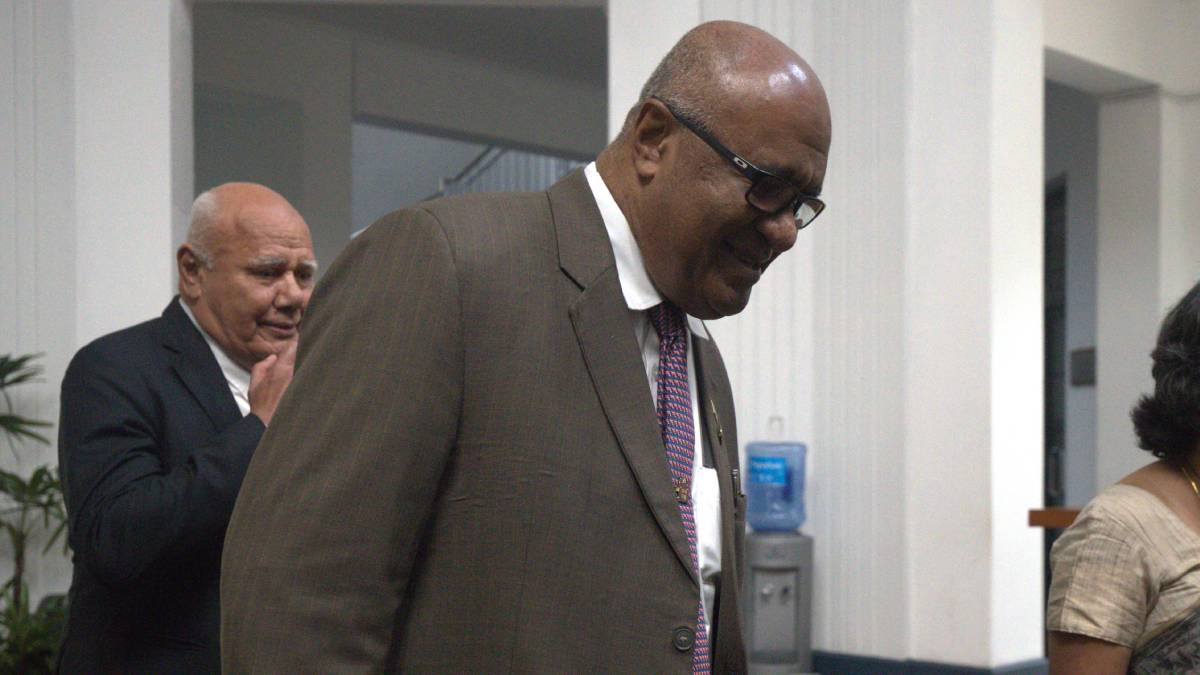 Deputy Prime Minister Manoa Kamikamica says he believes the six-month process to review Fiji’s Constitution has been adequate, while the Government prepares for the next stage of the process.
Kamikamica says Prime Minister Sitiveni Rabuka has been on record saying the next general election will be held within the constitutional period.
He says Cabinet is meeting today, after which there could be announcements on what needs to be done.
Kamikamica says the current Constitution is an evolution of Fiji’s previous constitutional documents, including the 1970 and 1990 Constitutions, the 1997 Constitution, the Yash Ghai report and the 2013 Constitution.
He says Fiji now needs to allow a new process to begin.
Insert: Kamikamica on due process 22nd Sept
He says the Government now has the numbers in Parliament to move the process forward, while recognising that a new process needs to be followed.
According to Kamikamica, there will be about 30 days of consultation with the people of Fiji before the process moves forward.
On the possibility of a referendum being a challenge, Kamikamica says he believes it should be a fairly straightforward process, but this will be determined by the Electoral Commission.
He adds that Fiji should be excited because this will be the first time the people of Fiji will vote on the Constitution.
Next constitution must be acceptable, reached through transparent and accountable process – Prof. PrasadBy Alipate Narawa 23/09/2026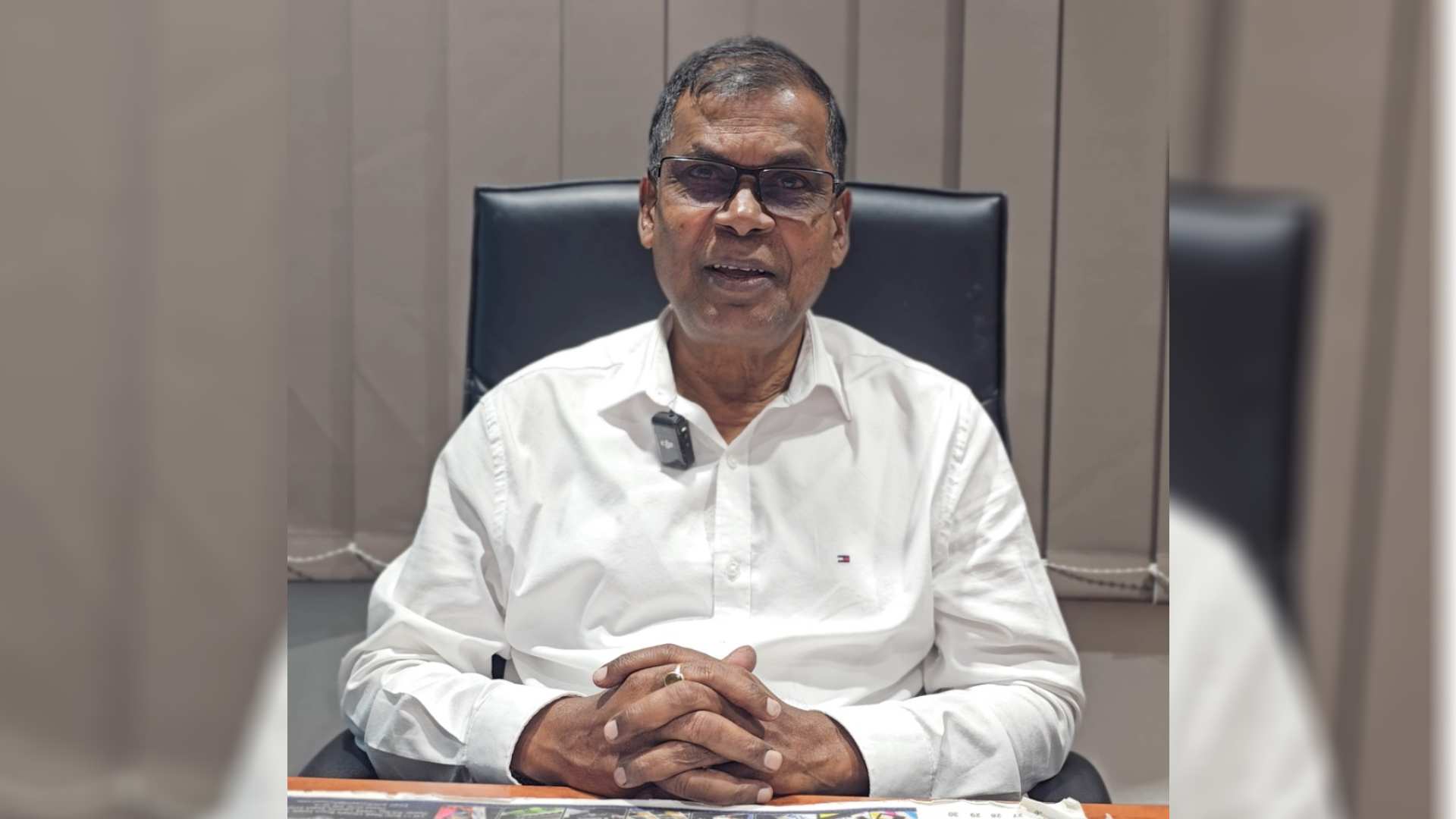 We do not want the next constitution, the fifth constitution of this country, to be one that is unacceptable, or one that has been arrived at through a process that is neither transparent nor accountable.
Former Deputy Prime Minister and National Federation Party Leader Professor Biman Prasad stated this to fijivillage News.
He says now that the Constitution Review Commission has completed its work and its report has been presented to Parliament, the next step would be the establishment of a joint parliamentary committee.
Professor Prasad says the joint parliamentary committee would then consider the draft amendment bill, which he describes as a new constitution, followed by further consultation and discussion.
Insert: Prof Prasad simple Sep 22
He says everyone knows that the 1990 Constitution was imposed.
The NFP Leader says it was later amended through negotiations, and the NFP played a very important role in that process.
He says that Constitution was thrown out following the 2006 coup led by former Prime Minister Voreqe Bainimarama, before the 2013 Constitution was imposed.
PM believes Government has numbers for proposed constitutional changesBy Karishma Kumari 23/09/2026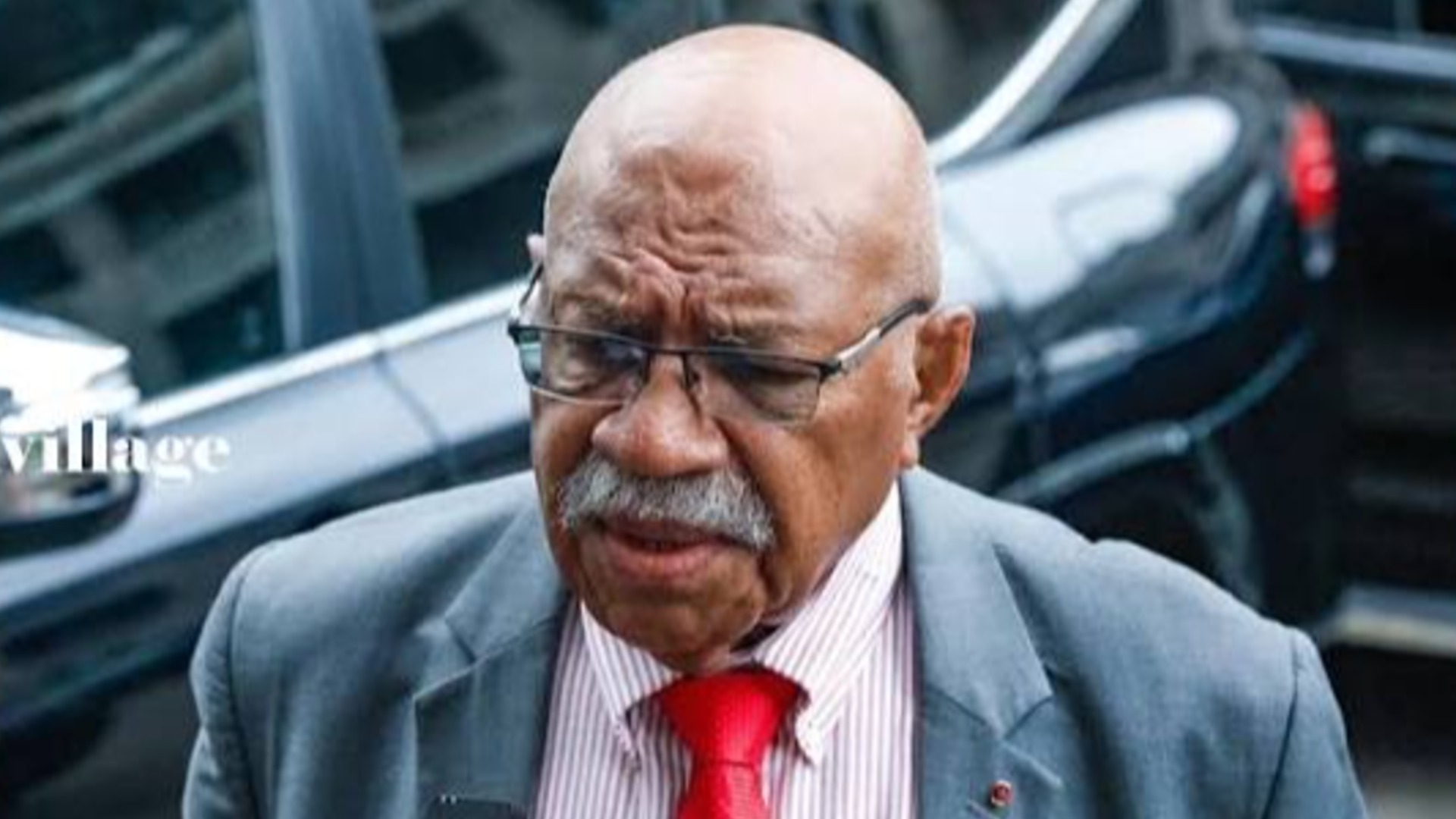
Prime Minister Sitiveni Rabuka believes the Government currently has the numbers required to secure the two-third parliamentary support needed for proposed constitutional changes.
While responding to fijivillage News on whether he is confident in securing two-thirds support for a bill to amend the Constitution, Rabuka said, “At the moment, yes.”
When asked on the proposed constitutional amendment that would limit a Prime Minister to two terms, and would rule him out from serving as Prime Minister after the next elections, Rabuka says the Bill will be debated and voted on again.Â
Rabuka also clarified that the recommendations made by the Constitution Review Commission Report are not the final proposed amendments that will go before Parliament.
He says a Cabinet sub-committee has been deliberating on the CRC’s proposed amendments over the past two weeks and making changes.
The Prime Minister says those changes will be the ones that make their way to Parliament.
However, when questioned on whether there would be enough time to prepare for and hold the next general elections under a new Constitution if the proposed changes come into effect by December 24th, Rabuka, says if the Constitution is changed, transition provisions will determine which Constitution or electoral law the election will be held under.
When asked why the constitutional changes were being pursued now rather than during the Government’s first or second year in office, Rabuka says an attempt was made in the second year but it was defeated in Parliament.
He says the matter was then referred to the Supreme Court and the process has continued.
Rabuka also rejected suggestions that the constitutional review process is being rushed.
He says he and the leadership of the National Federation Party have been talking about changing the Constitution since after 2013.
Click here to find the Constitution Review Commission report.
Prime Minister Sitiveni Rabuka believes the Government currently has the numbers required to secure the two-third parliamentary support needed for proposed constitutional changes.
While responding to fijivillage News on whether he is confident in securing two-thirds support for a bill to amend the Constitution, Rabuka said, “At the moment, yes.”
When asked on the proposed constitutional amendment that would limit a Prime Minister to two terms, and would rule him out from serving as Prime Minister after the next elections, Rabuka says the Bill will be debated and voted on again.Â
Rabuka also clarified that the recommendations made by the Constitution Review Commission Report are not the final proposed amendments that will go before Parliament.
He says a Cabinet sub-committee has been deliberating on the CRC’s proposed amendments over the past two weeks and making changes.
The Prime Minister says those changes will be the ones that make their way to Parliament.
However, when questioned on whether there would be enough time to prepare for and hold the next general elections under a new Constitution if the proposed changes come into effect by December 24th, Rabuka, says if the Constitution is changed, transition provisions will determine which Constitution or electoral law the election will be held under.
When asked why the constitutional changes were being pursued now rather than during the Government’s first or second year in office, Rabuka says an attempt was made in the second year but it was defeated in Parliament.
He says the matter was then referred to the Supreme Court and the process has continued.
Rabuka also rejected suggestions that the constitutional review process is being rushed.
He says he and the leadership of the National Federation Party have been talking about changing the Constitution since after 2013.
Click here to find the Constitution Review Commission report.
Centre calls for deeper scrutiny of proposed electoral system in CRC reportBy Rashika Kumar 23/09/2026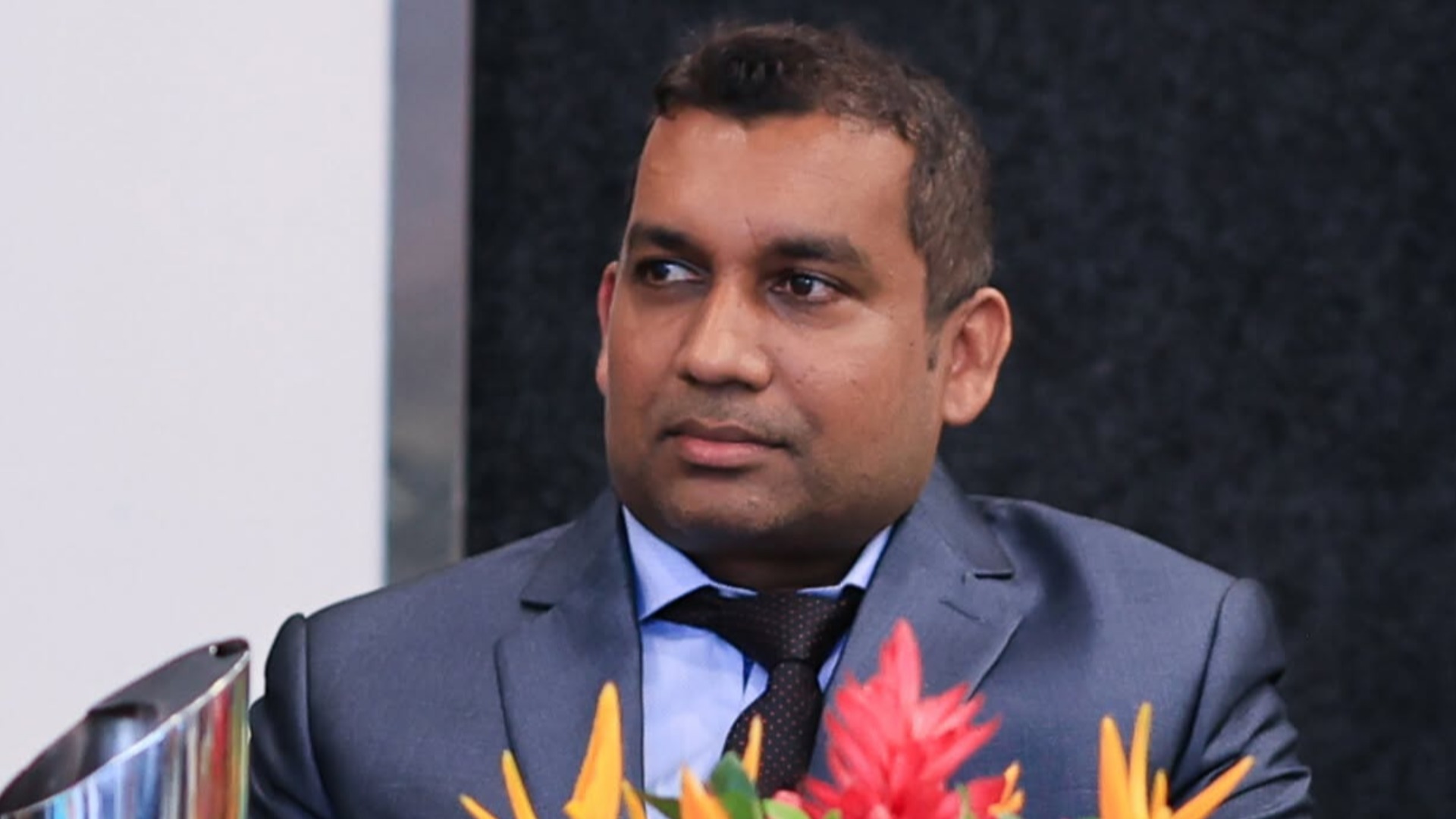 We need to ask very carefully whether a country that currently has a fully elected national legislature should move backwards to a system in which a substantial part of Parliament is not directly elected by citizens.
Following the tabling of the Constitution Review Commission's report, which includes the draft Constitution, the Centre for Democracy and Dialogue is calling for deeper public scrutiny of several proposed changes.
Centre CEO Nilesh Lal says the organisation’s preliminary assessment is that the draft contains many significant and welcome constitutional reforms, addressing many longstanding weaknesses in the 2013 Constitution, particularly the concentration of executive power and weaknesses in institutional independence and accountability.
He says Dialogue Fiji made 22 substantive proposals in its submission to the Commission and their preliminary analysis finds that around 17 of those 22 proposals are reflected to some degree in the draft Constitution, including 12 that are substantially or fully reflected.
Lal says this is significant as many of the reforms they advocated were aimed at dispersing concentrated power, strengthening independent institutions and improving democratic accountability.
The CEO says the draft substantially reflects Dialogue Fiji's proposals to depoliticise constitutional appointments, strengthen the independence of the Public Service Commission, cap Cabinet at 15 members, limit a Prime Minister to two terms, strengthen the Bill of Rights and the test for limiting rights, strengthen access to information, strengthen judicial independence, constitutionally entrench the Public Accounts Committee with an Opposition chair, retain the four-year parliamentary term, restrict the use of expedited legislation, retain secularism and equal citizenship, and strengthen constitutional recognition of local government.
He says these are substantial constitutional improvements and the Centre believes they should be acknowledged and preserved.
However, Lal says their preliminary review has also identified a small number of potentially fundamental flaws and democratic regressions that require much closer scrutiny.
He says one of the most regressive elements is the proposed move away from the current proportional representation of electoral system to a mixed-member proportional system, when the overwhelming evidence globally shows that proportional representation systems are more representative and fair, and highly desirable for ethnically divided societies.
The Centre CEO says the proposed system is dominated by 26 first-past-the-post constituency seats and only 15 compensatory list seats.
He says the Commission describes its proposal as mixed-member proportional system, but the design is heavily majoritarian in effect.
He says the Centre has serious reservations about replacing Fiji’s existing national proportional representation system with a model in which almost two-thirds of elected seats would come from single-member constituencies.
Lal says this would represent a significant change in the way votes are translated into representation and warrants much deeper scrutiny, particularly in a multi-ethnic society with a history of exclusionary governance such as Fiji.
He says they are also concerned about the proposed reintroduction of unelected elements into the legislature through a 19-member Senate containing members appointed by political and traditional institutions.
They also consider the proposed reopening of the divisive debate about the common national identity of “Fijian” to be a significant concern.
Lal says their submission strongly supported retaining ‘Fijian’ permanently as the common civic identity of all citizens while fully protecting the distinct indigenous identity of the iTaukei people and the identities of all other communities.
He stresses reopening the common national identity risks weakening the important principle of common and equal citizenship.
Lal says the Centre would also closely examine provisions that give constitutionally entrenched political and legislative roles to traditional or ethnically defined institutions.
He says recognition and protection of indigenous rights, culture, land and traditional institutions are entirely compatible with equal citizenship.
The CEO says the question is whether those protections require unelected institutions to exercise substantial authority within the national political system.
He says its full assessment will distinguish between provisions that strengthen constitutional democracy, proposals that involve legitimate policy trade-offs, and provisions that it considers potentially regressive or harmful.
Lal says the Commission has produced a substantial body of work and many of its recommendations deserve careful consideration, but constitutional reform cannot be approached as an all-or-nothing package.
He adds that we should preserve the reforms that strengthen rights, accountability and institutional independence, while subjecting the provisions that alter electoral representation, the composition of Parliament, national identity and the role of unelected institutions to much deeper public scrutiny.
Meanwhile, Prime Minister Sitiveni Rabuka says the recommendations in the report are not the final proposed amendments that will go before Parliament.
He says a Cabinet sub-committee has been deliberating on the Commission's proposed amendments over the past two weeks and making changes.
The Prime Minister says those changes will be the ones that make their way to Parliament.
Meanwhile, Prime Minister Sitiveni Rabuka says the recommendations in the report are not the final proposed amendments that will go before Parliament.
Rabuka confirms Feb 6th 2027 election deadline remains unchangedBy Vijay Narayan, Rashika Kumar 23/09/2026
Prime Minister Sitiveni Rabuka says the Government remains committed to holding the next general elections by 6th February next year, with no legal basis for a one-year extension.
While responding to questions by fijivillage News in Savusavu, Rabuka confirms there have been suggestions to extend the deadline for the elections, but it is outside the law.
When questioned about concerns that the constitution process is being rushed, Rabuka says they started talking about the constitution in 2013, when it was decreed into being.
He says everybody were talking about it, and everybody who had spoken about it should have come forward during the consultation.
Rabuka adds the result of the consultation is what they are now taking through Parliament.
He also says that the recommendations in the Constitution Review Commission's report are not the final proposed amendments that will go before Parliament.
He says a Cabinet sub-committee has been deliberating on the Commission's proposed amendments over the past two weeks and making changes.
The Prime Minister says those changes will be the ones that make their way to Parliament.
Click here to find the Constitution Review Commission report.
Prime Minister Sitiveni Rabuka says the Government remains committed to holding the next general elections by 6th February next year, with no legal basis for a one-year extension.
While responding to questions by fijivillage News in Savusavu, Rabuka confirms there have been suggestions to extend the deadline for the elections, but it is outside the law.
When questioned about concerns that the constitution process is being rushed, Rabuka says they started talking about the constitution in 2013, when it was decreed into being.
He says everybody were talking about it, and everybody who had spoken about it should have come forward during the consultation.
Rabuka adds the result of the consultation is what they are now taking through Parliament.
He also says that the recommendations in the Constitution Review Commission's report are not the final proposed amendments that will go before Parliament.
He says a Cabinet sub-committee has been deliberating on the Commission's proposed amendments over the past two weeks and making changes.
The Prime Minister says those changes will be the ones that make their way to Parliament.
Click here to find the Constitution Review Commission report.
