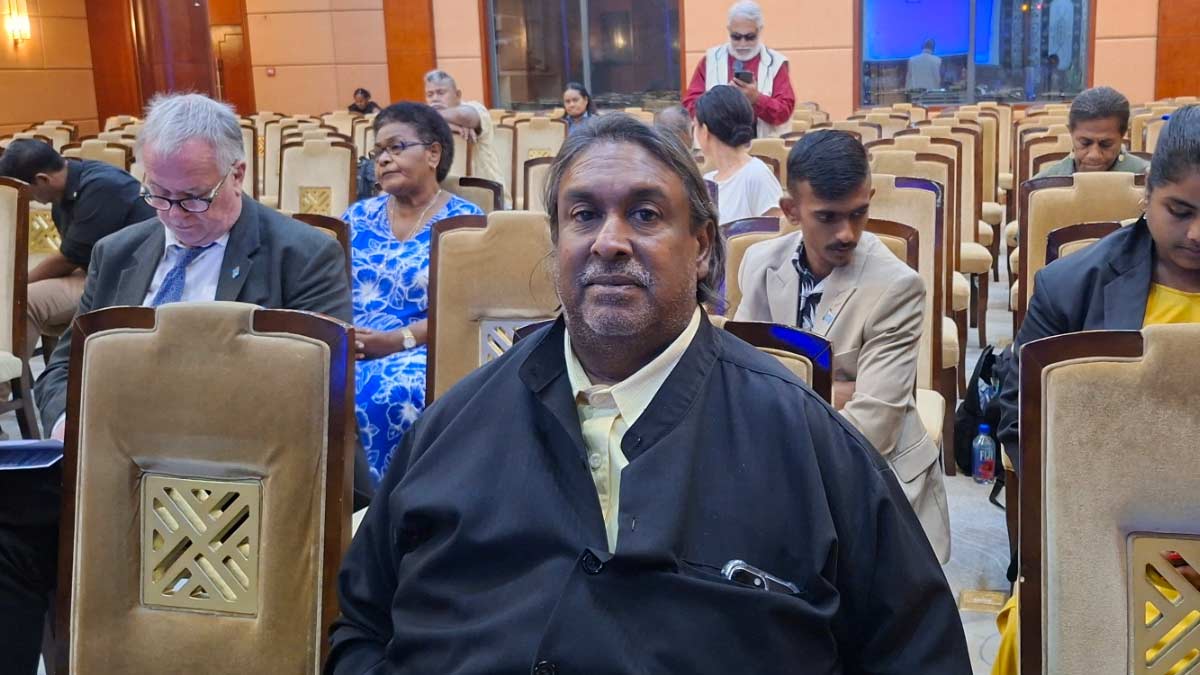
Retired school teacher and Nabua Crime Prevention Committee member Ashish Prasad has called for stronger community involvement, guaranteed anonymity for informants on drug related activities, and strict response timelines in his submission during the public consultation on the Counter Narcotics Bill at the Suva Civic Centre.
Prasad says his submission was based on daily frontline experience, noting that the Nabua Crime Prevention Committee covers a large area and deals with crime-related information every day.
He says many of the concerns raised came directly from residents, youths, and non-government organisations who regularly engage with the committee.
Prasad says a major concern was the lack of confidence in existing reporting systems, with people reluctant to report drug-related crime if their phone numbers or identities could be traced.
He says reporting lines must have no caller ID, and only then would people come forward, adding that attempts to contact the emergency line 919 had gone unanswered on several occasions.
The retired school teacher also raised concerns over delays in police action after reports are made, saying residents often wait for days, months, or even years without seeing outcomes.
He says there must be clear timeframes for action, adding that cases dragging on destroy trust and discourage people from reporting.
He further stressed the importance of including community representatives and NGOs in any new Counter-Narcotics Bureau, warning that previous structures had been compromised and lacked independent oversight.
Prasad says frontline people in settlements have access to information that office-based officials do not, and if they are excluded, the system will fail again.
He says many residents do not feel comfortable reporting directly to police and instead approach community leaders or organisations they trust.
He says the Bill must recognise this reality if it is to be effective.
The retired school teacher also called for efforts to rebuild public confidence in law enforcement, saying trust in the police is currently low and needs deliberate improvement through transparency and engagement.
He highlighted the role of businesses in supporting national awareness efforts, saying companies were willing to sponsor billboards and campaigns but require proactive engagement from authorities.
He says funding is waiting, and the police must go to businesses rather than wait for them to come.
Prasad also urged greater use of positive role models, social media, and technology such as CCTV.
He says several community-led social media initiatives had reached hundreds of thousands of viewers and assisted police in identifying suspects within minutes.
He adds that people are watching and engaging, and that social media and CCTV are effective tools that must be used properly.
Prasad says the success of the Counter Narcotics Bill would depend on anonymity, rapid response, community trust, independent oversight, and modern communication.
He says if people trust the system, they will report, and when they report, crime will reduce.
Cabinet endorsed Fiji’s Counter Narcotics Strategy 2023–2028 on June 4th 2024, which recognises that drugs are no longer just a police issue; they are a national security, public health, and social stability issue.
As part of that strategy, the Government has established the Counter Narcotics Bureau and is developing a new Counter Narcotics Bill to give the Bureau its full legal powers and responsibilities.
Consultations will continue today at the Lami Parish Hall from 2pm to 4.30pm and at the Nasinu Police Post from 5pm to 6pm.

Stay tuned for the latest news on our radio stations