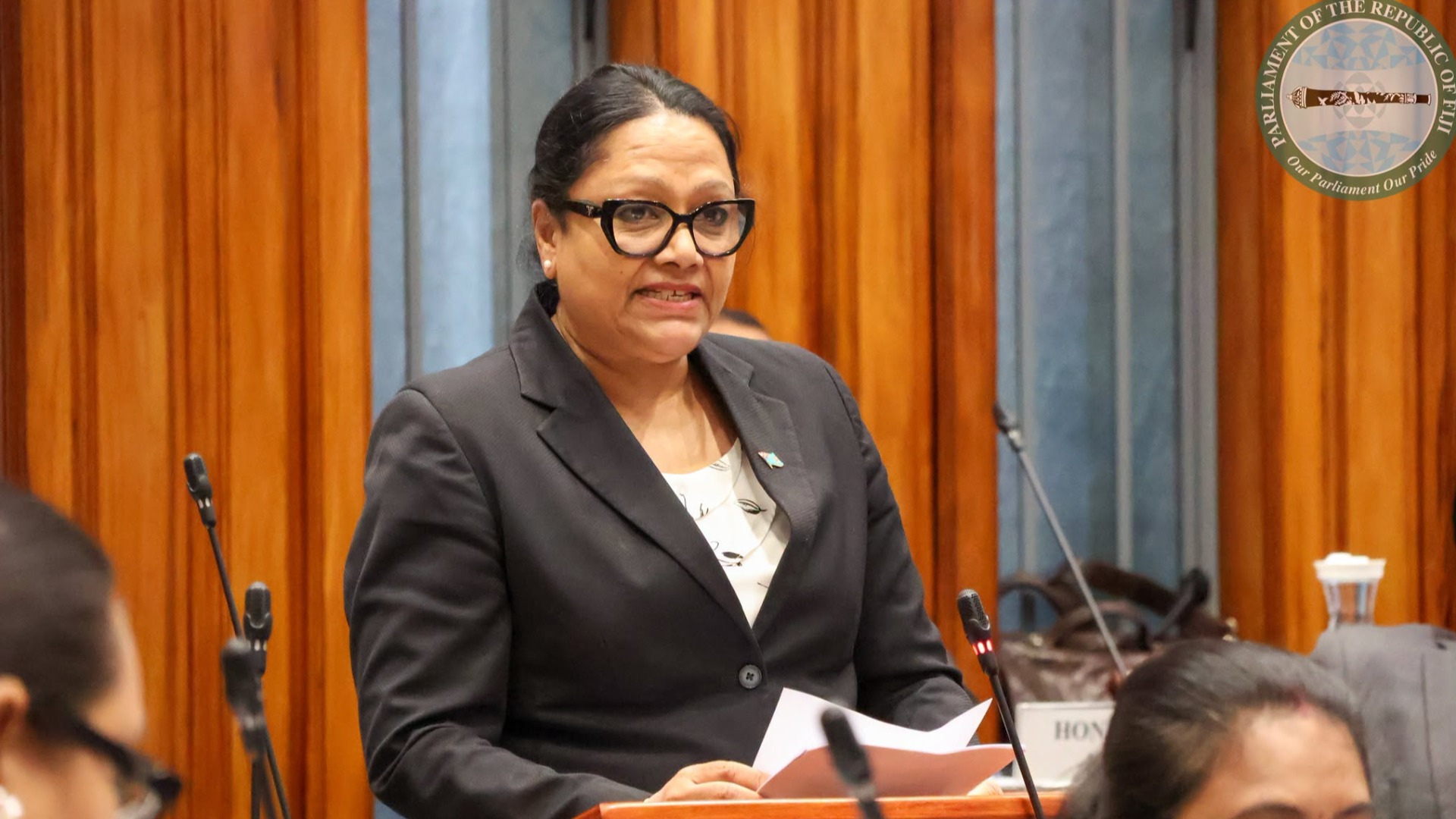
Opposition Member of Parliament Premila Kumar has criticised the 2026-2027 National Budget, claiming the Government’s fiscal strategy has resulted in rising debt, higher interest costs and slower economic growth.
Speaking during the 2026/2027 National Budget debate in Parliament, Kumar says the Budget cannot be considered “responsible” based on its financial figures, despite being labelled a “responsible budget for a sustainable future” by the Minister for Finance Esrom Immanuel.
Insert: Kumar - this budget is irresponsible July 13
She questioned the Government’s decision to increase borrowing while allocating a larger share of expenditure towards operational costs rather than capital investment.
Kumar says the projected budget deficit of 7 percent of GDP for the 2026-2027 financial year raised concerns, noting that the figure had previously been projected at 4 percent before being revised to 5 percent.
Kumar also raised concerns about public debt, saying the Government was projected to add around $3.4 billion to Fiji’s national debt by the end of its term.
She says debt servicing costs had increased significantly, reaching $1.481 billion compared with $743.5 million in the 2022-2023 financial year.
She criticised the allocation of government expenditure, saying 82 percent was directed towards salaries, wages, utilities and the day-to-day running of government, while only 18 percent was allocated for capital investment.
Kumar says this limited the Government’s ability to deliver essential infrastructure such as schools, roads, electricity and bridges.
She also questioned the Government’s economic growth projections, saying growth had slowed despite repeated claims of an $8.9 billion investment pipeline.
Kumar says the Government must explain why promised investments had not translated into stronger economic performance after more than three years in office.
She further criticised the expansion of the public service, saying the civil service had grown by 50 percent under the Coalition Government, creating additional pressure on the wage bill.
Kumar also raised concerns over Government policies including the write-off of student debt and the expansion of tertiary scholarships, questioning whether such initiatives were financially sustainable amid increasing public debt.
She acknowledged the work of the Reserve Bank of Fiji and Fiji Revenue and Customs Service in maintaining monetary policy and collecting revenue but said the responsibility for the country’s fiscal position rested with political leadership.
She also challenged the Government’s position on Fiji’s debt-to-GDP ratio, saying a lower ratio did not necessarily mean debt had been reduced.
Kumar says the ratio could decline when economic growth outpaced debt growth, but that did not mean the Government had repaid its borrowings.
