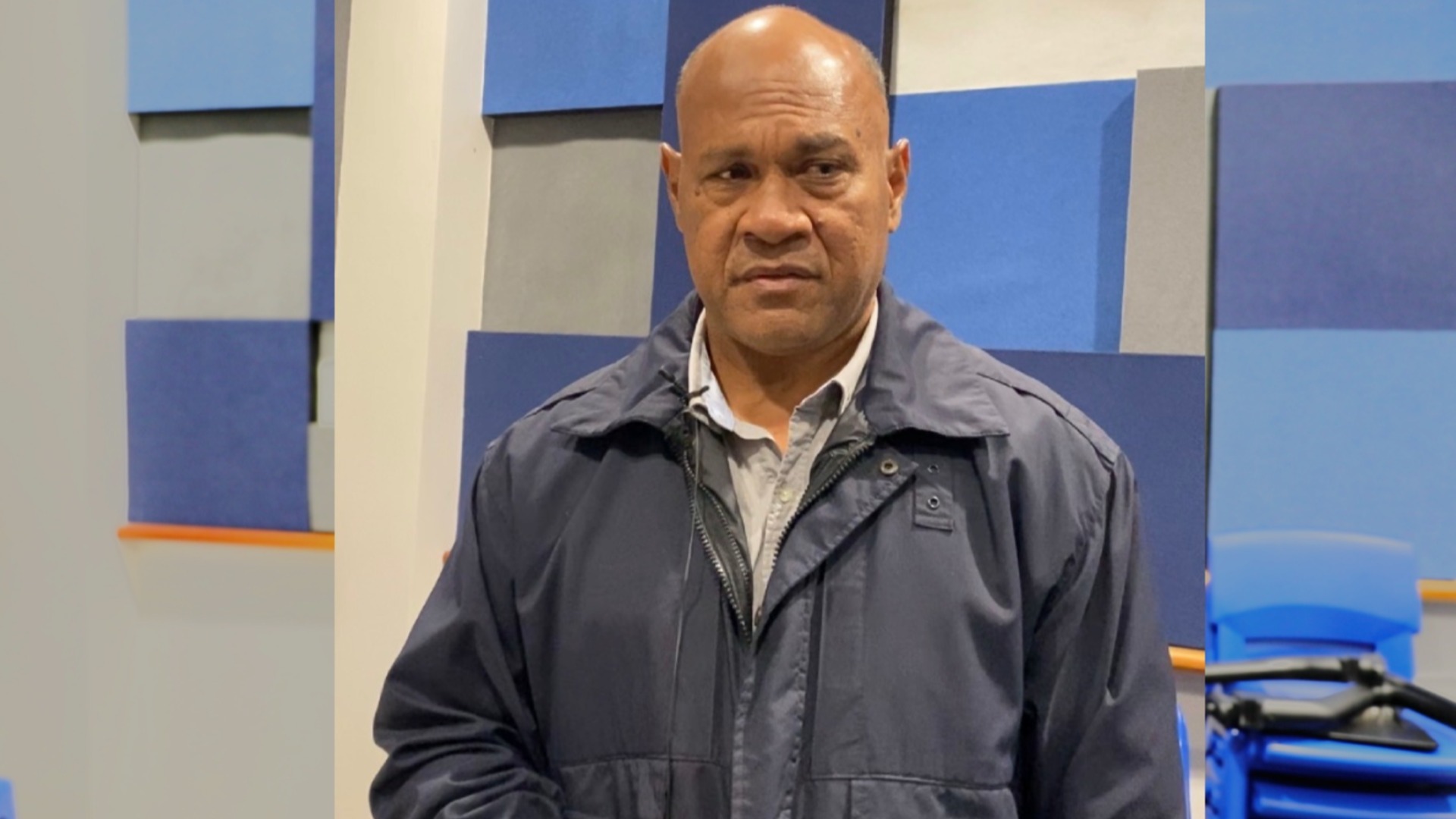
Fiji National University lecturer, Paula Turaga says members of Fiji's disciplinary forces should swear allegiance to the Constitution rather than any individual, while also calling for the appointment of the President to return to the Great Council of Chiefs.
While making submissions to the Constitution Review Commission at FNU's Nasinu Campus, Turaga stressed that Fiji should adopt a system similar to that of the United States, where members of the military pledge allegiance to the Constitution rather than the President.
He says members of the Republic of Fiji Military Forces, Fiji Police Force and Fiji Corrections Service should take an oath to uphold and defend the Constitution.
He says loyalty to the Constitution should be paramount, adding that any coup, overthrow or suspension of an elected government would directly violate that oath.
Turaga also called for the appointment of the President to return to the Great Council of Chiefs, saying the current system has become too political because the governing party can use it's majority in Parliament to appoint its preferred candidate.
He proposed bringing back the Senate, saying it would act as a buffer by reviewing legislation before it becomes law, suggesting that the Senate include representatives appointed by the Great Council of Chiefs, government nominees, Opposition nominees and an independent member.
Turaga also called for the removal of the immunity clause from any future Constitution.
INSERT: Turaga on immunity clause 25th June
During questioning by the Commission, Turaga acknowledged that removing the immunity clause was unlikely under the current Constitution if the proposed amendments failed to gain the required support.
However, he says if a future government decides to replace the Constitution, members of the public should once again push for the immunity clause to be removed during the next round of constitutional consultations.
On the electoral system, Turaga called for the threshold for political parties to be reduced from 5 percent to 2 percent, saying the current requirement disadvantages smaller parties.
He also questioned whether Fiji's one-man, one-vote system is suitable for a country with a population of less than one million.
He proposed a proportional representation system combining constituency and community representation to ensure communities are better represented in Parliament.
The lecturer also raised concerns about drug trafficking, saying Fiji has become a significant transit point in the Pacific for methamphetamine and cocaine trafficked by foreign drug cartels.
He says people working on behalf of international drug syndicates should be classified as terrorists because they act as proxies for overseas criminal organisations that are harming Fiji's young people.
Meanwhile, the Commission responded that the issues raised by Turaga were among those that had already been raised during other consultation sessions.
They say all of his recommendations, along with those made by other members of the public, had been noted.
They also stressed that while only a few submissions were received during this particular consultation session, it was the quality of the submissions, rather than the quantity that mattered.
They add that they would carefully consider the substance of all submissions when deliberating on what should be included in a future Constitution.