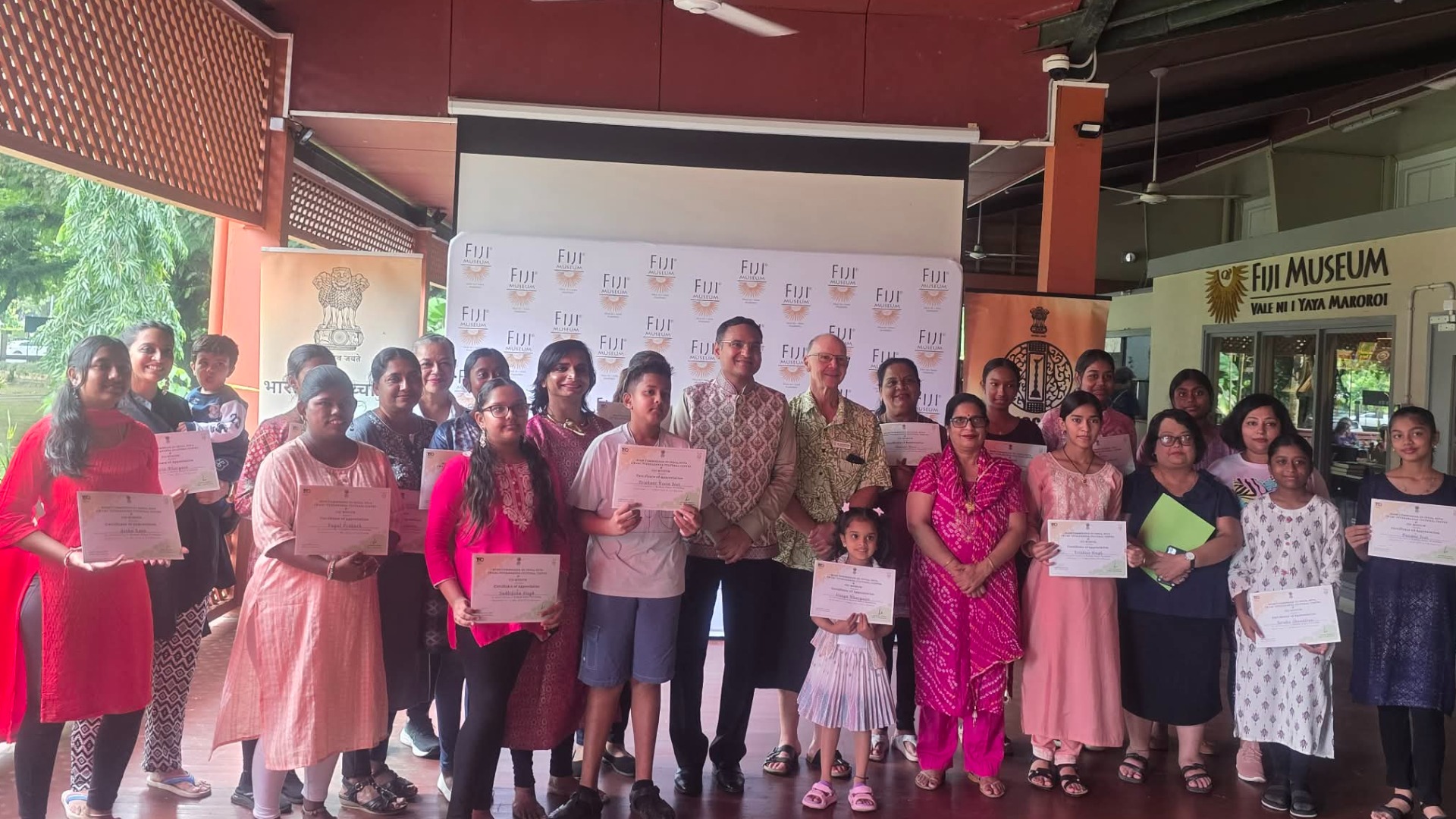
The three-day Kathak Dance Workshop at the Fiji Museum concluded today with participants encouraged to continue engaging in cultural learning and artistic expression.
Speaking at the closing ceremony, Indian High Commissioner Suneet Mehta says the workshop had brought together dance and art enthusiasts in a space filled with rhythm, movement and creative energy.
He says culture was not something preserved only in books or galleries, but something people actively participated in, practised, experienced and passed on to future generations.
Mehta says the workshop, led by Pandit Avijit Chakravarti, the centre’s in-house Kathak teacher and dancer, had provided participants with guidance, discipline and a deeper understanding of the traditional art form.
He says the programme formed part of a wider series of cultural workshops and initiatives that would continue throughout the year, following intensive Kathak workshops held in December last year and January this year.
He says the continued efforts reflected a commitment to providing ongoing learning opportunities rather than one-time experiences.
Mehta stresses Kathak was a classical dance tradition that combined rhythm, grace and storytelling, adding that the dance form had evolved over centuries from the narrative traditions of North India into a refined and expressive art form.
He emphasises participants had been given the opportunity to engage with intricate footwork, graceful movements and emotive expression while gaining both technical insight and an appreciation for Kathak as a medium of artistic communication.
Mr Mehta encourages interested participants to continue their learning journey through regular Kathak classes offered at the Swami Vivekananda Cultural Centre.
Speaking on the relationship between Fiji and India, he stresses the two countries shared close and enduring ties rooted not only in diplomacy but also in people-to-people connections, shared memories, heritage and culture preserved by generations of Indo-Fijians.
Mehta also highlights upcoming cultural activities, including a Madhubani painting workshop at the Fiji Museum and the Girmit commemorations scheduled to take place later this week.
He says cultural traditions remained relevant through active participation in dance, music, language and art, particularly in a changing world.