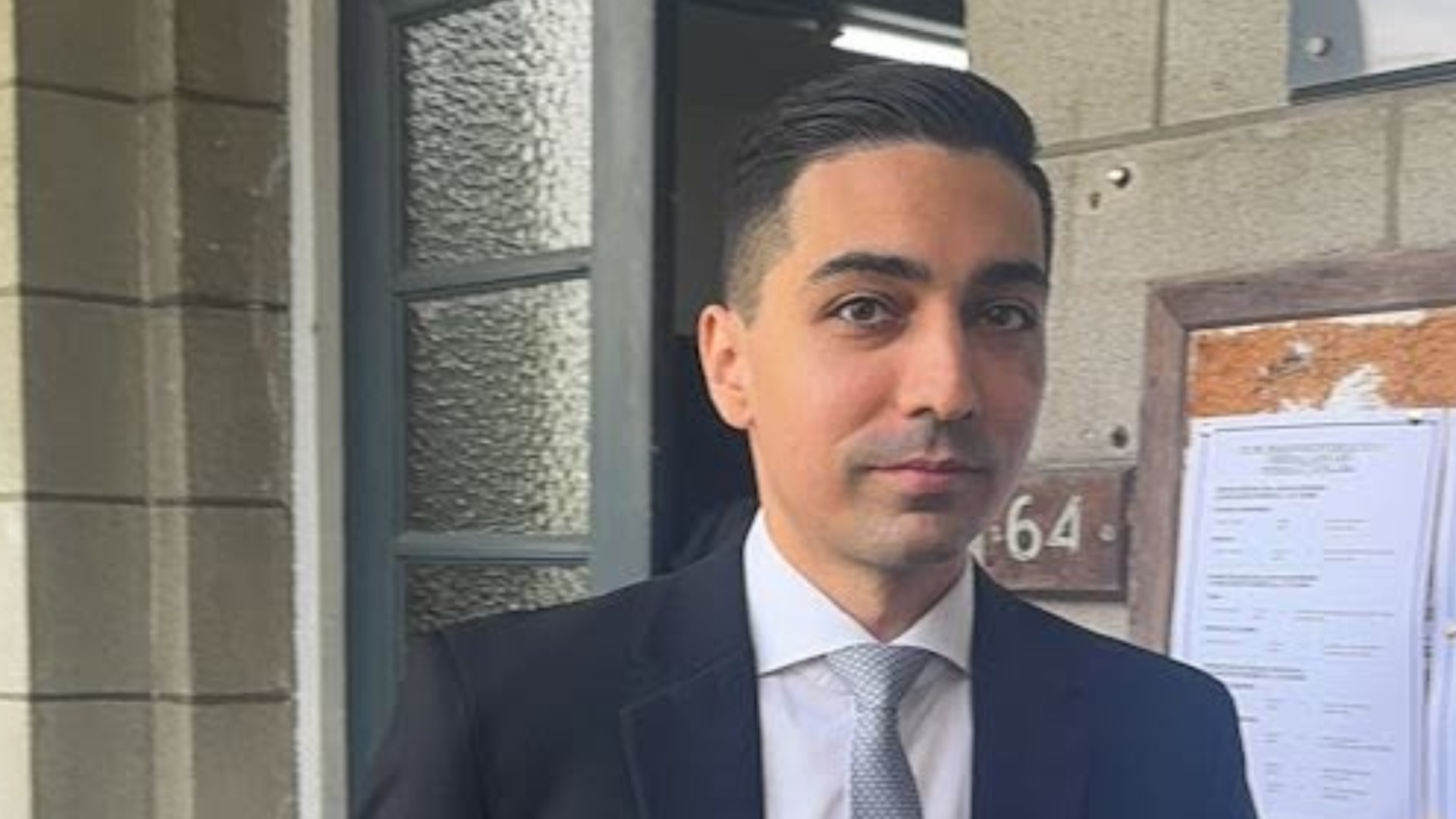
The Supreme Court will decide at a later date whether Fiji-Canadian national Joshua Aziz Rahman should face a new trial or be acquitted over the 39.5 kilograms of cocaine worth $31 million found at a Caubati home in 2019.
Rahman was sentenced to 23 years' imprisonment in October 2021, with a non-parole period of 14 years, after his conviction, but was released in March this year after the Court of Appeal quashed his conviction and ordered a retrial.
He then appealed the Court of Appeal's decision ordering a retrial through his counsel, Devnesh Sharma.
During the hearing, Sharma argued that the prosecution's case has serious evidential weaknesses, saying there is no proof Rahman knew the cocaine was in the house, no forensic evidence linking him to the drugs or the bedroom where they were found, no evidence he handled the drugs, and no evidence he had control over them.
He says the prosecution has also failed to rule out the possibility that Rahman's father, Tallat Rahman, was solely responsible for the drugs.
He further submits that Rahman has spent more than seven years in custody, memories have faded, a key witness has died, and police investigations were inadequate.
Sharma also argues that investigators failed to carry out fingerprint or DNA testing, examine Rahman's electronic devices, investigate imports linked to the property, obtain CCTV footage, or gather evidence that could establish Rahman's knowledge or control of the drugs.
He says a retrial would unfairly give the prosecution a second chance to repair deficiencies in its original case, adding that the Supreme Court should acquit him, and not order a new trial.
In their submission, Acting Director of Public Prosecutions Nancy Tikoisuva argued that the Court of Appeal should not have ordered a retrial, but also says the appeal by Rahman should have been dismissed entirely because there was no substantial miscarriage of justice.
She submits that the Court of Appeal failed to assess all the evidence before deciding to quash the conviction and order a retrial, and did not properly apply the legal test in the Court of Appeal Act.
Tikoisuva argued there was strong direct and circumstantial evidence against the Rahman and that, even if there were legal errors, a properly directed court would still have convicted him.
She says that the Court of Appeal did not properly consider the interests of justice before ordering a retrial and that both parties should have been allowed to address that issue.
The Acting DPP also objected to Rahman's attempt to rely on renewed grounds of appeal and new evidence, arguing these should have been raised separately and should not affect the retrial decision.
They ask the Supreme Court to dismiss the Rahman's appeal, maintaining that the correct outcome was to dismiss the original appeal rather than order a retrial.