Law enforcement agencies will be equipped with powers to disrupt trafficking networks, seize the proceeds of crime, hold offenders accountable and support rehabilitation after the Counter Narcotics Bill 2026 was passed unanimously this evening.
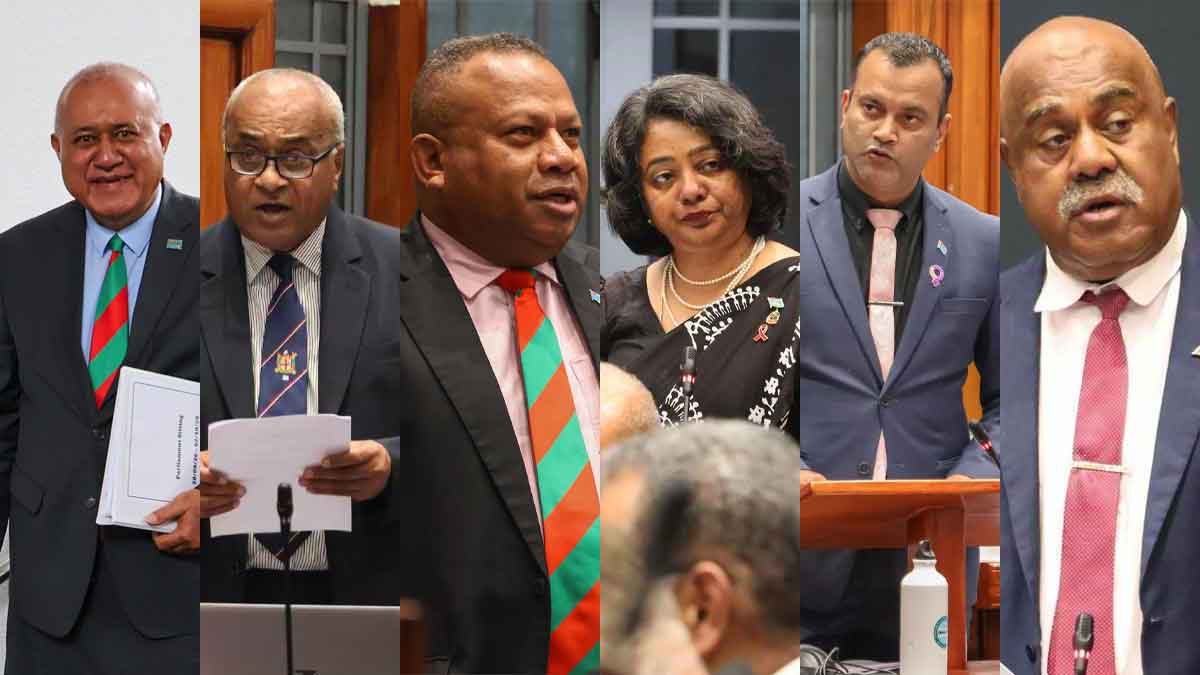
Minister for Policing Ioane Naivalurua says the drug threat confronting Fiji is real, present and evolving.
Naivalurua says the threat now includes narco-terrorism, which is the use of illicit drug activity, directly or indirectly, to support, finance, promote or carry out a terrorist act or the activities of a terrorist organisation.
He says Clause 99 of the Bill creates a specific offence of narco-terrorism, punishable by life imprisonment with forfeiture of connected property and instrumentalities.
Naivalurua says the limitation of the current Illicit Drugs Control Act 2004 is that it takes a predominantly offence-based approach, while the new Bill transitions Fiji towards a modern, coordinated and whole-of-nation counter-narcotics framework.
He says these are significant powers but they are not unchecked powers adding that the powers are prescribed by law, balanced by safeguards and subject to oversight and accountability.
Naivalurua says Clause 11 establishes the Counter-Narcotics Bureau as Fiji’s specialised national counter-narcotics institution, with its functions under Clause 13 extending beyond enforcement to prevention, transnational organised crime, treatment and rehabilitation, protection of children, and inter-agency and international cooperation.
He says modern narcotics networks operate across borders, maritime routes, digital communications and financial systems.
He says investigators must therefore be capable of following the criminal network, not simply seizing drugs at the end of it.
He says Clause 13 requires the Bureau to act in accordance with the Constitution, Fiji’s international human rights obligations and the principles of legality, necessity, proportionality, reasonableness and non-arbitrariness.
On the independence of the Bureau, he says Clause 16 requires the Director-General to act independently and impartially, while Clause 18 places the organisation, administration and operational control of the Bureau with the Director-General.
He says independence does not mean immunity from accountability.
Naivalurua says the strength of the legislation should not be measured only by the powers it gives the State, but also by the discipline with which those powers are controlled.
Assistant Minister for Public Works Naisa Tuinaceva says Fiji’s drug problem today is not the same problem the country faced 20 years ago.
He says the Bill provides Fiji with a specialised Bureau to lead the prevention, detection, investigation and disruption of illicit drug activity, however, he says arrests alone will not solve the problem.
Tuinaceva says the Bill recognises the need to distinguish between those who profit from the drug trade and people struggling with dependency, exploitation or vulnerability.
Leader of the Opposition Inia Seruiratu says the Opposition agrees that the Counter-Narcotics Bill is one of the most comprehensive pieces of legislation dealing with illicit drugs that Parliament has considered.
Seruiratu says the Bill establishes a new narcotics bureau, creates an extensive enforcement regime, provides significant investigative powers, establishes new offences and penalties, and provides for interagency and international cooperation, prevention, treatment, rehabilitation and diversion.
He says the Opposition supports the independence of the Bureau.
He also welcomed the oversight role of the Fiji Human Rights and Anti-Discrimination Commission, the rehabilitation provisions and the protection of children under the Bill.
Minister for Women, Children and Social Protection Sashi Kiran says the proposed legislation is fundamentally a child-protection, violence-prevention and family-strengthening measure, and a vital shield for social protection.
Kiran says the Bill looks at the human reality behind the drug crisis and provides legislative tools needed to protect Fiji’s most vulnerable citizens.
She says a transformative feature of the framework is Clause 5, which formally defines a vulnerable and at-risk person.
Kiran says for the first time in Fiji’s legal history, the narcotics framework explicitly recognises that children, people experiencing extreme poverty, the homeless and those facing mental health challenges require targeted protection rather than blanket criminalisation.
She says Clause 80 creates serious criminal offences for any adult who sells, supplies or administers drugs to a child, or procures a child for illicit drug activities.
Kiran says Clause 81 goes further by placing a legal obligation on adults to protect children in their care from exposure to illicit substances.
Meanwhile, Opposition MP Alvick Maharaj says the Bill represents a turning point in Fiji’s fight against illicit drugs by providing a comprehensive framework to dismantle supply networks while protecting and rehabilitating people affected by substance abuse.
Maharaj says Fiji is no longer dealing solely with localised marijuana cultivation but is battling syndicates using Fiji as a hub for hard drugs.
He says the scale of the drug crisis has grown from a domestic law-enforcement issue into a multi-billion-dollar transnational threat that requires an unprecedented response.
Assistant Minister in the Office of the Prime Minister Sakiusa Tubuna says under Clause 13, the proposed framework will go beyond simply investigating drug offences.
Tubuna says its responsibilities will include preventing and controlling the supply and demand of illicit drugs, investigating related and transnational organised crime, developing prevention strategies, supporting treatment and rehabilitation, cooperating with other agencies and international partners, and maintaining a national database on drug trafficking, abuse and money laundering.
He says the Bill recognises that the drug problem cannot be fought by Police alone and provides for cooperation with agencies including Immigration, the Fiji Revenue and Customs Service, Biosecurity, maritime and aviation authorities and the Financial Intelligence Unit.
Tubuna says one of the most important aspects of the Bill is that it does not treat every person affected by drugs simply as a criminal.
He says there must be a clear distinction between those who profit from trafficking and exploiting people and those who have become trapped by addiction.
Tubuna says the Bill provides for prevention, early intervention, public education, school awareness, community outreach, treatment, rehabilitation, counselling, aftercare and reintegration.
Minister for Sports Jese Saukuru says the fight against illicit drugs is not simply a fight against substances but a fight to protect human potential, children, families, communities and Fiji’s future.
Saukuru says a young person who has made a mistake should not be written off and should instead be provided with a pathway back to family, education, employment, sport and society.
He says young people must grow up understanding respect, consent, responsibility and the dignity of every human being.