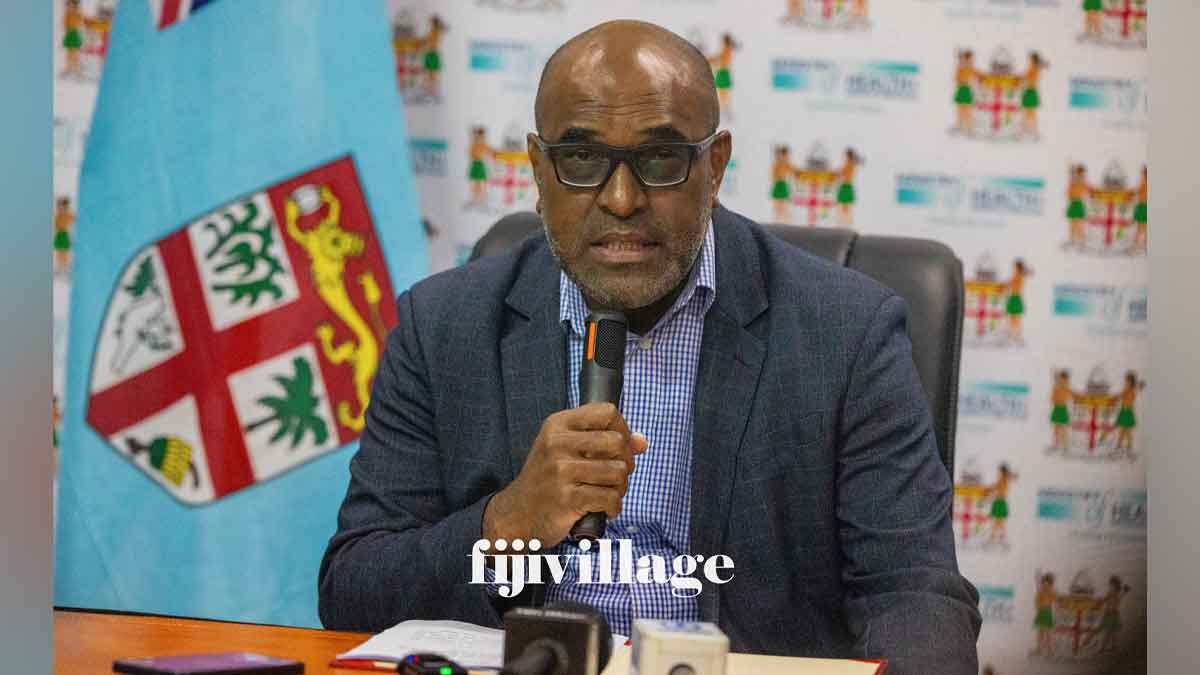
Fiji has declared HIV a national crisis, with the Government set to introduce a formal needle and syringe programme as part of its response to the growing epidemic.
Minister for Health Dr Ratu Atonio Lalabalavu says current estimates indicate one in every 60 adults in Fiji is living with HIV.
He says 2,016 new HIV diagnoses were recorded in 2025, while HIV prevalence among women attending antenatal care has reached around 2 percent.
Dr Lalabalavu says the needle and syringe programme will be introduced alongside expanded HIV testing and treatment, greater access to pre-exposure drugs like prophylaxis, or PrEP, and long-acting injectable prevention.
He says the Government will also work to resolve regulatory issues, train staff, secure supplies and strengthen engagement with communities.
A Cabinet committee of five ministers has been established to address issues that have slowed implementation.
These Ministers include the Acting Attorney General, Minister for Finance, Minister for Women, Children and Social Protection, Minister for Information and will be chaired by the Health Minister.
While responding to questions by fijivillage News on the rollout of the programme, Dr Lalabalavu says Fiji already has sufficient supplies of needles and syringes, with the necessary legislation expected to be brought to the next Parliament sitting.
He says the needles and syringes are currently stored in a warehouse in Suva.
Dr Lalabalavu says amendments to the legislation are required, and they plan to bring them to Parliament under Standing Order 51.
Chairman of Fiji’s National HIV Outbreak and Cluster Response Taskforce Dr Jason Mitchell says Fiji also has the support of UNDP to procure additional supplies if required.
Dr Mitchell says the needle and syringe programme is needed because the unavailability of sterile needles and syringes has resulted in people who use drugs sharing needles, syringes and drug-mixing equipment.
He says drug use itself is not what is driving the rise in HIV infections, but the risky behaviour associated with drug use.
Dr Mitchell says the programme, which is used in more than 90 countries, will make sterile needles and syringes available to people who use drugs to reduce the risk of HIV transmission.
He stresses that the programme does not mean the Government supports illegal drug use.
Dr Mitchell says the Ministry of Health’s role is to reduce health risks, while law enforcement agencies are responsible for addressing the criminal aspects of drug use.
He says approved agents and health workers will be involved in making sterile needles, syringes and safe drug-mixing equipment available.
Dr Mitchell says the needle and syringe programme must also work alongside rehabilitation services.
He also says Fiji does not currently have enough quality rehabilitation programmes and both services need to be available so people who use drugs can access comprehensive support.
Dr Mitchell further says health authorities and law enforcement need to work closely together to ensure the needle and syringe programme is not affected by other aspects of the Government’s response to illegal drugs.