The Republic of Fiji Military Forces remains in a supporting role as it conducts joint operations with the Fiji Police Force, with police continuing to take the lead on the ground.
Minister for Defence Pio Tikoduadua says the arrangement is not new, with the RFMF stepping in when additional manpower and specialised capabilities are required.
INSERT: Minister on RFMF provides support PN 13th Aug
Tikoduadua says while joint operations involving the RFMF can be expensive, the military has capabilities that can provide critical support when needed.
He highlighted the use of drones by the Republic of Fiji Navy, particularly during search and rescue operations where visibility and weather conditions allow them to be deployed.
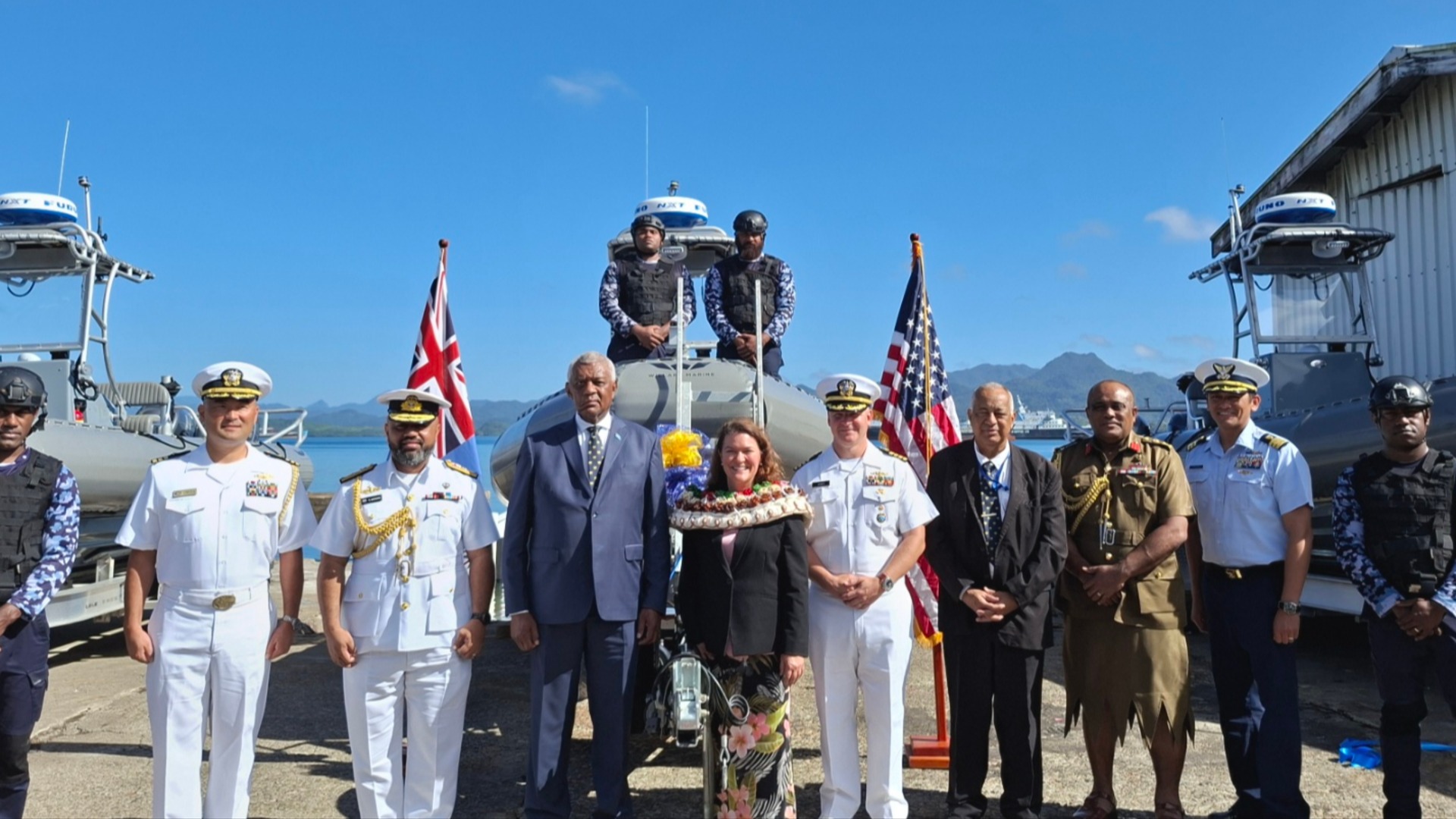
Meanwhile, the Republic of Fiji Navy has received a timely donation from the United States, which includes three new 7-metre Rigid Hull Inflatable Boats and a new boat ramp, which will strengthen its ability to patrol Fiji’s waters, combat illegal fishing and intercept drug traffickers moving narcotics through the Pacific.
Tikoduadua says the RHIBs will give the Navy greater flexibility and mobility, allowing sailors to operate closer to shore, move personnel quickly and undertake tasks for which larger vessels are not always suited.
He says the boat ramp and supporting infrastructure are equally important because equipment only becomes real capability when it can be launched, sustained, maintained and kept ready for use.
The Minister says the Pacific security environment is changing, with transnational organised crime, narcotics trafficking, illegal fishing, the movement of illicit goods, natural disasters, climate-related emergencies and pressure on maritime resources placing new demands on security institutions.
He says Fiji must be able to understand what is happening in our waters, to act when required, and to contribute meaningfully to the security of our region.
He urged the officers and sailors of the Republic of Fiji Navy who will operate the boats to look after them, maintain them properly, operate them safely and use them well.
He says the true value of what is handed over today will not be measured by its price, nor by a ceremony at this base; it will be measured years from now, in the missions these vessels support, in the waters they help us protect, in the communities they assist, and perhaps one day in the lives they help save.
Commander Fiji Navy, Commodore Timoci Natuva says the project has been in development with the United States since around 2018 or 2019 in anticipation of the growing maritime security challenges facing Fiji.
Commodore Natuva says the capability will be particularly important as Fiji deals with drug trafficking and the need for a greater naval presence across the country’s waters and islands.
INSERT: Commodore Natuva on presence 13th Aug
He says the United States has provided not only the boats, but also the infrastructure, training and spare parts needed to support them, while a specialist has also been assisting the Navy in establishing a logistics system to support the long-term sustainment of the vessels.
He says having the capability is one thing, but sustaining it will remain a challenge.
The Navy Commander says the Navy is now focused on ensuring the boats remain operational and deliver the capabilities required, including maritime presence, interdiction, boarding operations and search-and-rescue missions close to shore.
Meanwhile, U.S. Chargé d’Affaires Christina Cavallo says the three RHIBs are equipped with advanced navigation, radar and communication systems and will be capable tools in combating transnational organised crime, stopping illegal fishing and saving lives.
Cavallo says the boats will enable the rapid delivery of Fiji Navy boarding teams to suspect vessels and help stop drug traffickers.
She says they will also support search-and-rescue operations, deliver critical supplies and support evacuation efforts during times of distress.
She says the new ramp will ensure the boats can be launched, recovered and maintained quickly and reliably whenever and wherever they are needed.
Cavallo says the United States is also working with Fiji Navy crews on maintenance and upkeep, while U.S. maritime advisers are supporting the development of a logistics maintenance system to ensure the assets remain operational for years to come.