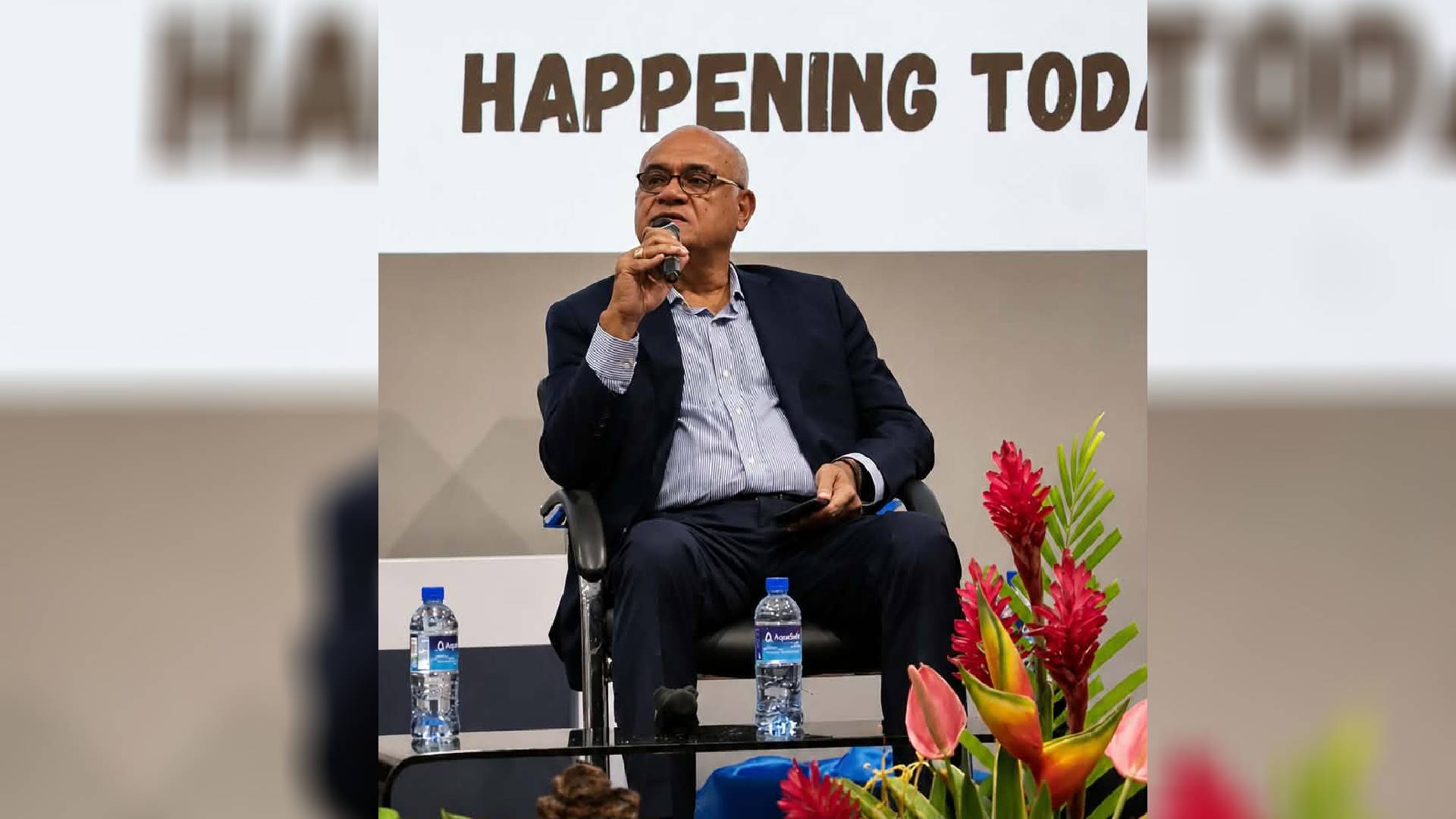
A call has been made for the Vanua to play a greater role in addressing Fiji’s gender-based violence crisis, with Na Turaga Na Vunivalu of Nukunitabua and member of the Great Council of Chiefs Ro Naulu Mataitini saying that the Vanua must work alongside Government, civil society and NGOs while strengthening women’s leadership at family, village, district and national levels.
Speaking at the Pacific Islands Health Research Symposium, Ro Naulu says the Vanua should not be viewed as an alternative to the work already being done by Government, CSOs and NGOs, but should complement those efforts.
He says the Vanua is an important social structure that has often been forgotten, particularly over the 56 years of Fiji’s independence, as the country has increasingly looked towards Western ways of addressing social issues.
Ro Naulu says he is pleased that the Vanua tradition is now part of the conversation and believes the role of chiefs is to act as custodians for everyone.
He says gender-based violence is a crisis that chiefs and the GCC must understand and help address.
Ro Naulu says the response must look at the bigger picture, with traditional leaders, Government and civil society working together to deal with the issue.
He also says Fiji needs to rethink traditional views about leadership, particularly the belief that leadership should primarily be held by men.
Ro Naulu says Fiji has a history of being a patriarchal society, partly because traditional communities were once frequently at war.
However, he says Fiji is no longer at war, and leadership should now come from those who are best equipped to take tradition forward, whether at village, district or national level.
He says women should not only be seen as supporting men but should stand alongside men in leadership and in addressing issues affecting their communities.
Ro Naulu says this thinking must filter down from the GCC to the district, village, tokatoka and family levels.
He recalls attending a funeral in Ovalau where two well-known Fijian women spoke before him.
Ro Naulu says he acknowledged their leadership and told the people of the district that he could see leadership in the two women who had spoken.
He also reflected on his involvement in the recruitment of the first women into Fiji’s armed forces in 1988.
Ro Naulu says the journey was not easy for those women, but he is proud to see some of them rise through the ranks and reach very senior positions in the military.
He says this demonstrates that discussions about women’s leadership and gender equality cannot be treated as a one-off issue.
Ro Naulu says conversations on gender-based violence need to continue at every level, including within families, tokatoka meetings, village meetings and even at funerals.
He says some of these conversations are difficult, but communities need to change the way they discuss such issues and bring them to the forefront.
Ro Naulu says communities must also educate their own people so everyone understands the importance of addressing gender-based violence.
He also acknowledged the next generation of traditional leaders attending the symposium, saying he hopes some of them will eventually join the Bose Levu Vakaturaga and share their wisdom with fellow chiefs and the people of Fiji.
He says chiefs themselves are on a journey between tradition and modernity, and this is a journey they must all undertake.