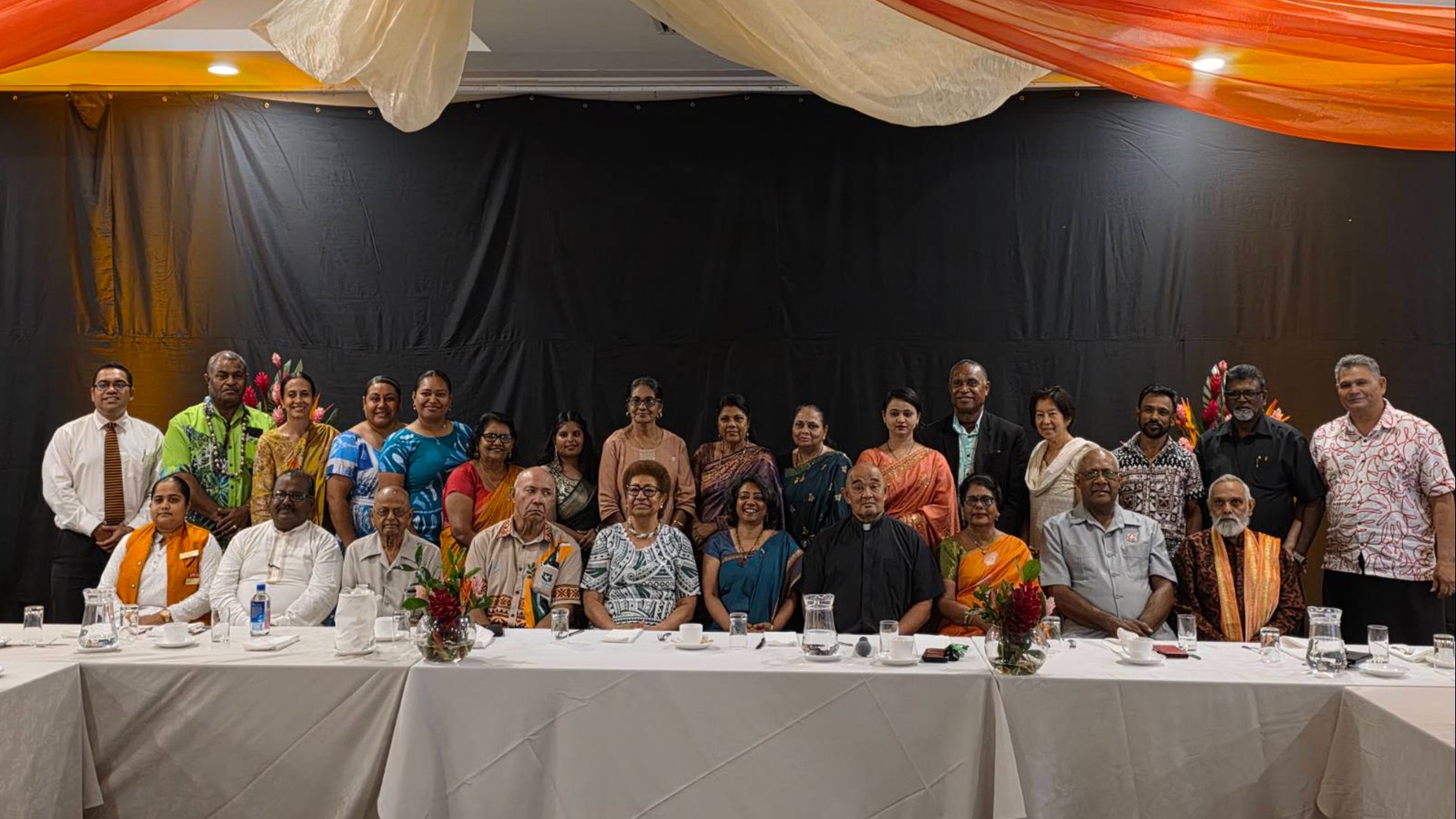
Faith leaders and traditional chiefs have been urged to play a greater role in strengthening social cohesion and addressing divisions through dialogue, as Fiji works towards developing a shared national Social Cohesion Framework.
This was highlighted by Minister for Women, Children, Social Protection and Cohesion Sashi Kiran during a special Diwali lunch, saying the gathering provided an opportunity to bring faith leaders and Vanua representatives together to reflect on the significance of Diwali and discuss what social cohesion should look like for Fiji's future.
She says faith and Vanua leaders are among the most trusted groups in society, making their involvement important, particularly during times of tension when communities can become divided.
Kiran says research has also highlighted the high levels of trust placed in these leaders, and their influence in shaping narratives within communities.
She says the Ministry recently partnered with the United Nations Development Programme, the Fiji National University and international experts to conduct the Fiji Social Cohesion and Reconciliation Index, also known as the SCORE Index.
Kiran says the study found that more than 80 percent of people across each ethnic group expressed deep trust in one another, highlighting the strong intergroup relationships that Fiji can build on.
She says social cohesion is about the quality of relationships that allows people and institutions to work together towards a shared national future.
Reflecting on Fiji's history, Kiran says the generosity shown by indigenous communities towards indentured labourers, including those rescued following the sinking of the Syria at Nasilai Reef, helped lay the foundation for relationships that continue today.
She says despite differences in language, culture and religion, the ancestors of both communities built relationships through friendship, mutual respect and shared humanity.
Kiran says the different faith traditions have also helped communities preserve their values, identity and cultural practices through generations.
She says peace is not simply the absence of conflict, but the active presence of healthy and thriving relationships.
Kiran says the country must continue creating safe spaces for mature and respectful dialogue, particularly when sensitive issues involving land, economic opportunities and security arise.
She is also encouraging chiefs and faith leaders to consider how schools, community centres and places of worship could become hubs for learning languages, sharing traditions, respecting cultures and teaching value-based leadership to young people.
Kiran says divisive narratives can easily spread through social media, making it even more important for communities to address their concerns through legitimate and peaceful dialogue.
She says the proposed Social Cohesion Framework aims to foster a shared sense of belonging, patriotism and collective responsibility for the country.
Kiran says the discussions were encouraging, with participants openly sharing their concerns and committing to several immediate actions, while also calling for further dialogue between faith leaders and Vanua representatives.
She says the Ministry is grateful for their willingness to come together and contribute towards building a peaceful and resilient Fiji.
