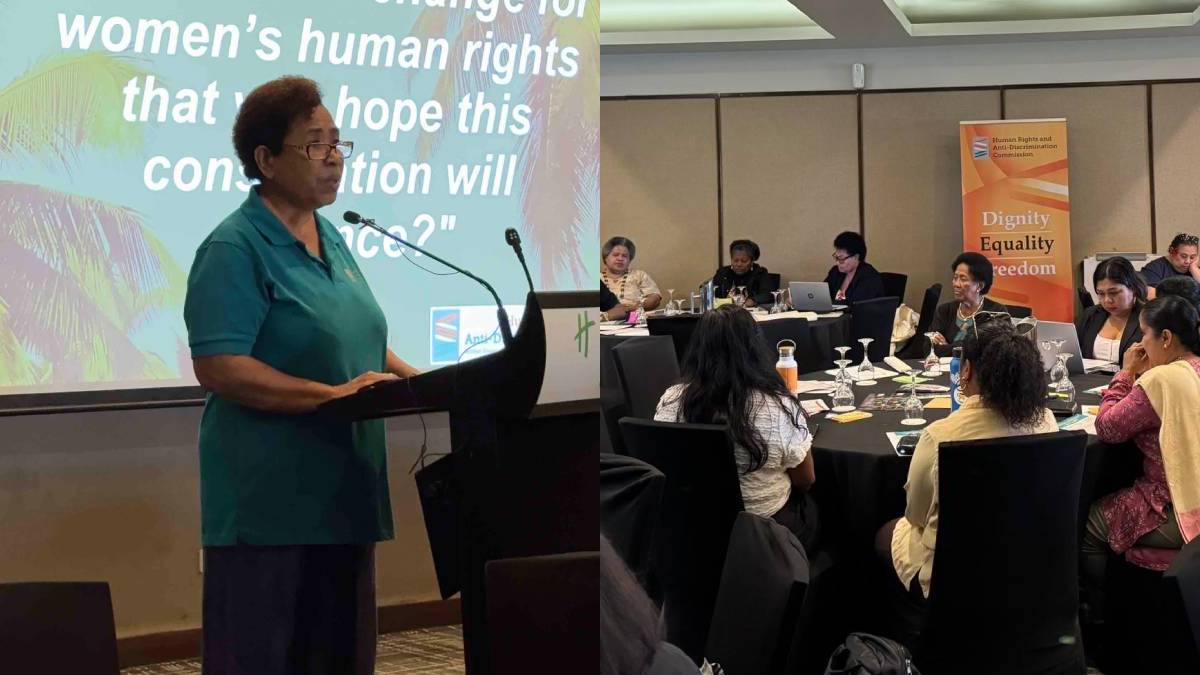
Fiji Human Rights and Anti-Discrimination Commission Commissioner, Alefina Vuki says the dialogue aims to identify the challenges faced by women, explore practical solutions and strengthen the Commission’s role in advancing women’s rights and gender equality in Fiji.
Speaking at the opening of the dialogue at the Holiday Inn in Suva, Vuki says discussions will also focus on disability and social inclusion, particularly the challenges faced by women in rural and remote communities.
She says women with disabilities in rural areas can face multiple barriers, including difficulties accessing transport, essential services and specialised assistance.
Vuki says one of the major barriers to accessing justice is the lack of information about women’s rights and the support available to help them exercise those rights.
She says it is important to ensure information reaches women in rural and remote communities so they can understand their rights and the avenues available to seek assistance.
Meanwhile, the Commissioner says the decline in the number of women in Parliament is an example of how progress towards gender equality has moved backwards in some areas, despite years of efforts and programmes to promote women’s participation.
She says the Commission is using the dialogue to establish the factors contributing to the decline, stressing that the reasons must be identified through evidence rather than speculation.
She says the dialogue will help explore the conditions affecting women’s participation and identify practical ways to address the challenges.
Vuki says the recommendations from the dialogue will also inform an upcoming multi-stakeholder government workshop and an Indigenous symposium scheduled for November, ensuring women’s voices and concerns are reflected in broader discussions.
Meanwhile, on the proposed constitutional provision relating to the moderate chastisement of children, Vuki reiterates the Commission’s position that Fiji’s obligations under the Convention on the Rights of the Child do not permit the legal authorisation of violence against children for disciplinary purposes.
She also points to evidence from the World Health Organization and UNICEF highlighting the harmful effects of violence on children’s physical and mental development.
She says violence against children offers no benefit to the child, parents or society.