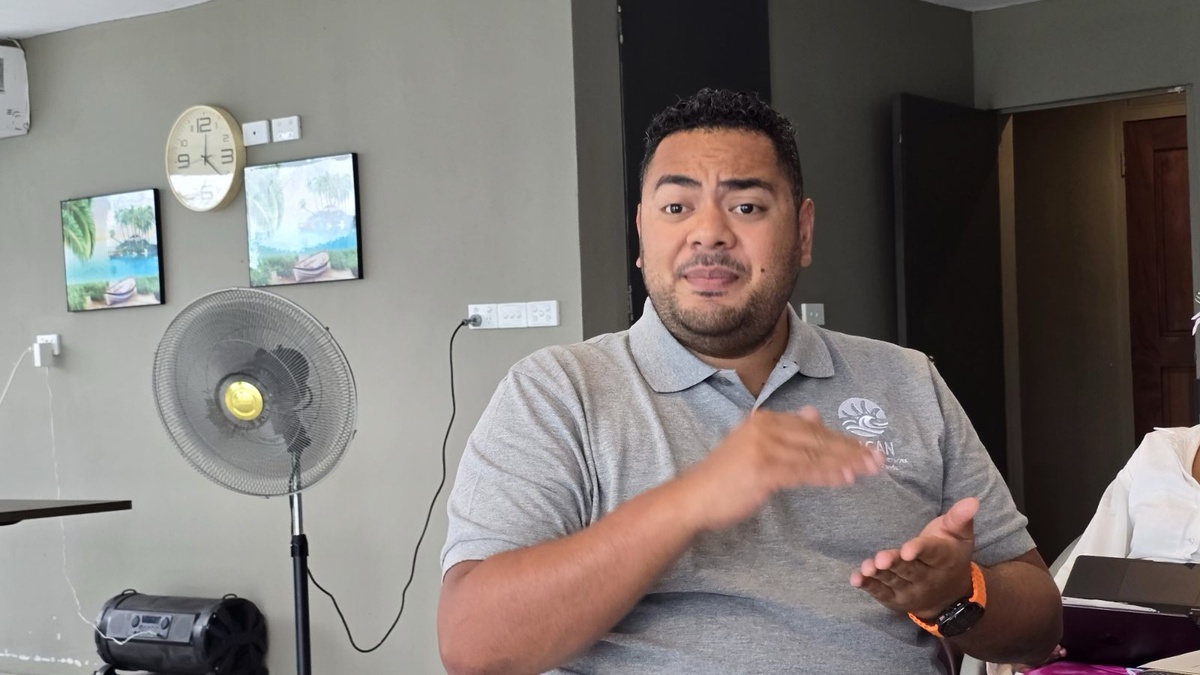
Traditional fishing grounds could be lost if global temperatures overshoot 1.5 degrees Celsius, as fish are forced to move to new feeding grounds, according to Pacific Islands Climate Action Network Director Dr Rufino Varea.
While speaking to fijivillage News, Dr Varea says an overshoot scenario could see customary and traditional fishing grounds lost as fish move to newer feeding grounds.
He says natural cycles would also be disrupted, affecting spawning and breeding seasons, while practices observed and practised by traditional Pacific communities for generations could also be at risk of being lost.
Dr Varea says the Pacific is already experiencing climate change impacts, although the region has not yet reached an overshoot beyond 1.5 degrees Celsius.
He says the current El Niño event is contributing to some of the impacts being experienced, while continued carbon dioxide emissions from countries that produce and use large amounts of fossil fuels are warming the planet.
Dr Varea says oceans and forests can absorb only a limited amount of excess emissions, and emissions are being released at a rate beyond the planet’s ability to remain in balance.
He says while an overshoot beyond 1.5 degrees Celsius may be temporary, some of its consequences would be permanent.
Dr Varea says native forests and endemic species could be threatened with extinction when temperatures exceed 1.5 degrees, and returning below the threshold would not bring extinct species back.
He says this is why the Pacific’s message has always been “1.5 to stay alive”.
Varea says 1.5 degrees Celsius is the threshold the Pacific cannot surpass, with higher temperatures bringing increasingly severe impacts including sea level rise, mass coral bleaching, saltwater intrusion into freshwater supplies and displacement of communities.
He says the Pacific’s priorities at pre-COP and COP31 are centred on four thematic pillars.
One of which is keeping 1.5 alive and maintaining it as the primary goal under the Paris Agreement.
Varea says the International Court of Justice’s advisory opinion on climate change states that all states have an obligation to ensure they keep 1.5 degrees as the primary goal under the Paris Agreement.
The second priority is climate finance, with Dr Varea calling for more simplified and accessible finance to flow into the Pacific so communities can receive the support needed to respond to climate change.
Dr Varea says the Pre-COP31 coming to the Pacific provides an opportunity to bring the stories and lived experiences of frontline communities into international discussions.
He says many Pacific communities do not have the funding to engage directly in the process, making it important that their voices are heard in these spaces.
The Pacific Pre-COP31 starts in Nadi tomorrow and concludes on Friday while COP31 will be held in Antalya, Türkiye next month.