The National Youth Council of Fiji is calling for four dedicated youth seats in Parliament to ensure young people have a direct voice in national law-making and governance.
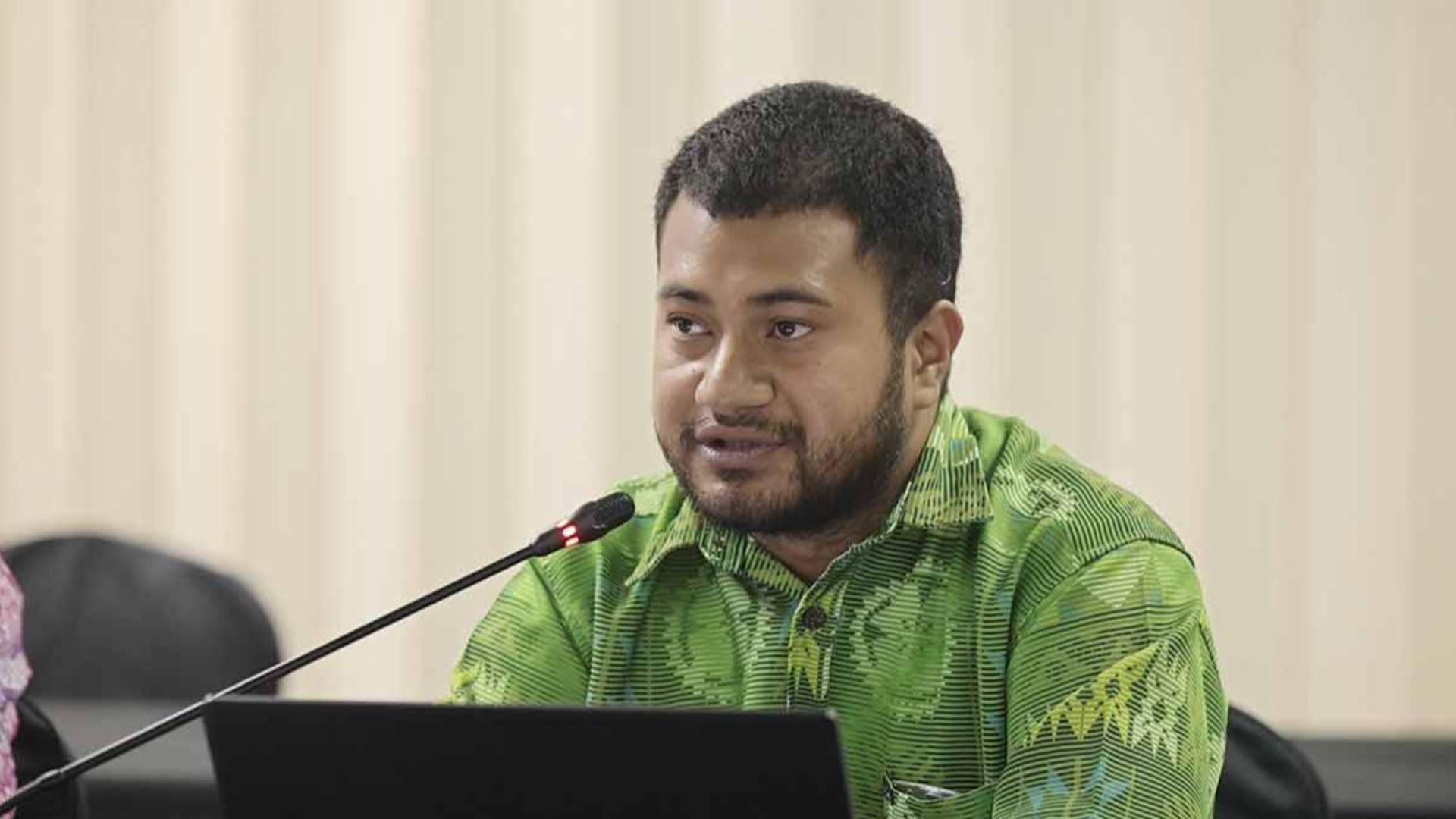
Youth Assemblies of Fiji Vice President Joseph Fonorito highlighted this while making submissions before the Constitution Review Commission, saying youth representation should be constitutionally guaranteed rather than left to political goodwill.
Insert: Fonorito on youth seats 8th July
The proposal forms part of wide-ranging constitutional reforms put forward by representatives of the NYCF, the Provincial Youth Forum of Fiji and Youth Assemblies of Fiji, covering stronger youth representation in governance, greater protection of indigenous rights, education reforms, climate justice, accountability and guaranteed government funding for the Council's Secretariat.
Fonorito also recommends that Members of Parliament possess minimum qualification, training or competency requirements, suggesting MPs should have at least a diploma and relevant experience, while acknowledging this could unintentionally exclude capable customary leaders, workers and community advocates with practical knowledge but limited formal education.
He says Ministers should also have relevant experience or competency in the portfolios they lead, adding that Fiji is rapidly moving towards the future with developments such as artificial intelligence and leaders must be able to adapt to a changing society.
NYCF General Secretary Mereia Leano says Chapter 1 of the Constitution should include the principle of intergenerational responsibility, requiring the State to consider the rights, welfare and future security of children, young people and future generations when making major public decisions.
Leano says young people should not be treated only as future voters or future leaders because they are citizens now and are already affected by decisions on education, land, climate change, employment, governance, technology, health, culture and national development.
She recommends amending Chapter 1 to require the State to protect the interests of children, youth and future generations in all major public decisions.
Leano also proposes amending Section 147 to require government funding for the National Youth Council of Fiji Secretariat through the national budget.
She says the Council previously operated with government-funded Secretariat staff while it was housed within the Ministry of Youth and Sports, but after its relocation under the previous administration the funding arrangement ceased.
Leano says the Council now operates with a budget that is insufficient to employ Secretariat staff, forcing continued reliance on volunteers and unpaid young people, despite their work advancing the interests of Fiji's youth.
She says government funding would restore the previous arrangement, strengthen the Council's institutional capacity and enable it to effectively fulfil its statutory mandate.
Provincial Youth Forum of Fiji Public Relations Officer Severo Biaukula says the Council is concerned that some students progress through the education system without adequate literacy and numeracy, describing this as a system failure rather than an individual failure.
Biaukula says the Constitution should support early identification of learning needs, remedial support, inclusive education and flexible pathways that prioritise mastery of basic skills.
He says civic education should become a national priority so young people understand democracy, Parliament, elections, the Constitution, local government, public finance, climate responsibility, national unity and peaceful civic participation.
He also says health and well-being should be prioritised as young people face growing challenges relating to mental health, substance abuse, lifestyle diseases, reproductive health, cyber safety and social pressures.
The Council is proposing amendments to Section 31(4) to allow the State to direct educational institutions to teach health and well-being, civic education, constitutional literacy, political participation, leadership training, national development and issues of national interest, with every educational institution required to comply.
Biaukula also calls for Section 40 on environmental rights to be expanded to include climate justice and intergenerational equity.
He says young people are already living with the impacts of climate change, sea level rise, coastal erosion, pollution, poor waste management and environmental degradation, and should have a constitutional right to participate in climate-related decision-making.
The Council recommends that Section 40 recognise the rights of present and future generations to a clean, healthy and sustainable environment, place a constitutional duty on the State to act on climate change, guarantee youth participation in climate-related decision-making and require long-term environmental impacts to be considered before development decisions are made.
On children's rights, Biaukula says Section 41 should clarify the distinction between abuse and lawful discipline stressing child protection laws should not prevent reasonable, lawful and proportionate discipline, provided it does not amount to abuse, injury, cruelty, humiliation or inhumane treatment.
Biaukula also refers to Fiji's former Penal Code, saying its framework, which set a threshold of 12 strikes for corporal punishment, could be considered to avoid outright physical abuse, while ensuring any disciplinary framework remains strictly regulated, child-sensitive and consistent with the child's best interests and dignity.
He also proposeds constitutional recognition of the Bose Levu Vakaturaga as the principal traditional advisory institution for the iTaukei people.
Biaukula says the Great Council of Chiefs should advise on indigenous customs, traditions, culture, leadership, heritage and reconciliation, but should not replace Parliament or elect the Government. However, he recommends it be given the constitutional role of appointing and nominating the President of Fiji.
Youth representative Semesa Nawasoni calls for Section 28 to be amended to provide customary owners with not only ownership but also meaningful control over iTaukei land, traditional fishing grounds, including riverine and coastal fishing grounds, and associated customary resources.
Nawasoni says land, fishing grounds and natural resources are closely linked to indigenous identity, ancestry, chieftain systems, food security, culture, spirituality and future generations.
He proposes that ownership and control remain with customary owners and that such land, fishing grounds and resources cannot be permanently alienated except to the State in accordance with the Constitution and only with the free, prior and informed consent of customary owners.
He says related amendments would also be required to land, fisheries and minerals legislation so constitutional protections are reflected in ordinary law.
Nawasoni also recommends constitutional recognition of indigenous governance structures saying these institutions are central to traditional leadership, kinship systems, dispute resolution, cultural preservation, community governance, stewardship of natural resources and the transfer of customs and knowledge across generations.
He also proposes amending Section 53 to require every registered political party to maintain at least 30 percent youth representation within its membership, leadership structures or candidate development process.
If dedicated parliamentary seats are not supported, Nawasoni recommends alternative constitutional mechanisms including mandatory youth representation in Parliament and parliamentary committees, a standing youth advisory mechanism to Parliament and youth representation requirements in electoral laws.
He also recommends constitutional recognition of youth participation in public bodies, advisory structures and national committees, including national development boards, municipal consultations, climate bodies, education committees and employment policy forums.
Nawasoni further calls for constitutional recognition of Provincial Councils as representative institutions promoting community consultation, development planning, cultural preservation, education initiatives, disaster preparedness, social cohesion and communication between Government and indigenous communities, while also recommending constitutional recognition of the iTaukei Affairs framework.
Biaukula also calls for stronger constitutional protection of indigenous language, culture, heritage, traditional knowledge and cultural expressions, including masi, traditional tattoo patterns, clan and tribal symbols, traditional songs and chants, traditional dances, indigenous artwork, ceremonial regalia and traditional medicinal knowledge.
He says these cultural expressions belong collectively to communities and should not be reproduced, commercialised, registered or exploited without the free, prior and informed consent of the communities concerned, with proper consent, royalties and penalties where they are used commercially.
Biaukula also recommends amendments requiring meaningful public consultation and youth impact assessments before major legislation is passed so lawmakers consider the impact of proposed laws on children, youth, education, employment, climate, mental health, technology, civic space and future generations.
Youth Assemblies of Fiji President Vipin Maharaj also proposed reforms affecting governance and accountability recommending to remove the prosecutorial powers of the Fiji Independent Commission Against Corruption and limiting its role to investigations, referrals and anti-corruption enforcement support, with prosecutions transferred to the Office of the Director of Public Prosecutions.
He also calls for stronger constitutional safeguards on emergency powers, saying any limitation on rights during a state of emergency should be lawful, necessary, proportionate and subject to oversight, and should not be used to unnecessarily restrict freedom of expression, media freedom, peaceful assembly or rights relating to health, food and security.
Maharaj further recommends removing constitutional immunity provisions in their entirety to allow accountability through lawful, fair and independent processes.
He also calls for reform of the constitutional amendment process to balance constitutional stability with democratic reform through public participation, parliamentary approval and democratic endorsement, saying the recent Supreme Court decision interpreting the constitutional amendment provisions demonstrates that constitutional reform can proceed through lawful constitutional processes.
During questioning by the Commission, Youth Assemblies of Fiji President Vipin Maharaj says the Council has made budget submissions but has repeatedly received around $16,000 over the past two to three years, which he says is nowhere near enough to meet the Council's operational needs.
He says this year's allocation has been reduced to $13,000.
Maharaj says the Council had sought funding, including support for office space within the Ministry of Youth and Sports, where the Secretariat was previously located.
He says the funding request was around $150,000, but the Council has only received a fraction of that amount.
Constitution Review Commission member Nileesh Goundar acknowledges the Council's concerns and encourages the NYCF to continue engaging with the Ministry of Youth and Sports, noting that the National Development Plan includes strategies that could assist in addressing funding challenges.
Commissioner Ami Kohli welcomes the Council's recommendation on constitutional education, saying it should be taught in schools as a comprehensive subject or as a subject students can choose to study, to ensure people understand their rights and responsibilities.
He also notes that some recommendations, including those relating to the iTaukei Affairs framework, could be addressed through legislation rather than constitutional amendments.
Commission Chair Justice Sevoloni welcomes Valenitabua Council's recommendation to recognise the Bose Levu Vakaturaga in the Constitution, describing it as a bold and important submission that aligns with recommendations received from other parts of Fiji.
He also notes that the Commission's terms of reference include consideration of customary laws, saying submissions relating to the protection of language, culture, heritage, handicrafts and traditional knowledge would form part of that work.