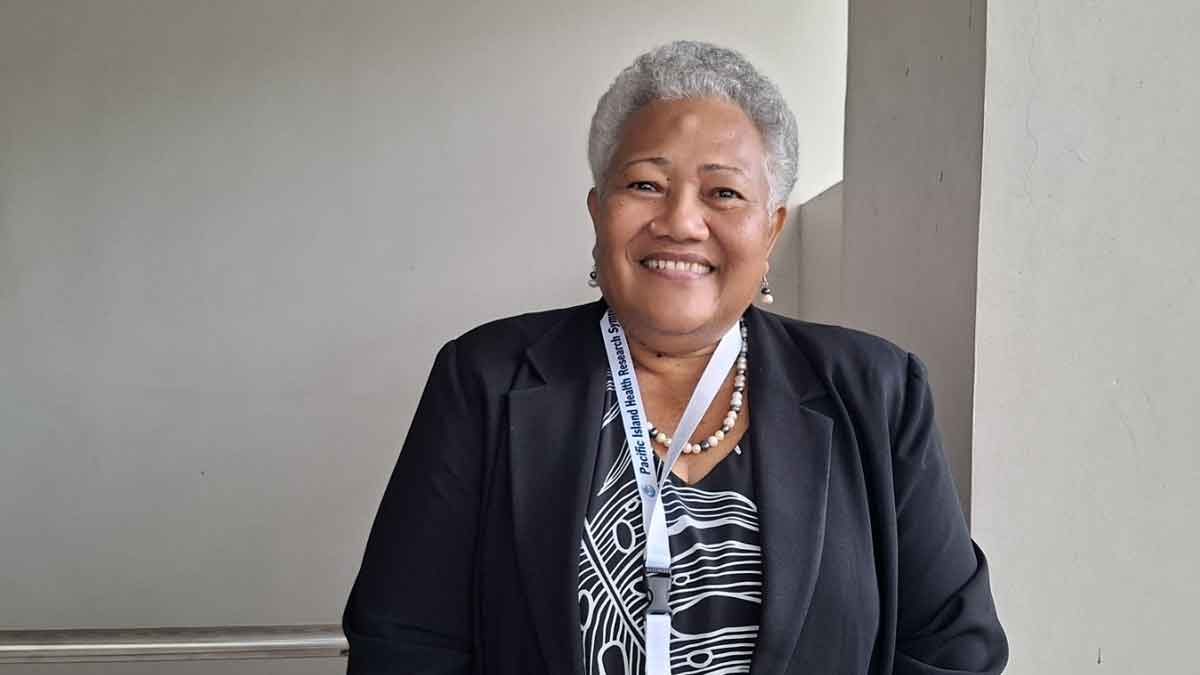
This is according to Fiji National University’s College of Nursing lecturer and one of Fiji’s first nurse practitioners, Asenaca Mataika, who shared her experiences during the Pacific Islands Health Research Symposium 2026 at
FNU’s Nasinu Campus.
Mataika presented her research on “Exploring the lived experience of nurse practitioners in rural, remote and maritime settings.”
She says the nurse practitioner programme was introduced in Fiji because of a shortage of doctors and she was part of the first cohort of nurse practitioners who graduated in 1999.
While speaking to fijivillage News, Mataika said she spent five years working as a nurse practitioner in maritime areas and faced many challenges.
She says one of the major challenges was resource allocation, with nurse practitioners sometimes having to work with limited resources.
She says communication was also difficult as there were no mobile phones, and when she needed to refer patients, she had to walk up a hill where the post office was located to make the referral.
She adds that another major challenge was role ambiguity.
INSERT: Mataika on nurse practitioners 2nd Aug
She also spoke about the mental stress and burnout experienced by nurse practitioners working alone in remote areas, adding that her Christian faith has helped her cope with the mental stress associated with her work.
Mataika says continuing professional development was also difficult for nurse practitioners working in remote areas.
She says as new guidelines and treatments are introduced, those working in remote areas can be isolated from the latest information and resources available in main hospitals.
She says geographical isolation also meant being away from family, peers and professional networks.
Mataika says despite the challenges, nurse practitioners have developed resilience.
She says passion is also one of the most important things that has helped nurse practitioners continue working in difficult environments.
Mataika’s message to the public is for people to continue supporting nurse practitioners, particularly those working in isolated communities.