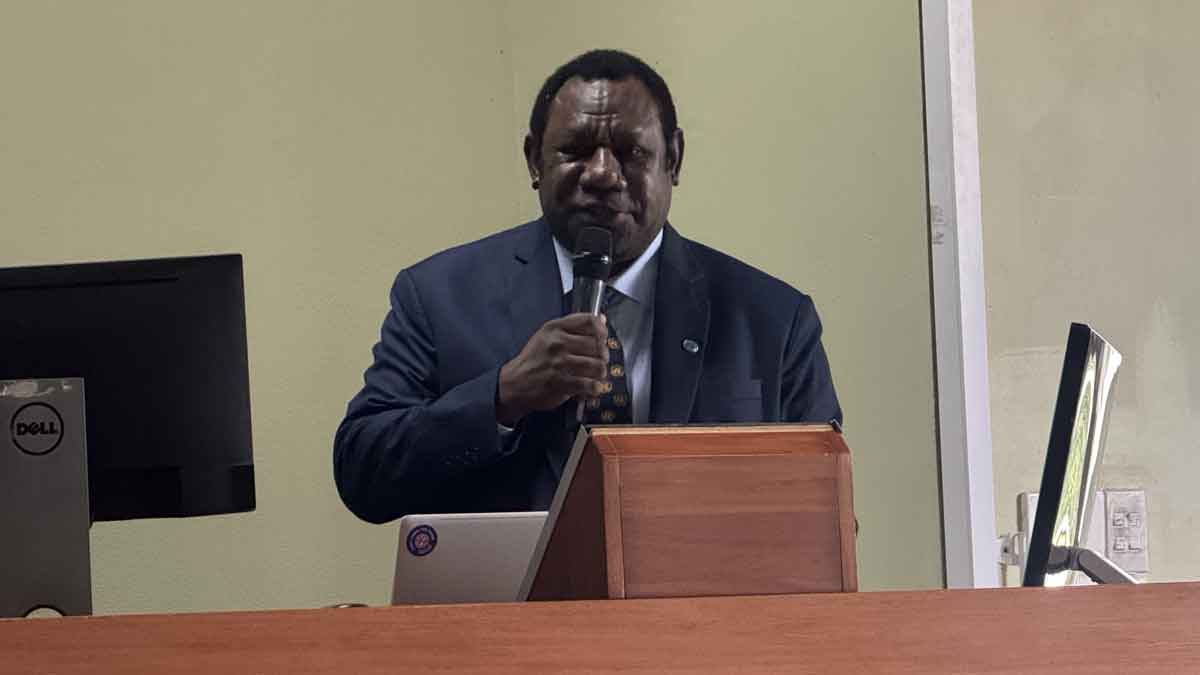
Speaking at the World Day Against Trafficking in Persons event at the University of the South Pacific, International Organization for Migration (IOM) Chief of Mission in Fiji Solomon Kantha says organised criminal networks are deliberately recruiting educated people with strong English language skills and professional experience to operate international online fraud schemes.
Kantha says many victims hold bachelor's or master's degrees and have backgrounds in information technology, marketing, customer service and human resources.
He says most victims are young adults in their 20s and mid-30s, with criminal organisations using sophisticated recruitment methods through online job platforms commonly used by job seekers.
Kantha says some scam compounds even operate dedicated human resource units that identify and recruit suitable candidates before coercing them into carrying out online fraud.
He says victims often lose their freedom, passports, savings, health and dignity once they are trafficked.
Kantha says recent United Nations Office on Drugs and Crime data, cited by the IOM, estimates annual losses from scam operations across East and Southeast Asia, Australia and New Zealand at between US$88 billion and US$114 billion in 2025 alone.
He says the IOM has assisted more than 3,500 victims of trafficking for forced criminality from 39 countries across Southeast Asia between 2022 and 2025.
Kantha says the IOM is working closely with the Government of Fiji and national partners to strengthen efforts to combat trafficking in persons, including a project aimed at raising awareness of online safety and reducing cyber-enabled exploitation.
He stresses that trafficking in persons is not only a law enforcement issue but also a human rights, development and community protection issue that requires stronger collaboration between government agencies, civil society organisations, researchers, technology companies, financial institutions and international partners.
Kantha says Fiji has already seen cases linked to trafficking in the region, referring to the recent rescue and return of Tongan women who had travelled to China under marriage arrangements.
He says stronger information sharing, enhanced cross-border cooperation, improved cybercrime capabilities and greater public awareness are critical to protecting vulnerable people.
Kantha is also encouraging students to improve their digital literacy and speak up if they encounter suspicious job offers, saying everyone has a role to play in preventing trafficking and protecting communities across Fiji and the Pacific.