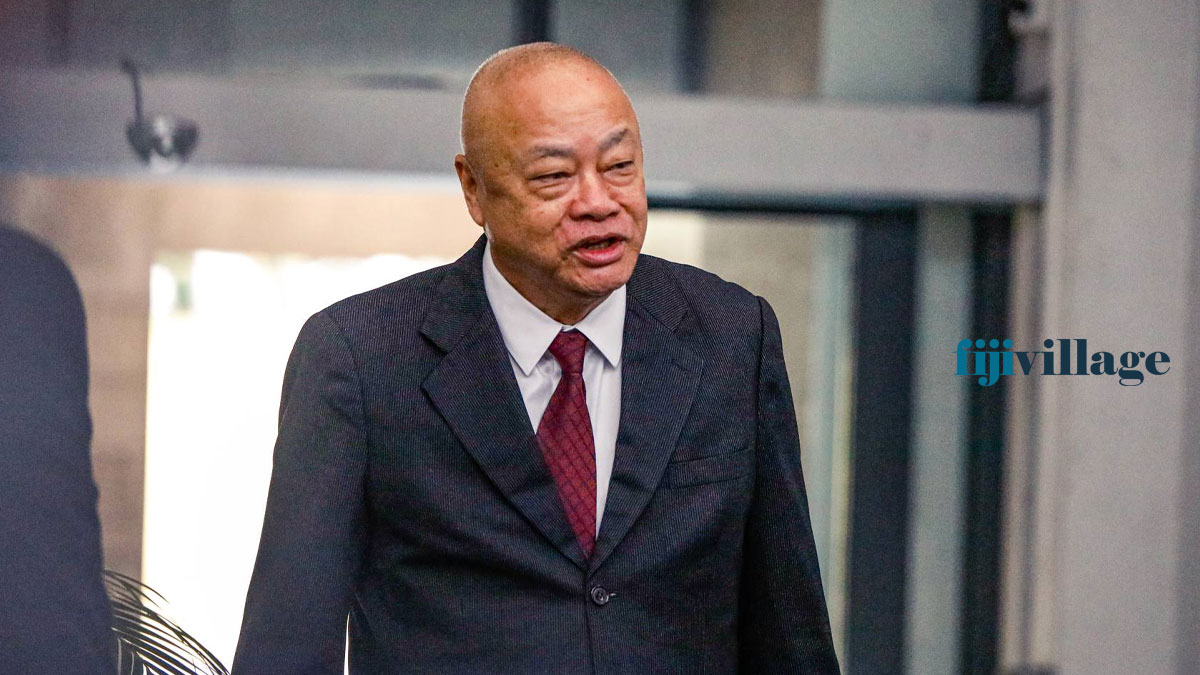
The Fiji Law Society has expressed grave concern over expanded restrictions on civil society and attempts to place Electoral Commission decisions beyond judicial scrutiny.
Law Society President, Graham Leung says they are particularly concerned that Parliament has extended the potential duration of restrictions on civil society organisations while also introducing a provision that purports to shield certain decisions of the Electoral Commission from further judicial review.
Leung says the proposed changes could have serious implications for the ability of independent organisations to contribute to public discussion during elections and for the constitutional accountability of institutions exercising public power.
Leung says the Constitution guarantees freedom of expression, assembly, association and political participation.
He says these are not merely individual privileges, they are essential safeguards of democratic government.
Section 115 restricts election-related campaigning by persons and organisations receiving foreign funding or assistance if Electoral Commission rules are not followed.
The provision expressly encompasses activities such as organising debates, public forums, meetings, interviews, panel discussions and publishing material relating to elections or electoral issues.
The latest amendment replaces the previous restriction period, which commenced following the announcement of an election date, with the entire officially declared campaign period.
The Electoral Commission declared the campaign period open on 25th May 2026.
Leung says with the next general election potentially taking place as late as 6th February 2027, affected organisations could now be subject to restrictions for more than eight months.
The Society questions the necessity and proportionality of extending these restrictions across such a lengthy period, particularly when informed public discussion and independent voter education are most important.
Leung says preventing foreign interference cannot justify indiscriminate restrictions on civic participation.
He says there is no dispute that Parliament may enact laws to prevent improper foreign interference in elections however foreign funding of partisan political campaigns must be distinguished from international development assistance supporting independent voter education, research, public-interest advocacy and democratic dialogue.
The Law Society President says the prospect of criminal prosecution may discourage organisations from conducting entirely legitimate activities, not because they intend to influence an election improperly, but because they cannot confidently determine whether their activities would be regarded as prohibited campaigning.
Leung says a law that could lead to fear criminal prosecutions for organising a public discussion, publishing electoral analysis or undertaking non-partisan voter education could have a chilling effect and raise serious questions about constitutional freedoms.
He says the Society is equally concerned about the insertion of section 115(2C), which purports to make certain decisions of the Electoral Commission final and not subject to further appeal or review by any court, tribunal or other adjudicating body.
Leung says this is not a minor procedural change as the right to challenge unlawful administrative action is an important safeguard against the arbitrary exercise of public power.
He says any weakening of that right is a concern.
Leung urges the Government to provide a clear and compelling justification for extending section 115 restrictions across the entire campaign period.
He asks what evidence demonstrates that independent civil society activities pose a threat to electoral integrity throughout such an extended period.
He says the Government must also explain the necessity of attempting to exclude further judicial review of certain Electoral Commission decisions, particularly where those decisions may affect constitutionally protected freedoms.
The Fiji Law Society calls for reconsideration of these amendments and urges the Government to ensure that section 115 does not unnecessarily impede independent, non-partisan voter education, public-interest advocacy, electoral research and democratic dialogue.
Leung says an election cannot be considered genuinely free merely because citizens are permitted to cast ballots.
He stresses that citizens must also be free to receive information, participate in public discussion, examine electoral issues and scrutinise those seeking public office.
