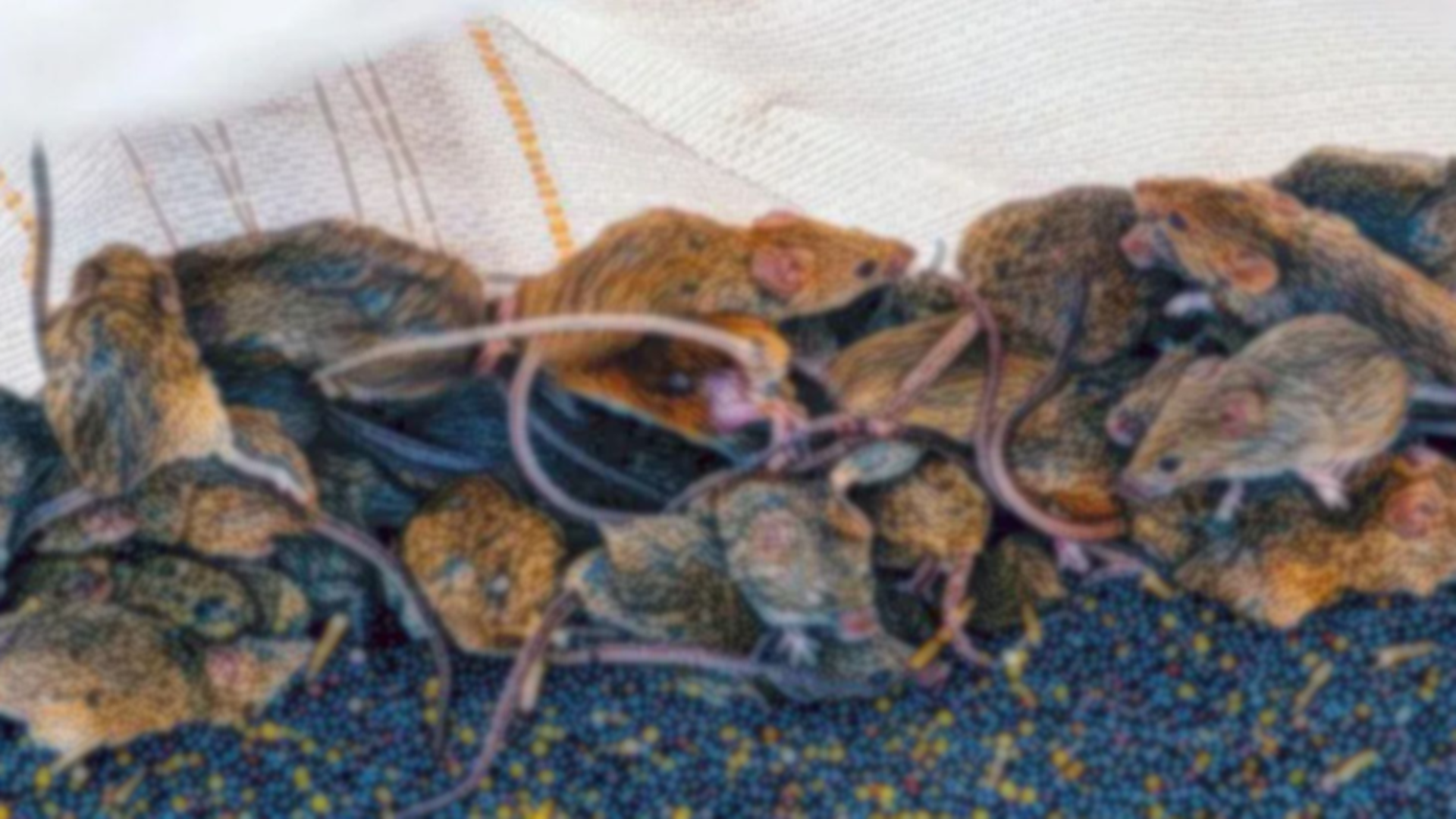
A mouse plague is spreading across large parts of Australia, with rodents invading homes and devastating grain fields, leaving farmers facing heavy financial and emotional strain.
Farmers in Western Australia and South Australia have reported plague-like mouse numbers since March, with crops of wheat, canola and barley being destroyed as the rodents feed in paddocks and storage areas.
The outbreak comes as farmers are already grappling with rising fuel and fertiliser costs linked to ongoing global tensions involving the United States, Israel and Iran, further increasing production pressures.
Farmers say they are spending hundreds of thousands of dollars on replanting crops and laying bait, while also dealing with ongoing losses in the field as mice eat freshly sown seeds overnight.
Western Australian farmer Geoff Cosgrove, who has been farming for 25 years and has only had to lay bait twice during that time, says this year's mouse plague is far worse than the one in 2021.
He says the mice run around at night in the ceiling and air-conditioning units, and can be heard and smelled throughout the house.
Agronomist Belinda Eastough says some areas are seeing between 8,000 and 10,000 mice per hectare, describing conditions as "living the nightmare".
She says mice are feeding directly in paddocks where grain is most accessible after strong harvests and summer rainfall created ideal breeding conditions.
Researchers from Australia's CSIRO say a mouse plague is generally defined as around 800 mice per hectare, but current numbers in affected regions are far higher.
They say mice can begin breeding at just six weeks of age and reproduce rapidly, with multiple litters in short cycles, making population control extremely difficult once outbreaks begin.
Farmers have also raised concerns about the psychological toll, saying the pests are invading homes, disrupting sleep and creating constant stress.
Retired farmer Damian Ryan says he has been catching dozens of mice daily on his property and has never seen conditions this bad.
Authorities recently approved stronger bait for farmers after weeks of pressure, with some reporting early signs of declining mouse numbers as cooler weather sets in.
Farmers remain hopeful that winter conditions will help bring relief, although many say the damage has already been severe.
Source: BBC News