The Fiji Government needs to target assistance at vulnerable households as rising shipping and energy costs push up food and transport prices, with the World Bank warning that Fiji’s fiscal space is narrowing, meaning the Government has less financial room to increase spending or respond to economic shocks without putting further pressure on its finances.
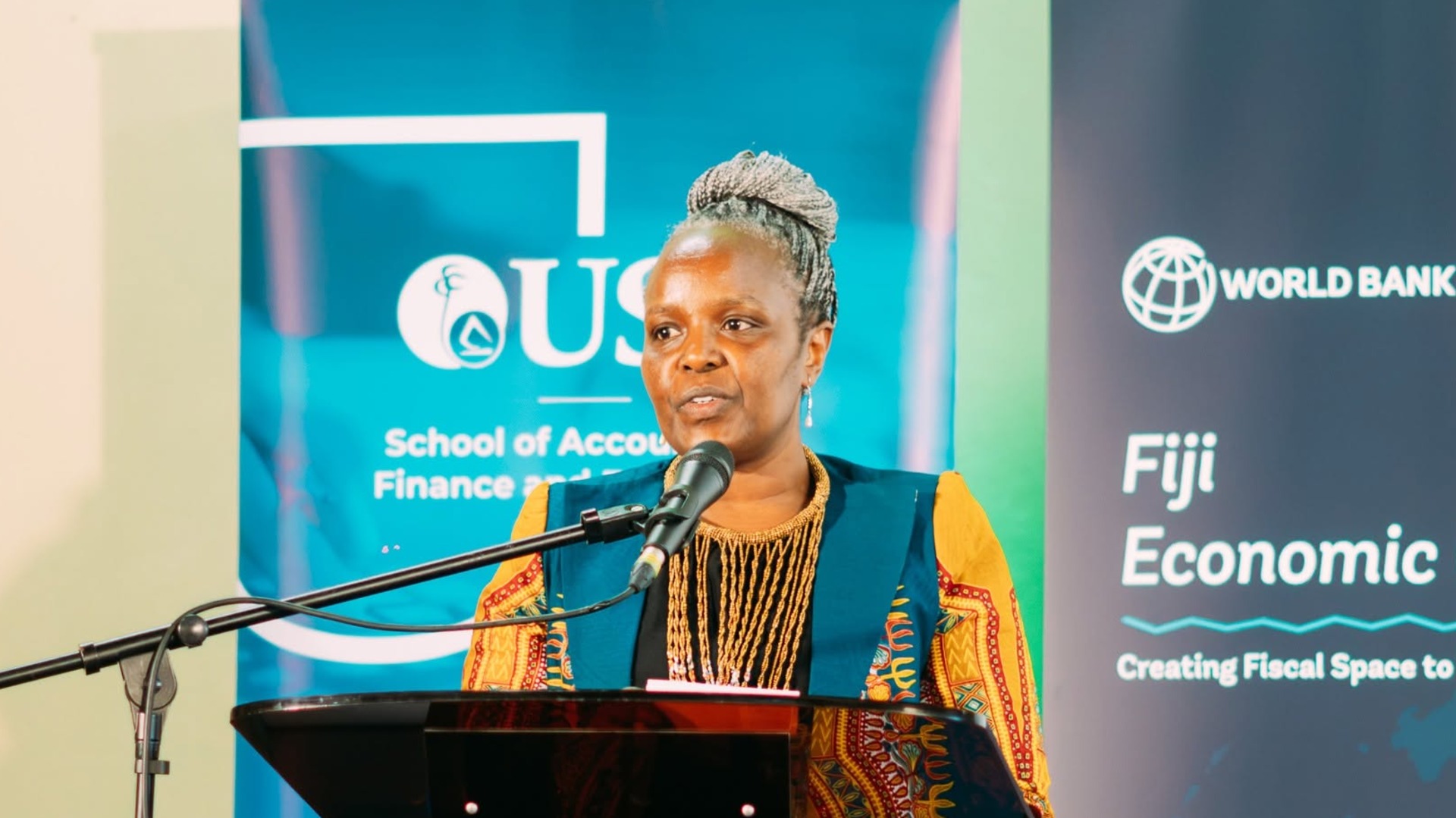
Speaking at the launch of the 2026 Fiji Economic Update, titled Creating Fiscal Space to Accelerate Growth, World Bank Group Senior Economist Naomi Mathenge says households need to be protected, but this protection must be targeted in an environment where fiscal space is narrowing.
Mathenge says high shipping and energy costs outside Fiji are increasing the country's import bill, which is translating into higher transport and food prices.
She says this means households have to spend more money on the same amount of goods they were purchasing a few years ago.
She says what this means in economic terms is that their real incomes have declined.
Mathenge says businesses are also facing narrower profit margins, which means revenues going to the Government have weakened.
She says this puts legitimate pressure on the Government to protect households, but questions how the Government can protect these households without the fiscal space.
She says the options are either to increase the deficit or to reallocate expenditure away from development expenditure to government consumption.
Mathenge says poverty declined from a post-pandemic high of 67 percent to around 52 percent, but stresses that this remains high.
She says poverty and vulnerability are unevenly distributed, with households far from growth centres more vulnerable than those near them.
She says this means households need to be protected, but this protection must be targeted.
Mathenge says Fiji's fiscal position is also under pressure, with the reduction in the VAT rate from 15 percent to 12.5 percent in 2025 reducing the contribution of an important source of Government revenue.
She also raises concerns about the composition of Government expenditure, saying government consumption is increasing while productive public investment is declining.
She says this means that if Fiji is not investing today, it is reducing the potential for growth tomorrow.
Mathenge says Fiji has not brought public debt down to pre-pandemic levels, which means the country's buffers are now very thin as it faces external shocks.
She says Fiji's fiscal deficit is increasing, meaning the gap between Government spending and revenue is widening.
She says the current account deficit is also increasing, this means that Fiji is paying more money to the rest of the world through imports and other international transactions than it receives through exports, tourism and other current income.
Mathenge says what Fiji needs to stabilise both the external and fiscal sectors is a credible medium-term fiscal framework, which is a realistic financial plan to manage Government spending, revenue and debt over the next few years.
She says fiscal consolidation, which involves reducing the Government's budget deficit through measures such as controlling expenditure and strengthening revenue collection, will also help stabilise the external sector.
Mathenge says Fiji's foreign reserves are currently adequate, but the question is not just about adequacy, as the direction of the trend also matters.
She says that as import prices increase, Fiji is losing days of import cover, placing further strain on the country's reserve buffers.
She says the World Bank has considered a fiscal adjustment package that would generate savings of about 2.5 percent of gross domestic product (GDP).
She says on the expenditure side, the measures include moderating the Government wage bill, which means controlling spending on salaries and wages, and improving spending efficiency to make better use of public funds.
On the revenue side, Mathenge says the measures include rationalising tax expenditures; this means reviewing tax exemptions, concessions and other tax benefits that reduce Government revenue.
She says the measures also include strengthening tax administration to improve tax collection and compliance, and broadening the tax base so that more economic activities and sources of income are subject to taxation.
Mathenge says the precise mix and sequencing of any adjustment package would have to consider economic and social conditions, meaning the Government would need to decide which measures to introduce and when, taking into account their potential impact on the economy and households.
She says the central principle is that the package should include targeted social protection and priority spending, ensuring assistance reaches households that need it most while maintaining funding for essential services and development priorities.
Mathenge says Fiji also needs to invest in climate-resilient infrastructure and renewable energy, as this reduces the cost of doing business.
She says the idea is to begin with a modest fiscal adjustment package, involving gradual changes to Government spending and revenue collection, which can be expanded over the next few years.
Mathenge says by doing this, Fiji can reduce the risk of a disruptive adjustment in the future, where more sudden and significant changes to Government spending or revenue measures may otherwise become necessary.
She says the policy recommendations from the report can be summarised in three priorities: protect better, rebuild buffers and broaden growth.
Mathenge says Fiji also needs to make better use of its untapped labour potential, particularly by addressing barriers that prevent more women from entering and remaining in the workforce.
She says the choices Fiji makes today will determine its future growth.