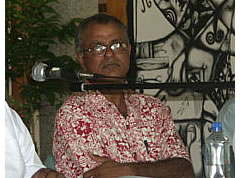
An in-depth analysis of the 2002 and 2003 Household Income and Expenditure survey shows that the poorest of the poor in Fiji are rural indo Fijians.
An economist has today revealed that 36 percent of the people in the country are living in poverty based on the 2002 and 2003 Household Income and Expenditure Survey.
In his new book, " The Quantitive Analysis of Poverty in Fiji", Dr. Wadan Narsey reveals the poorest ethnic sub-group were rural indo-Fijians or whom 44 percent were below the Basic Needs Poverty Line.
Doctor Wadan Narsey said the national poverty incidence was not 25 percent as earlier claimed.
He said previous findings by experts on the poverty situation in the country contained serious errors and were incorrect.
While launching his new book, Dr Narsey reveals that Dennis AhlBurg's 1997 Fiji Poverty report has made a major mistake in the methodology in estimating the incidence of poverty and the users of his data made further mistakes.
By divisions, Narsey's findings reveal that the most people in need were in the Northern Division with 53 percent of the population being in poverty, and a more horrendous 60 percent of rural indo-Fijians in the Northern population coming under this figure.
In other divisions, the Central Division, 26% of the people are classed as poor, 35 percent in the Eastern Division and 37 percent in the West. His findings further reveal that 40% of the total rural population in Fiji lives in poverty compared to 29% in urban areas.
Dr. Narsey also highlights in his book that contrary to previous findings, over 35% of the total population live below the poverty line in Fiji and not 25% as claimed by experts earlier.
He further states that using common values for the Basic Needs Poverty Line, on a source of income basis, the poorest groups were those dependant on Home Consumption, with 77 percent being classified as poor, followed closely by people in households dependant on Casual wages.
However, the poverty gap when compared shows that 49 percent of indigenous Fijians live in poverty compared to 47% of indo Fijians.
Dr. Narsey said he hopes his findings will help stakeholders device better policies based on needs and not ethnicity to alleviate the poverty situation.
Feature
Previous Poverty Stats Incorrect-Economist