There has been an increase in the amount of heavy metal such as lead, copper and zinc in the sediments of the Suva foreshore area according to research conducted in 2018.
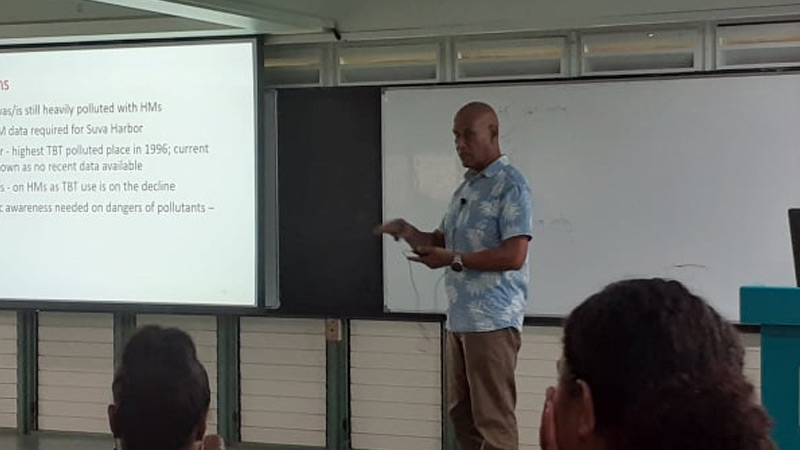
This has been revealed by Doctor Matakite Maata of the University of the South Pacific’s School of Biological and Chemical Sciences.
Doctor Maata says consumption of high levels of these metals can cause health problems, and people can even get cancer.
He says the closure of the Lami Rubbish Dump in 2014 led to a decrease in the amount of lead in the Suva foreshore area but it is still higher than acceptable levels and the levels of copper and zinc are still increasing.
Based on available data, heavy metal pollution will continue to rise if not curbed because of developments in the area and an increase in Suva’s population.
In a presentation during the Environmental Journalism Workshop at USP, it was revealed that 50 to 80 milligrams of lead was found in a kilogram of sediment in 2018 in Laucala Bay compared to 3.32 to 13.25 milligram per kilogram in 2001. The level present naturally in sediment is 14 mg per kg.
54 to 170mg per kg of copper was found in 2018 compared to 23.9 to 93.6mg per kg copper in 2001 while the 50mg per kg is present naturally in sediment.
15.5 to 157mg per kg of zinc was found in 2018 compared to 32 to 144mg per kg in 2001. 75mg per kg of zinc is naturally present in sediment.
Doctor Maata says the metals come from steel works, garages, slipway, marina, the Lami rubbish dump, battery factory, paint companies and rusty or junk vessels.
The researcher adds that Suva population increased by 5.7% in 2017 when compared to 2007.
He says recent data on levels of metal present in sediment is necessary and there is also a need to educate the public on the dangers of these pollutants.
The researcher also adds that more collaboration should be encouraged between researchers and the government where they can share data so that legislation and enforcement can be done by authorities to solve the pollution problems.
He has recommended that wastewater can be treated before discharging or have a soak pit, rusted and junk ships should ne removed from the harbor, waste can be collected from areas where ships are repaired and disposed off appropriately.
He adds that the management and disposal of solid waste and sewage should be looked at and civil society organisations such as PIANGO can also be engaged in lobbying authorities to address these pollution issues.