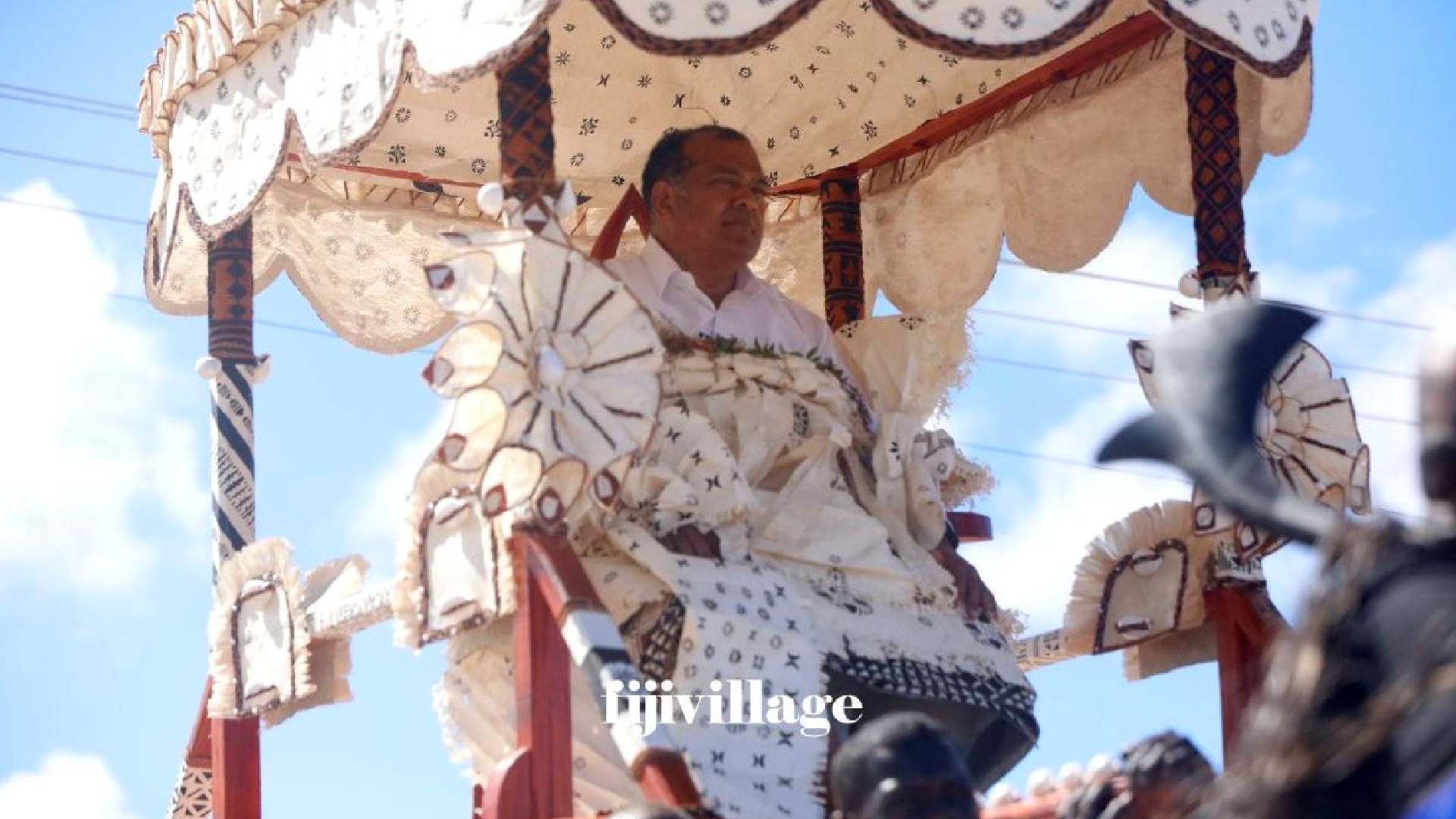
The Gone Turaga Bale Na Tui Nayau, Sau ni Vanua ko Lau and Tui Lau, Ratu Tevita Lutunauga Kapaiwai Uluilakeba Mara, is calling on Parliament not to approve the Fiji-Australia Vuvale Union or the Ocean of Peace Alliance (Veitacini Treaty) until the people of Fiji have been given a full, independent account of what these treaties would commit the nation to.
In a statement, Ratu Tevita says both treaties were signed in Suva on 6th July this year and, under the Constitution, neither would bind Fiji until approved by Parliament. Both treaties are now before Parliament’s Standing Committee on Foreign Affairs and Defence.
He says this is the moment, and the last opportunity, for Fiji to examine the treaties properly, adding that once ratified, they cannot easily be undone.
While welcoming the Committee’s work, Ratu Tevita says its examination should be given the time, independent advice and public participation that decisions of this nature demand.
He made it clear that this is not a rejection of Australia, which he described as a valued friend, but a defence of Fiji’s interests.
The Tui Nayau says an arrangement presented in the language of family and cooperation must still be read line by line, and Fiji must not accept terms whose deeper consequences may only become apparent after the country is bound by them.
Ratu Tevita says that on 10th October 1874, Fiji’s high chiefs ceded Fiji to Queen Victoria at a time of debt, disorder and foreign powers circling the country, believing they were protecting Fiji.
He says that 96 years later, to the very day, Fiji stood on its own again on 10th October 1970.
He says that, whatever the reasons, the lesson remains that where sovereignty is surrendered in an afternoon, it can take generations to recover.
He further says the Ocean of Peace Alliance is Fiji’s first-ever defence alliance, while the Vuvale Union, in the words of the Australian Government, “will deepen integration between our security, economies and people” and commits both countries to deepen that integration over time.
He adds that the Committee’s own hearings had already raised serious questions, including claims that both treaties bar Fiji from taking a dispute to any court or tribunal.
The Tui Lau says Permanent Secretary whose ministry would be responsible for implementing major parts of the Union told the Committee that he was not consulted.
He says if those responsible for implementing the treaties were not consulted, then the people and the Vanua certainly were not.
Speaking about what Fiji’s neighbours had shown him, Ratu Tevita said that in late July he was a guest of the Yothu Yindi Foundation and the Australian Government at the Garma Festival at Gulkula, in the Yolngu homelands of northeast Arnhem Land.
He says that this month, he stood with the Māori Queen, Te Arikinui Kuini Nga wai hono i te po, and the Kīngitanga at Tūrangawaewae in Waikato for Koroneihana, where both gatherings celebrated the enduring strength of First Peoples.
He says both experiences reminded him of how difficult it can be to recover what has been given away.
He adds that in 1963, Yolngu elders of Yirrkala sent bark petitions to the Australian Parliament after their land was set aside for mining without consultation.
The Tui Nayau says Waikato-Tainui waited more than a century for the Crown to apologise and settle claims over land confiscated in the 1860s, and that the settlement returned only part of what had been taken.
He says that at Garma, he told the International Voices panel, “Prosperity Through Connection”, that Lau has always lived by connection, as has Fiji, a nation of islands scattered across a vast ocean.
He says Fiji should welcome deeper connections with Australia.
He adds that in Sydney and Auckland, he sat with people from Lau and wider Fijian communities whose families live that connection every day and who have as much at stake as anyone at home.
He says the iTaukei remain the first people of these islands and the owners of most of the country’s land, an inheritance held in trust alongside every Rotuman, Indo-Fijian and fellow citizen who calls Fiji home.
Ratu Tevita says connection must never place that inheritance at risk through a treaty that the people have not fully understood.
He adds that Fiji already knows what it is to lose things by the stroke of a pen.
The Tui Lau says the 2013 Constitution was imposed on Fiji without a referendum, leaving no place for the Bose Levu Vakaturaga and abolishing the Senate, in which chiefs had a voice.
He says only now is Fiji beginning to restore what was taken, with the courts opening a path to constitutional amendment and Parliament working on the legislation required for a referendum.
He says it makes little sense to sign away sovereignty abroad while Fiji is still recovering it at home.
Speaking in his own right as Tui Nayau and Sau ni Vanua ko Lau, and not on behalf of any council or institution, Ratu Tevita says Fiji’s chiefs came together in 1874 and again on the road to independence in 1970.
He says the Bose Levu Vakaturaga was restored in 2023 after being set aside for 11 years, and that if the restoration is to mean anything, it must mean something now.
The Tui Lau is calling on the Bose Levu Vakaturaga to convene, examine the treaties and speak for the Vanua before Parliament votes.
He is also asking President Ratu Naiqama Lalabalavu, as a high chief and a member of the Council, to lend his office to ensuring that the Vanua is heard.
Speaking on the principles at stake, Ratu Tevita says Fiji’s sovereignty is not its to surrender, but its to safeguard — an inheritance held in trust for generations yet to be born.
He says the Vanua must be heard, as land, identity, tradition and the authority of communities cannot be assumed away by diplomatic language.
He further says Fiji’s constitutional and customary processes must be respected and that the country must honour those who served.
He adds that Fijians shed their blood in both World Wars for the freedom enjoyed today, and said the substance of that freedom must not be allowed to slip away through agreements whose implications remain unexamined.
The Tui Nayau is calling for:
No ratification of either treaty until the Committee’s findings have been fully debated.
Publication of all supporting documents, including the Government’s analysis of Fiji’s obligations, funding commitments and any implementing arrangements still to be negotiated.
Publication of independent constitutional and legal advice on the dispute-resolution provisions, mutual defence commitments and every clause touching Fiji’s sovereign decision-making.
Genuine consultation with the people, civil society and the Vanua through chiefly and provincial institutions, with sufficient time for considered submissions.
A plain-language public explanation of what “deepening integration” will mean in practice over the next 10, 25 and 50 years.
Ratu Tevita says the question before Fiji is that the Vanua is not merely land, but embodies identity, belonging, ancestry and responsibility to those who came before and those yet unborn.
He says the question before the nation is simple but profound: what are we handing to our children, and to their children?
The Tui Lau urges every Member of Parliament and every citizen to pause, examine and protect Fiji’s freedom before the country ratifies anything it may one day wish it had not.