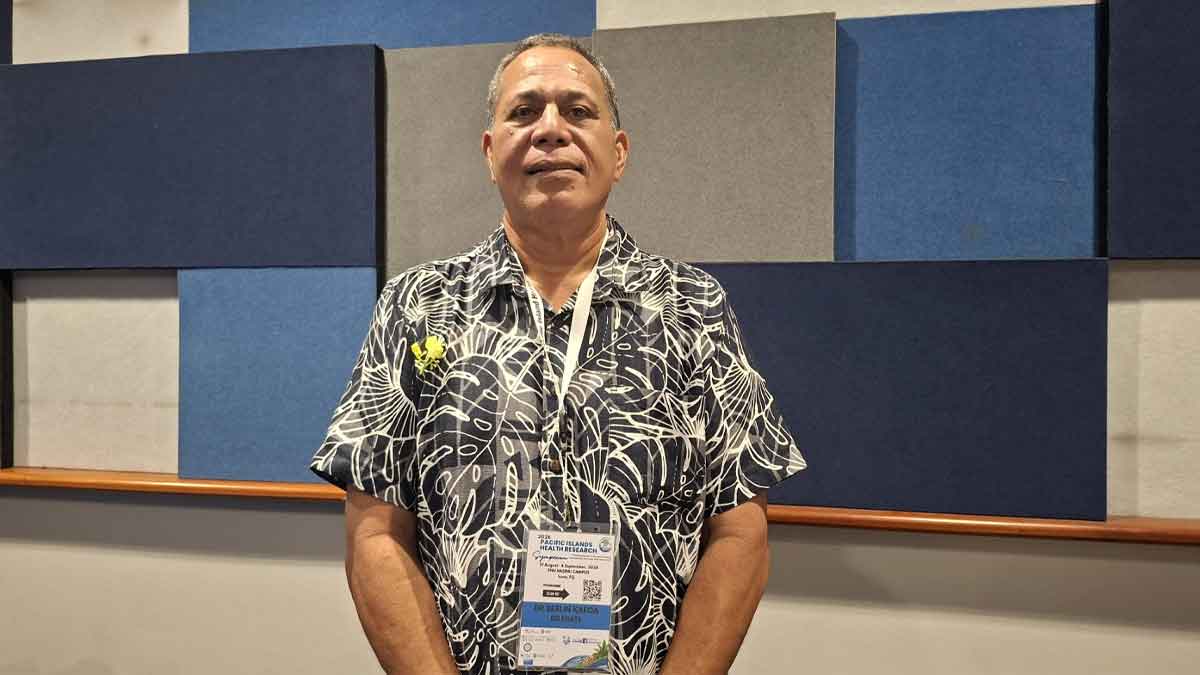
Speaking to fijivillage News at the Pacific Islands Health Research Symposium 2026, currently underway at Fiji National University’s Nasinu Campus, Pacific Community's Director of Public Health Division, Dr Berlin Kafoa admits that while the burden on health workers remains a concern, Fiji has a health workforce that is much stronger than many other Pacific Island countries.
INSERT: Dr Kafoa on health workforce and Sept
Dr Kafoa says the country is not only looking after its own needs but is also supporting the region.
He also highlighted Fiji’s current HIV situation as another major concern.
He says Fiji’s situation has implications for the wider Pacific because the country is a major regional hub, with many people traveling through Fiji, while large numbers of students from other Pacific Island countries are studying in Fiji.
He says strengthening Fiji’s response to HIV will therefore not only benefit Fiji but can also help other Pacific Island countries prepare for HIV-related challenges.
Dr Kafoa says the issue of the health workforce also needs to be looked at alongside the increasing demands being placed on health systems.
He says Pacific countries need to ensure they have the information needed to understand where the pressures and gaps are within their health workforce and broader health systems.
He says one of the key issues is the availability of data to support better decision-making.
According to Dr Kafoa, the Sustainable Development Goals provide an important mechanism for measuring health and other development indicators.
However, he says the SDGs do not capture everything that countries and the Pacific region are doing.
He says there are gaps in the information being collected, and Pacific countries need to be able to collect additional data that is not covered by the SDG indicators.
He stresses a more complete dataset will allow governments and decision-makers to have a better understanding of the issues affecting their populations and make better-informed decisions.