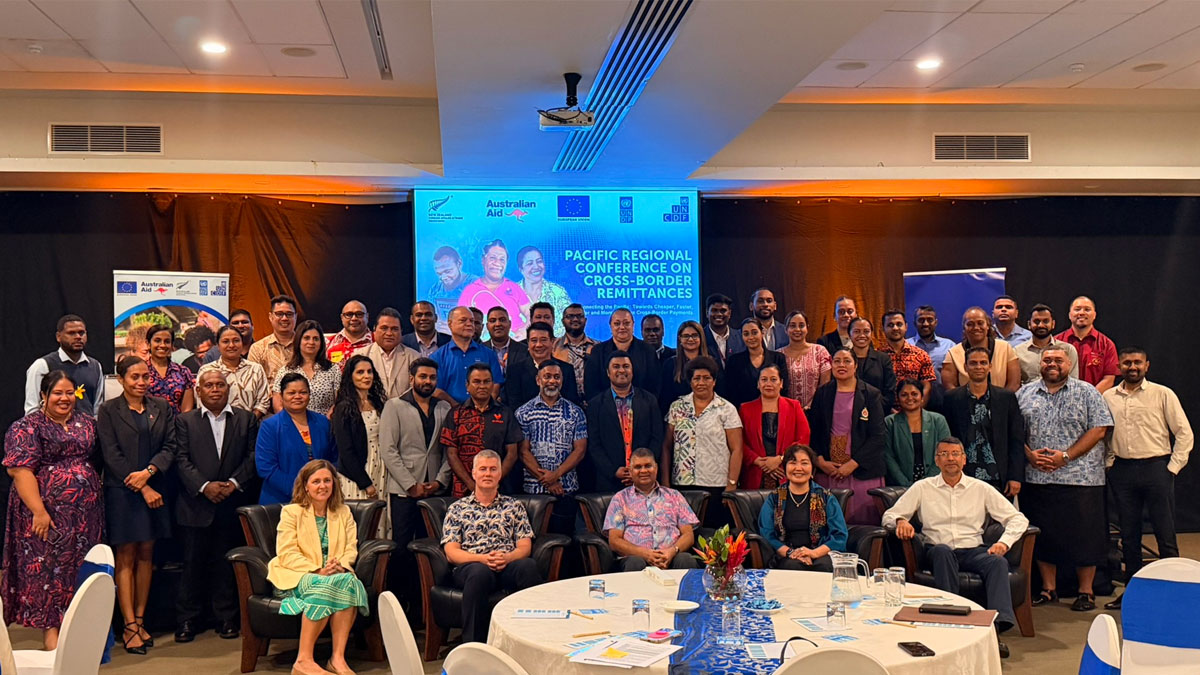
Speaking at the Pacific Regional Conference on Cross-Border Remittances at the Grand Pacific Hotel in Suva, Reserve Bank of Fiji Governor Ariff Ali says remittances have grown significantly over the last couple of decades.
Ali says remittances totalled just under $500 million in 2015 and more than doubled to $1.3 billion last year.
He says remittances have grown by close to 32 percent in the first eight months of this year, while their contribution to GDP is likely to reach about 10 percent.
Ali says Australia remains Fiji's largest source of remittances, contributing almost half of the total inflows, followed by the United States, New Zealand, the United Kingdom and Canada.
He says behind these figures are thousands of Fijians living and working abroad, many of whom make personal sacrifices to support their families back home.
He says their contributions extend well beyond financial support, helping strengthen communities, improve livelihoods and contribute to Fiji's economic resilience.
Ali says remittances are a lifeline for Pacific families and economies, helping pay school fees, cover medical expenses, put food on the table and provide support during difficult times.
He adds that, in many respects, remittances reflect who Pacific people are, connected by family, culture and community regardless of distance.
However, the RBF Governor says sending money across the Pacific costs too much, with some of the region's remittance corridors facing some of the highest costs.
He says the average cost of sending remittances globally is about 6.5 percent, which is more than double the United Nations Sustainable Development Goal target of 3 percent.
Ali says the smallest and most remote corridors, including many in the Pacific, risk being left behind.
He also says the new US levy on remittances is something the Pacific cannot afford to stand by.
Ali says remittances are vital to the region, with regional assessments indicating that Pacific Island countries received close to $1.4 billion in remittances in 2023.
He says remittances account for almost 40 percent of Tonga's GDP and around one-fifth of Samoa's GDP, while in Fiji they are the country's second-largest foreign exchange earner after tourism.
He says during COVID, remittances were actually Fiji's largest foreign exchange earner.
Ali says the region must ensure that sending and receiving money across borders is affordable, secure and accessible to all.
He says one of the most encouraging developments in recent years has been the growth of digital remittance channels, which make it easier, faster and more convenient for people to send and receive money.
He says mobile network operators now play a leading role in Fiji's remittance market, with their share of total remittance inflows rising from almost one-third in 2023 to more than half last year.
Ali says the integration of mobile money providers into Fiji's national payment system has helped create a more seamless experience for consumers, enabling transfers between bank accounts and digital wallets with greater ease.
He says digital remittances can also serve as an entry point to broader financial inclusion by connecting individuals to savings, credit, insurance and other financial services.
Ali says there is still considerable work ahead to improve the efficiency and affordability of cross-border payments, and none of the countries can tackle these challenges alone.
He has highlighted five priorities for the region, including reducing remittance costs, preserving access to correspondent banking services, strengthening interoperability, ensuring innovation goes hand in hand with integrity, and reaching those who are still underserved.
Ali says these priorities are interconnected and the region must aspire to make remittances a pathway to greater financial inclusion and economic opportunity.
He says the decisions made by policymakers, regulators and industry leaders will directly affect the lives of Pacific people.
Ali says the goal is to turn remittances from a lifeline into a launchpad for savings, small businesses and security for the next generation.
He says the conversation over the next two days matters because the decisions will be felt not in boardrooms, but in kitchens, classrooms and clinics across the Pacific.
He says the region must learn from one another and remain committed to a more connected and resilient Pacific.
Meanwhile, UNDP and United Nations Capital Development Fund Resident Representative Munkhtuya Altangerel says between 13 and 15 percent of some remittance transactions in the Pacific can be absorbed by transaction costs, leaving families with less of the money sent home by their loved ones.
Altangerel says while making remittances cheaper, faster and safer remains essential, the region must also focus on what happens after the money reaches the recipient.
She says the region must ask how it can ensure that a remittance does more than simply arrive.
She says if recipients can safely retain some of their money in the financial system, use digital services to pay bills, build savings and access insurance, including parametric insurance, this can help strengthen their financial security.
Altangerel says digital remittance relationships are important because they provide a pathway towards broader financial inclusion.
She says this is particularly important in the Pacific, where households and businesses remain exposed to climate shocks, global economic volatility and other external shocks.
She says the conference provides an opportunity to examine remittance processes, regulation and financial integrity, correspondent banking, payment infrastructure, interoperability, global payment networks and digital remittance models that could be relevant to the Pacific.
Altangerel says the region must identify where the real challenges lie, which issues individual countries can address themselves, and where regional cooperation can add value.
She says bringing together regulators, financial institutions and remittance providers is important because each sees a different part of the challenges facing the sector.
She says building on these different perspectives will help the region identify practical solutions and address the challenges more effectively.
Altangerel says the ultimate question is how the Pacific can ensure that remittances do more than arrive, and instead create greater financial security and opportunities for the people, households and businesses receiving them.