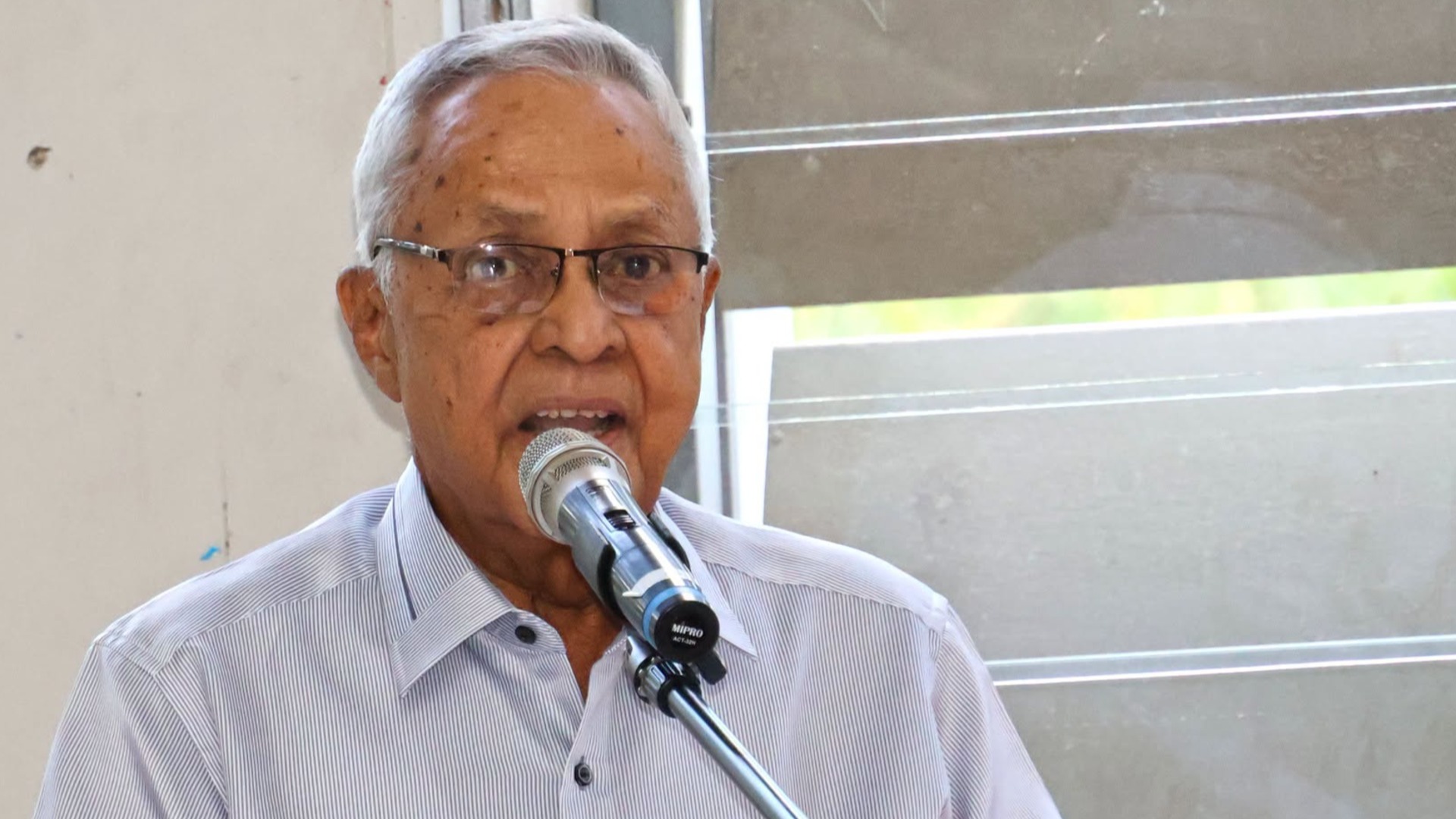
Former Prime Minister Mahendra Chaudhry says religion and the State must remain separate to protect Fiji’s multiracial society from division, stressing that all people should be free to practise their faith without the government favouring one religion over another.
Making his submission during the Constitution Amendment Bill 2026 public consultation in Labasa, Chaudhry says he has no problem with Christian values but believes religion and the State must remain separate.
Chaudhry says Fiji is a multiracial country, and introducing provisions that could favour one religion could create serious divisions between different communities.
Insert: Chaudhry says religion and state must remain separate 25th Oct 26 PT
He questions why religious provisions that have generated controversy should be included in the proposed Constitution when people are already allowed to practise their faith freely.
Chaudhry urges the committee to seriously consider this issue.
He also raises concerns about the overall direction of the Constitution Amendment Bill 32 of 2026, describing it as divisive, undemocratic and discriminatory in several of its provisions.
Chaudhry says Fiji should focus more on addressing the pressing problems facing the country rather than rushing to introduce another Constitution.
He says the country is dealing with poverty, hunger, unemployment, poor health services, challenges in education, crumbling infrastructure, drug trafficking, HIV and non-communicable diseases.
Chaudhry says the economy must be a priority because a strong economy is necessary for the Government to deliver better services and opportunities to the people.
He questions whether previous constitutions have adequately served the people, saying Fiji is worse off today than it was at independence in several respects.
Chaudhry also questions why the constitutional review process is being rushed, saying Fiji can hold its next general elections under the existing Constitution and allow the incoming government to address constitutional reform through proper and thorough public consultation.
He says people participating in the consultations have repeatedly called for more time, with many saying they have barely had an opportunity to examine the proposed Constitution.
Chaudhry says his submissions to the Constitution Review Commission, which he presented on 7th July, still stand.
He says the Constitution Amendment Bill 32 being considered by Parliament differs significantly from the draft prepared by the Constitution Review Commission and presented to Parliament on 22nd September.
He believes the committee should be considering the draft prepared by the Commission under the President’s mandate.
Chaudhry also raises concerns about the transitional provisions in clauses 211, 219 and 221 of the proposed Constitution.
He says these provisions create suspicion that they could allow existing Members of Parliament to continue into a new government under the new Constitution without a general election.
He calls for clarification on why these clauses have been included if the intention is to hold elections.
Chaudhry also questions the proposed referendum and election timetable, pointing to the planned referendum on 9th December, with results expected by 14th December, and the 24th December deadline for issuing the writ of elections.
He says the timing, when considered alongside the transitional provisions, raises concerns that must be addressed.
On minority rights, Chaudhry says communities that make up approximately 38 percent of Fiji’s population need stronger assurances about their future, particularly regarding access to land and economic opportunities.
He says the indigenous iTaukei people own roughly 90 to 92 percent of Fiji’s land, leaving limited freehold and State land available for housing, agriculture and commercial purposes.
Chaudhry says people have been displaced from farms and businesses when leases expire and are not renewed, and he believes greater certainty is needed for those affected.
He also highlights the lack of development in rural areas, saying some Indigenous iTaukei people working in Australia and New Zealand want to remain overseas because of limited opportunities and a lack of reliable income in their communities.
Chaudhry says productive land, including land previously used for sugarcane farming, is increasingly being left unused and becoming overgrown.
He warns that failing to address these issues could widen economic disparities between communities and says greater investment in rural development is needed.
Chaudhry says these important national issues require longer discussions and meaningful dialogue, which he believes have been missing from the current process.
He clarifies that he is not opposed to amending the 2013 Constitution, saying some provisions should be reviewed to ensure they comply with democratic norms and international treaties, instruments and conventions to which Fiji is a party.
However, he stresses that any constitutional changes must be made through a democratic, inclusive, transparent and lawfully mandated process, with sufficient time for people to understand the proposals and have their voices heard.