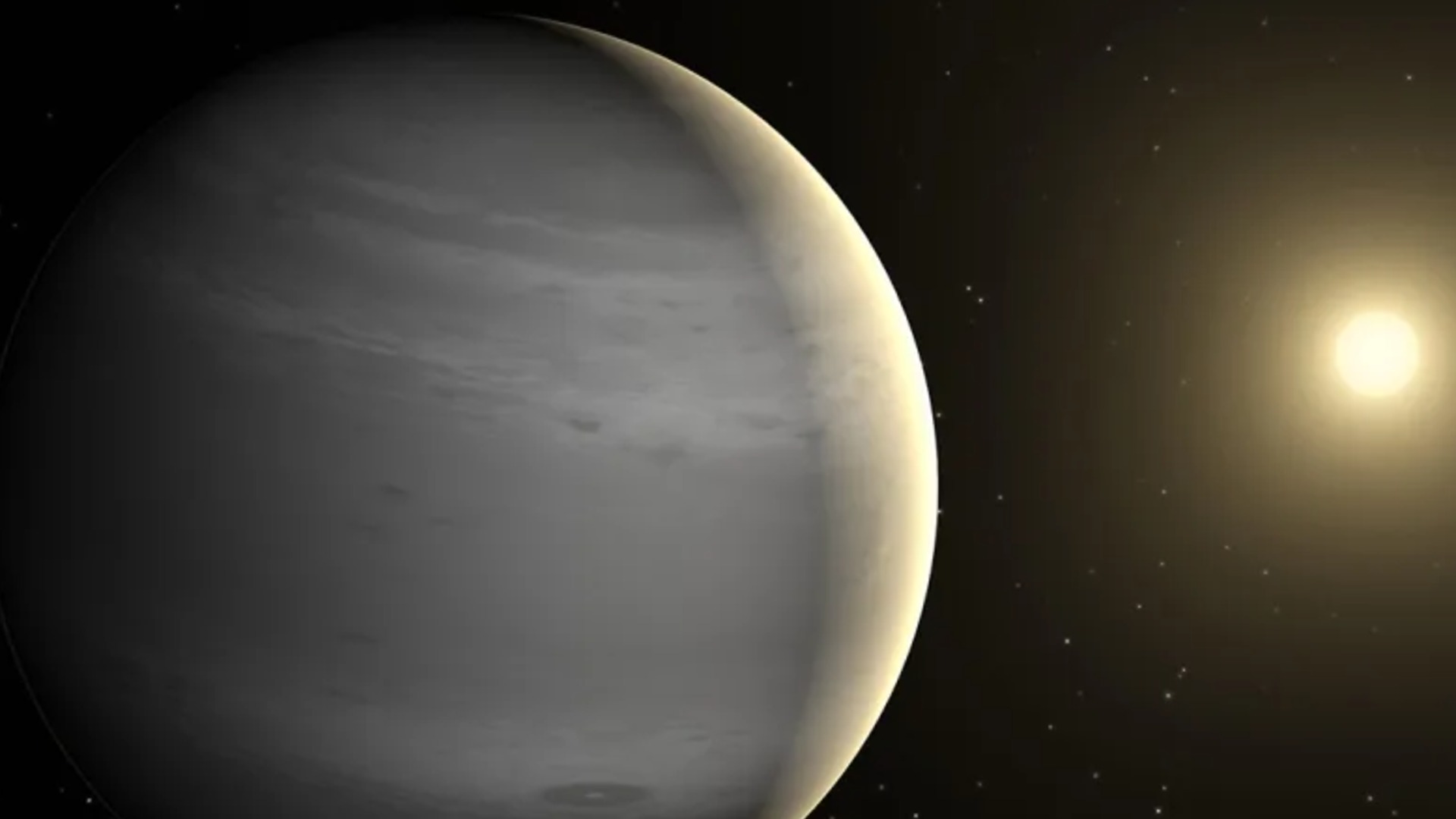
Astronomers have detected the first confirmed radio emission coming directly from a planet outside our solar system.
The signal was detected from Beta Pictoris b, a gas giant located about 63 light-years from Earth.
Researchers say the signal is not evidence of intelligent life, but instead appears to be produced by a powerful magnetic field surrounding the planet.
The radio bursts are believed to be linked to auroras, similar to the Northern Lights seen on Earth. Charged particles moving through the planet's magnetic field produce both the auroras and the radio waves.
Researchers estimate that Beta Pictoris b's magnetic field is at least 200 times stronger than Jupiter's.
The discovery was made using the MeerKAT radio telescope array in South Africa, which consists of 64 radio telescope dishes and were very suprised seeing it coming from a well-observed set of celestial bodies.
Scientists say the ability to detect radio emissions directly from an exoplanet could provide a new way of studying planets beyond our solar system, including their magnetic fields and atmospheres.
The Beta Pictoris system is around 23 million years old, making it extremely young compared with Earth's 4.5-billion-year-old solar system.
The findings are currently undergoing peer review, and scientists say further observations are needed to confirm the discovery and determine why the planet's magnetic field is so strong.
Researchers say the discovery, if confirmed it could change scientists' understanding of magnetic fields on planets outside our solar system.
Source: RNZ