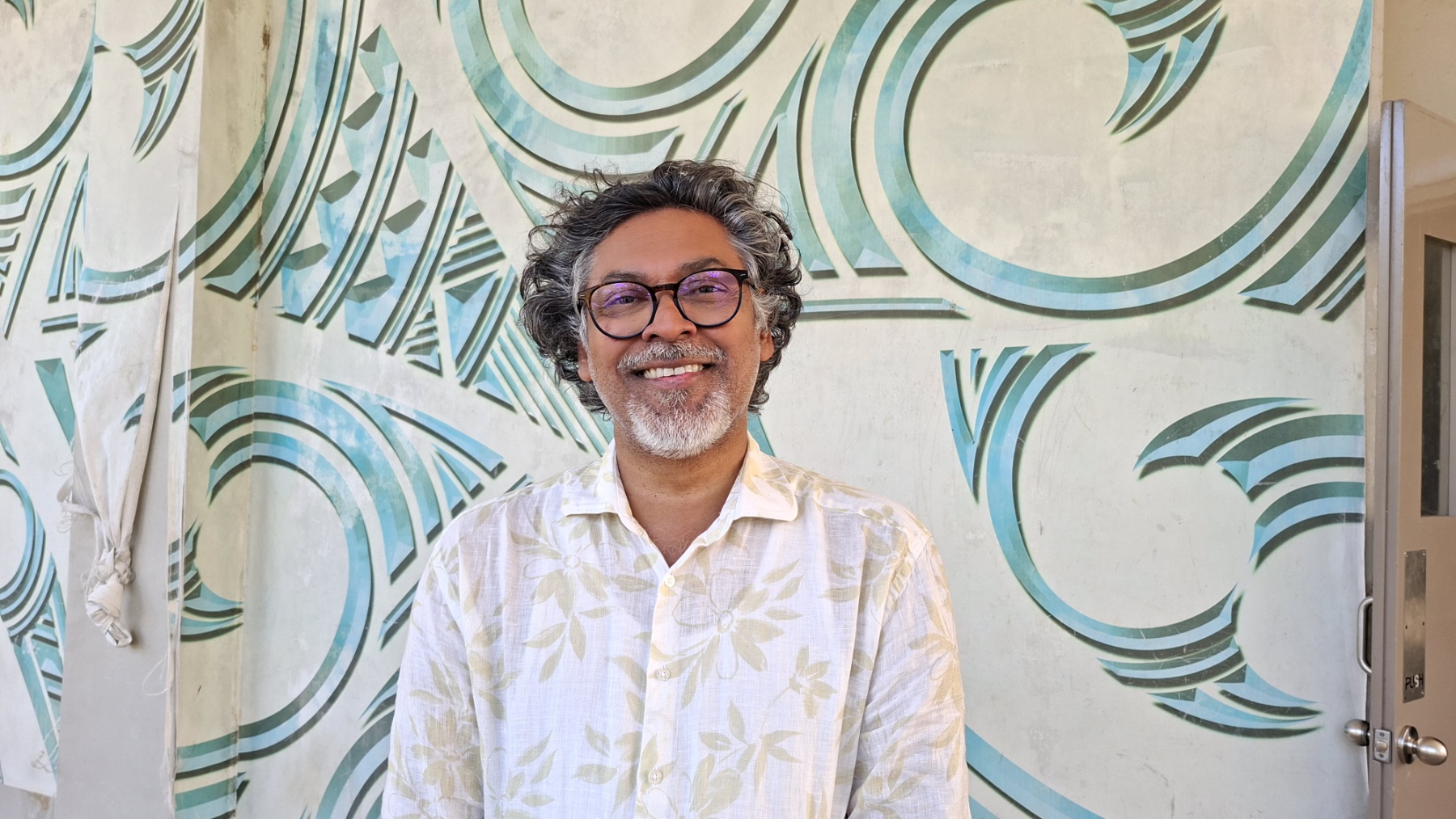
International Labour Organization (ILO) Head of Education and Training, Dr Naren Prasad says Fiji’s biggest economic challenge is no longer just achieving growth, but ensuring that growth creates productive jobs, develops skills, retains talent and gives people confidence to build successful lives at home.
Dr Prasad, who is from Dreketi in Vanua Levu and is based at the ILO headquarters in Geneva, delivered a public lecture at the University of the South Pacific on "Why Economic Growth Alone Will Not Solve Fiji's Labour Market Crisis."
Speaking to fijivillage News after the lecture, he highlighted that Fiji’s economy has grown significantly since the 1980s and 1990s, but there is now a paradox where employers are struggling to find workers while many people continue to look overseas for better opportunities.
INSERT: Prasad on economy 15th July
Dr Prasad says this reflects a deeper issue, which is that we are not able to provide opportunities for people to stay in the country and contribute to the country.
He says one of the key shifts Fiji needs to make is putting jobs at the centre of economic and social policy.
He says his research shows that job-centred economic growth has been applied internationally.
He stresses that it is good to have economic growth, but that growth should be for the people so that they are able to benefit from it.
Dr Prasad says Fiji must also ensure its skills system responds to the needs of the labour market, and that the country is retaining the talent Fiji produces.
INSERT: Prasad on retaining people 15th July
He also says that remittances from overseas workers are beneficial for families, allowing families to improve their quality of life, educate children and purchase household items.
However, he warns that Fiji should not become too dependent on remittance income.
He says if we start relying too much on remittances and exporting or sending our people abroad, we will become centres where we produce future migrants, where we have younger people and older people, and nobody in the working-age population who stays in the villages because they are all abroad.
He says remittances are positive, but they should not become Fiji’s development strategy.
Responding to concerns raised that employers are bringing in foreign workers because local workers do not have the same level of productivity, Prasad says Fiji produces highly skilled people and the difference may come from the conditions under which migrant workers operate when they come to Fiji.
He explains that when you bring people from abroad, they are on a contract basis in another country, so they feel vulnerable and may appear more productive because they are in a different situation compared to local workers.
He says what they do is they may be more productive than our locals because they don't have those family connections and they don't know the country.
He says the issue should not simply be viewed as a difference in ability between local and foreign workers, but should also consider the wider labour market conditions, including the nature of employment, incentives and workplace conditions.
Dr Prasad says Fiji’s challenge is to create decent work opportunities that encourage people to remain in the workforce and contribute to the economy.
He says one issue Fiji needs to examine is why some people are not entering the labour market despite available jobs, and that one factor is the support received from family members overseas so there is not enough incentive for them to go and work.
He says another factor is whether jobs provide decent conditions, adding that maybe the work is not decent work, the wages are too low, or there is no flexible working time.
Dr Prasad says Fiji’s low female labour force participation rate should be a major concern for policymakers, with fewer than four out of ten women currently participating in the workforce.
He says increasing women’s participation in the labour market is one of the key shifts Fiji needs to make as it addresses its economic and employment challenges.
He explains that there are several barriers affecting women’s participation, including childcare responsibilities, family commitments, workplace security and the need for more flexible working arrangements.
He says these are issues that policymakers need to address as part of Fiji’s future labour and economic policies.
Dr Prasad says labour policies should be developed through cooperation between government, employers and workers.
He says the government should be able to bring the private sector that generates jobs and the workers, trade unions, to the table in order to put better policies.
He says Fiji is moving in the right direction but can strengthen this process further.
Dr Prasad also highlighted that the ILO office in Suva faces challenges because it supports 11 Pacific Island countries.
He says their staff are overstretched and more resources should be provided so the office can better support Pacific countries.
He further says that Fiji must also prepare for emerging issues such as artificial intelligence and the green economy.
Dr Prasad says his journey from a small farming village in Dreketi to the ILO headquarters in Geneva reflects the hopes, sacrifices and aspirations of many Fijian families.
He says his parents never had the opportunity to attend school and could neither read nor write, but they understood the importance of investing in people and the value of education.
While studying at USP he received a scholarship to study Mathematics and Economics in France, and completed his studies, including a Master’s degree and PhD in Economics from the University of Paris.
He has been working with the ILO since 2008, first as a researcher and later as Head of Education and Training.
In this role, he works with governments, trade unions and employers’ federations globally to strengthen the use of research, data and evidence in policymaking on labour markets, decent work, employment creation, social security, labour rights and migration issues.
During his recent visit to Fiji, Dr Prasad returned to his home in Dreketi, Vanua Levu, where his mother still lives, and decided to walk the same route he took as a student to Dreketi Central College.
He says the walk was something he did on a very personal level, not because he had to, but because he wanted to remember where he came from.
He says the journey was a way of reflecting on the community, the school and the farm that shaped his early years.
He says his story represents a generation of Fijians whose parents believed education would create opportunities, a dream that became a reality for many families, but Fiji must now ensure young people continue to see opportunities to build successful lives at home.
