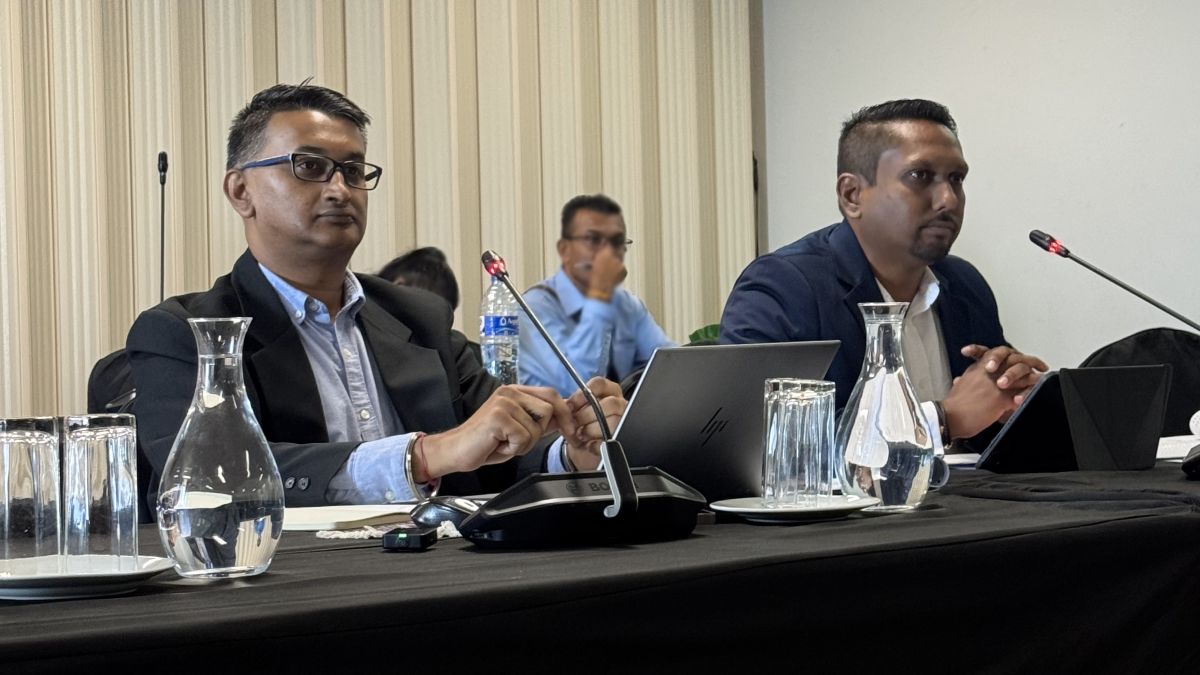
The Fiji Institute of Chartered Accountants has proposed stronger constitutional principles around prudent borrowing, sustainable debt, transparency in public expenditure and intergenerational fiscal responsibility.
While making their constitution submission, Executive Director Daljeet Maharaj said public debt decisions made today affect future taxpayers and fiscal responsibility should be viewed as a constitutional stewardship issue rather than only an annual budget matter.
Maharaj says they are not advancing a political position but want to contribute to strengthening Fiji’s constitutional framework for the long term.
FICA says its submission focuses on strong institutions, merit-based public administration, fiscal responsibility and intergenerational equity.
The Institute has proposed that the current electoral system be reviewed to determine whether it provides the appropriate balance between fairness, accountability and effective democratic representation.
It has also raised concerns about the 5 percent threshold, particularly for independent candidates.
FICA is also calling for merit-based recruitment, promotions and leadership appointments in the public service and constitutional institutions based on competence, integrity and demonstrated capability.
Other proposals include reviewing the constitutional framework governing FICAC, strengthening the role of the Public Service Commission, ensuring timely parliamentary consideration of Auditor-General reports and improving integrity requirements around asset declarations and conflicts of interest.
FICA has also proposed new constitutional principles covering digital governance and data protection, climate resilience, long-term national development planning, national integrity, productivity and skills development, strategic infrastructure and the recognition of unpaid care work, volunteerism and community service.
The Institute adds that Fiji’s Constitution should not merely govern the country today but should help shape the Fiji that future generations will inherit.
FICA says constitutional reform should be careful, consultative and guided by national consensus.
They also suggest a five-year parliamentary term.
During the submission, Commissioner Ami Kohli questioned the proposal for a five-year parliamentary term, raising concerns that if the country had a bad government, people would be stuck with it for five years.
Kohli says if there is a good government under a three or four-year term, it can always return to office through an election.
In response, FICA President Ravinder Singh says they are only suggesting that the Commission assess whether a five-year parliamentary term is feasible while ensuring good governance is maintained.
Singh says a five-year term could also help reduce the overall expenditure associated with frequent elections.
He says the proposal would have to be carefully reviewed by the Commission.