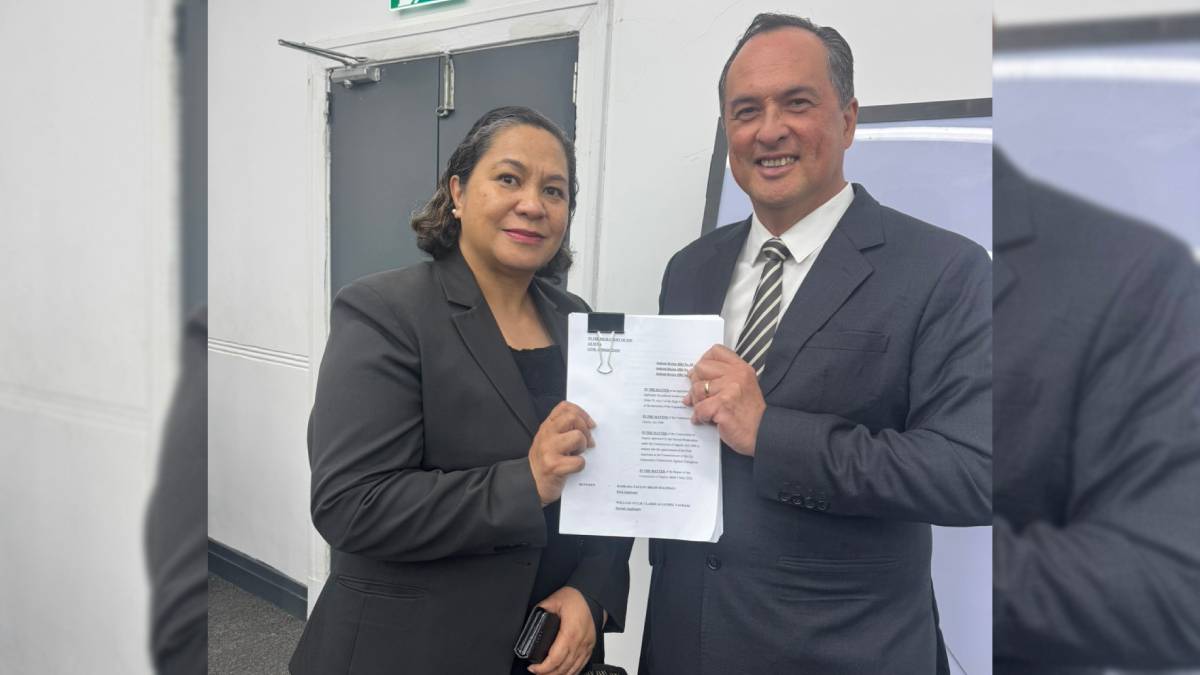
This has been highlighted by Fiji Law Society President Wylie Clarke after the Suva High Court ruled that the Commission of Inquiry report into Barbara Malimali’s appointment as FICAC Commissioner is null and void in its entirety.
Clarke, lawyer Laurel Vaurasi, former Attorney-General Graham Leung and Malimali had filed a judicial review challenging the COI.
He says when Government establishes a Commission of Inquiry, it remains responsible for ensuring that the process meets those basic standards.
Clarke says public confidence depends not merely on an inquiry being held, but on its work being performed competently, impartially and with appropriate restraint, particularly where its findings may seriously damage a person’s reputation, profession and family.
He says this litigation would not have been necessary had the Commission done its job properly.
The Law Society President says Commissioner Justice David Ashton-Lewis and counsel assisting Janet Mason were under a duty to act impartially, test the evidence properly and ensure that persons facing serious criticism were treated fairly.
Clarke says their failure to put the proposed adverse findings to the applicants, allow a meaningful response and remain within the COI’s terms of reference was a fundamental failure.
He says the COI report compounded that unfairness through what he describes as intemperate, pejorative and unnecessarily condemnatory language.
Clarke says a commission exercising significant public power should communicate its findings with objectivity and restraint.
He says the language used intensified the personal and professional harm caused to the applicants and the distress suffered by their families.
Clarke stresses that the proceedings were not about avoiding accountability, but about ensuring that accountability is pursued lawfully, impartially and fairly.
He says Government, commissioners and counsel assisting should carefully reflect on the failures identified by the court.
Clarke says the considerable public cost of the Commission, as well as the further cost and burden of the litigation, could have been avoided had the inquiry observed the standards required of it.
He also expressed support for others who were adversely named in the report but did not challenge it in court.
Clarke says while the applicants do not speak for those individuals, the responsibility of Government and the Commission to act properly extended equally to every person whose reputation was affected.
He acknowledged the court, the legal team, families, colleagues and those who supported the applicants, saying he hopes the judgment strengthens public confidence that everyone who exercises public power remains accountable to the law and the requirements of fairness.
