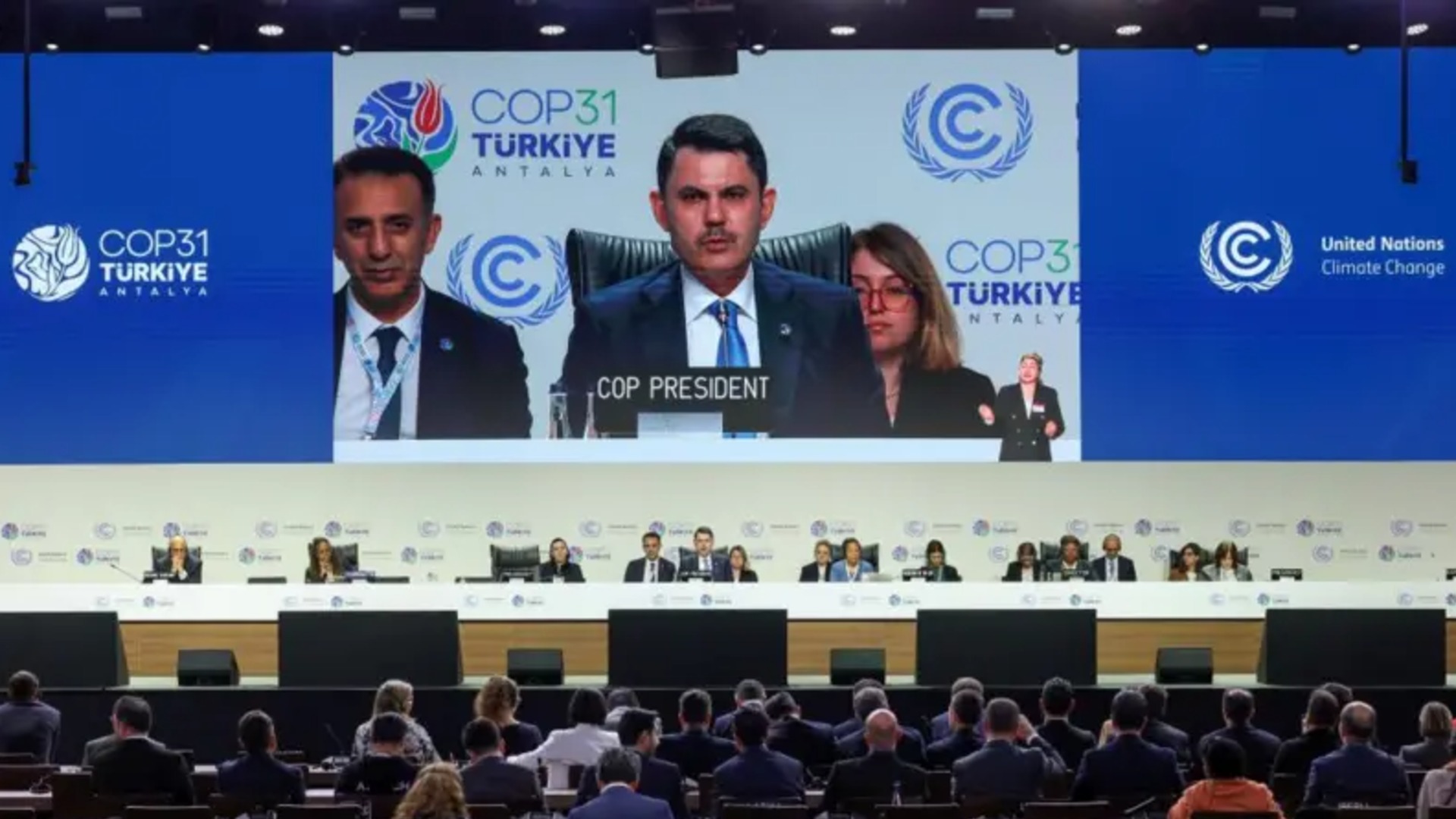
The COP31 climate conference in Antalya, Turkey, has ended without a major agreement after participating countries failed to resolve differences over fossil fuels and financial assistance for nations affected by climate change.
The negotiations continued for more than two weeks and extended beyond the scheduled closing time, making it the longest climate conference of its kind.
Despite discussions involving more than 190 countries, delegates could not reach the agreement required to adopt the proposed Antalya Pact.
The biggest disagreement centred on whether countries should commit to reducing their dependence on fossil fuels, including coal, oil and gas.
An early version of the proposed agreement included a call for an immediate shift away from fossil fuels in energy systems. However, that reference was removed from later drafts, despite more than 100 countries supporting its inclusion.
The European Union, Panama, the Marshall Islands and Norway were among the countries that refused to support the final proposal.
Ireland's Climate Minister Darragh O'Brien says the European Union could not accept an agreement that failed to address fossil fuels.
COP31 President Murat Kurum later confirmed that countries had not reached the level of agreement needed to approve the document.
Financial assistance for developing nations was another major issue during the negotiations.
Several vulnerable countries called on wealthier nations to provide more funding to help them prepare for natural disasters, strengthen infrastructure and recover from the effects of climate change.
However, the proposed pact only called for efforts to increase adaptation funding threefold by 2035, without identifying a clear starting figure or setting out specific financial commitments.
Climate campaigner Harjeet Singh criticised the lack of funding commitments, saying vulnerable communities needed meaningful financial support rather than promises.
There were also disagreements over the growing use of carbon capture technology, which aims to prevent carbon emissions from entering the atmosphere.
Although the technology is considered by some scientists to be part of the wider climate response, critics say it should not become an excuse for countries to continue relying on fossil fuels.
The outcome of the conference has raised further concerns as the world continues to experience the effects of rising temperatures.
A recent United Nations assessment indicates that current government policies could put the world on course for approximately 2.8 degrees Celsius of warming above pre-industrial levels, well beyond the internationally agreed goal of limiting the increase to 1.5 degrees.
Global temperatures have already increased by around 1.4 degrees, with severe flooding, extreme heat and other climate-related disasters affecting communities in different parts of the world.
Climate experts have described the failure to reach an agreement as a major setback, particularly for countries that are already facing serious climate threats.
Mohamed Adow, Director of Power Shift Africa, says the outcome should serve as a warning to world leaders about the need for stronger action.
Former Irish President Mary Robinson also expressed disappointment, saying the negotiations had failed to reflect the urgency of the climate crisis.
Despite the absence of an overall agreement, the conference did produce some progress in other areas, with more than 90 countries signing a separate commitment to speed up the transition towards greater electrification of their economies.
The United States was not part of the negotiations after President Donald Trump withdrew the country from international climate action.
Source: CNN