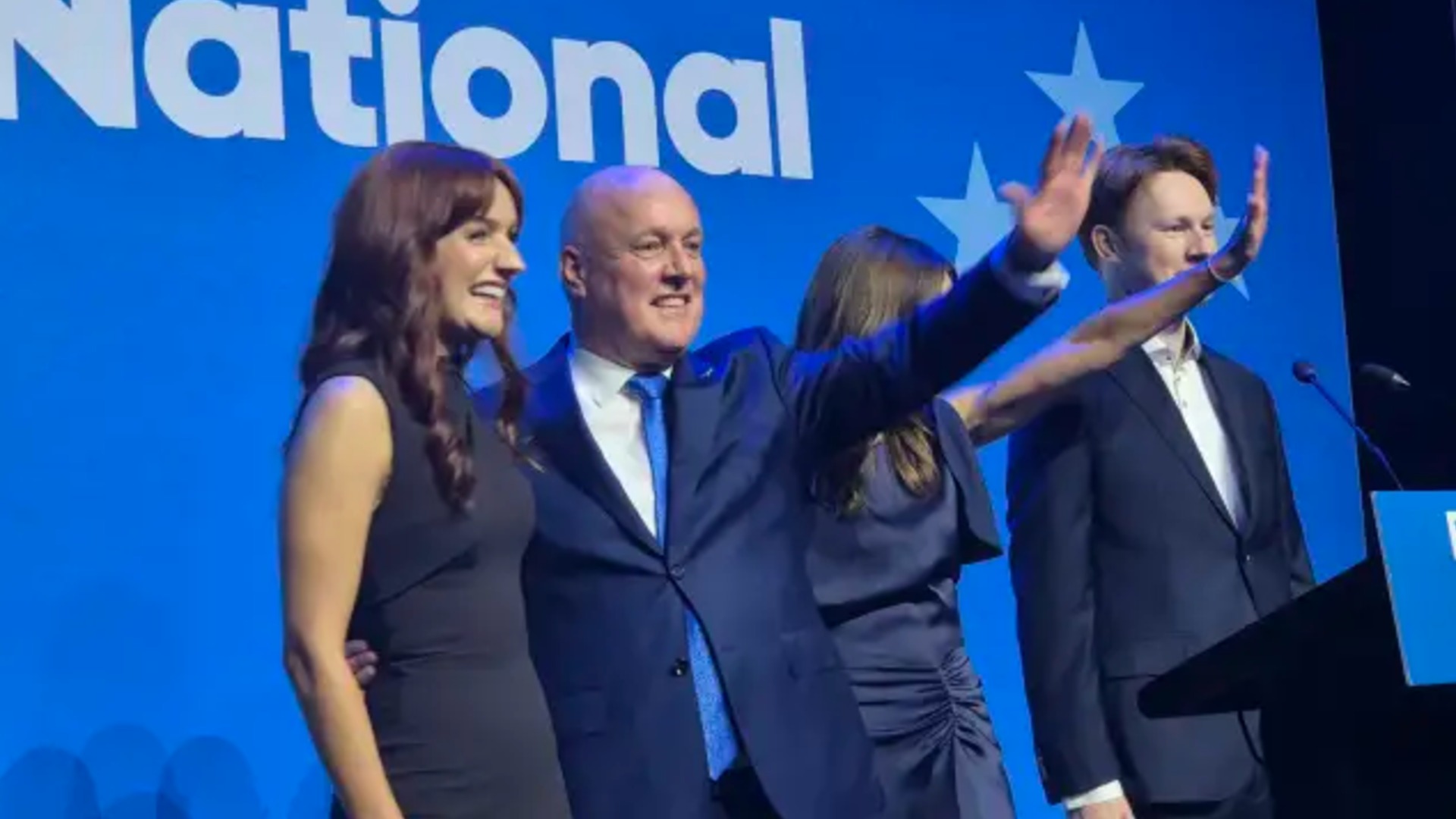
New Zealand faces weeks of uncertainty over who will form the next government, with special votes expected to determine whether the current coalition retains power.
Provisional election results show the incumbent coalition parties, National, ACT and New Zealand First, holding 67 seats, compared to 56 seats for the left bloc, while the Opportunity Party has secured seven seats.
However, nearly 600,000 special votes are still to be counted, with final results expected in about three weeks.
The election has also resulted in a larger-than-usual parliamentary overhang, which could increase the number of MPs from the usual 120 to between 129 and 130.
Based on the provisional results, the current coalition could retain power with a narrow majority of just one or two seats.
There are three possible outcomes: National, ACT and New Zealand First could form another coalition government; they could seek support from the Opportunity Party to reach a majority; or Labour, the Greens, Te Pāti Māori and Opportunity could secure enough seats to form a centre-left government.
The final outcome will depend largely on the special votes, which have traditionally favoured left-leaning parties.
Any changes to closely contested electorate seats could also shift the balance of power.
New Zealand's next Parliament must meet by January 14 at the latest, putting pressure on political parties to reach an agreement in the coming weeks.
Source: RNZ