The Rugby World Cup history does not favor the winner of the quarterfinal match between the defending champion, South Africa and the Wallabies to win the Webb Ellis trophy.
Past World Cup winners have been determined by the team that beat the defending champion in the pool game or during the play-offs.
The All Blacks were the champions in 1987 however in 1991 they lost to Australia in the semi-final and then the Wallabies went on to win the final beating England.
In 1995, Australia lost their opening pool game to host South Africa who later beat NZ in the final.
Springboks lost in the RWC semifinal in 1999 to Australia who beat France to win the final.
In 2003, Australia hosted the RWC and lost in the final to England with a Johnny Wilkinson field goal.
In 2007, the Springboks beat England in pool play and then went on to walk away with the Webb Ellis Trophy.
Another fact from past RWC is that no team has been able to defend the title which makes it harder for the Springboks, while for Australia - it means that no team which lost in the pool game will win the World Cup.
Former Wallaby, Ilivasi Tabua who was part of the side that defended the Webb Ellis in 1995 still has high hopes in the Robbie Deans side to win the World Cup.
In the quarter final, Ireland will play Wales in Wellington on Saturday at 5pm.
France will play England at Eden Park on Saturday at 7.30pm.
Australia will play South Africa in Wellington on Sunday at 5pm and the All Blacks will face Argentina at Eden Park on Sunday night at 7.30pm.
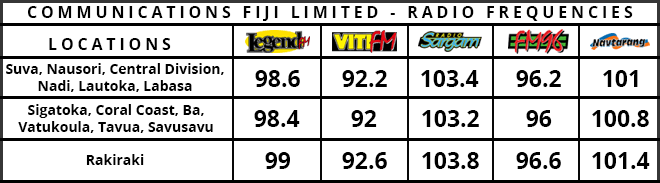
You can catch the live commentaries of both games - the All Blacks versus Argentina and South Africa versus Australia game on Sunday on our sister station Viti-FM with the voice of rugby, Malakai Veisamasama and expert comments from Ilivasi Tabua.
Still on the RWC:
The Government and Auckland Council are spending a further $5.5 million on the Rugby World Cup to prevent a repeat of the chaos that occurred on the night of the opening ceremony during the knockout phase.
The extra money is to pay for measures after the council’s tourism and events division failed to forecast an opening night crowd of 200,000 in the city, causing a transport meltdown and chaotic waterfront scenes.
Story by: Dreu Vukailagi
Sports
History does not favour South Africa and Australia