A man ran through a village naked in broad daylight in Lau last Saturday after villagers apparently found a powder and used or sniffed it without reporting the matter to police.
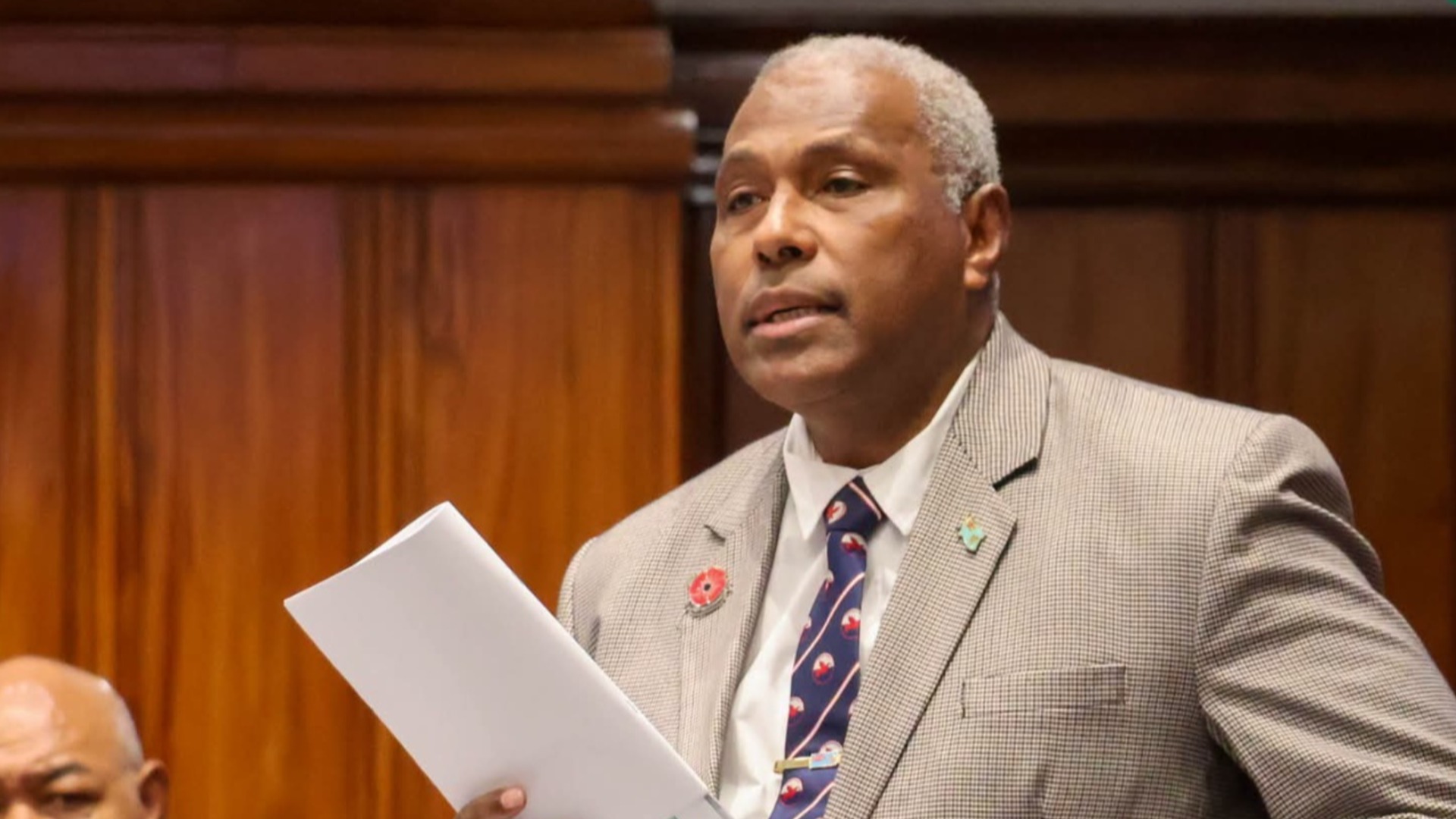
This was revealed by Government Member of Parliament, Siromi Turaga during the debate on the Fiji Police Bill in Parliament.
Sharing the incident with the House, Turaga says this is the reality of today and reflects the challenges facing Fiji.
He says Fiji also has unresolved murders, adding that if he had a good recollection, there would probably be more than 40 or 50 unresolved cases.
He says Fiji is no longer the safe haven that it used to be.
He says people in their homes have been attacked, phones have been hacked and people are coming in planes to steal from machines.
Turaga says the country is at a crossroads and questions how police are expected to solve these crimes when they are constantly criticised but not given the necessary tools.
He says there is so much criticism of the police, but they are not given the tools to do their work.
He says the Fiji Police Bill is an important tool to enable the Fiji Police Force to perform effectively given the situation in Fiji.
Speaking in his capacity as a Principal Legal Officer in the Fiji Police Force, a lawyer who serves the State Office in defending the Police Force in legal actions and a former magistrate, Turaga says he fully supports the Bill.
He says the Police Act 1965 has 60 provisions, while the proposed Police Bill has 167 provisions.
He says the new Bill clearly articulates the functions of the police and provides clarity for officers to know exactly what they can do and what they cannot do.
He says says Section 5 clearly outlines the functions of the police and provides clarity for officers to know exactly what they can and cannot do.
On Section 8, which deals with the role of the Force during a state of emergency, Turaga says the Bill clearly explains the arrangements and makes it clear that the Commissioner of Police does not have to give away his powers.
He says if there is a state of emergency, full control rests with the police and not the military.
He also fully supports the powers for covert operations, saying the police will not be able to do their work efficiently if they are not given these powers in this age of technology and information technology.
On stop-departure orders under Section 69, Turaga says what is new is the requirement for the person affected to be served with a notice.
He recalls people being stopped at Nadi Airport only to find out that their names were on the stop-departure list.
He also refers to the former Attorney-General being stopped at the airport while travelling to attend a conference in Australia, because someone up the line did not want him to go saying the Government was sued and substantial sums were awarded to him.
Turaga says many other people were stopped simply because someone did not want them to travel, breaching their fundamental right of movement.
He says the proposed Bill covers the basic principles of natural justice.
On crime scenes, Turaga says Sections 83, 84 and 85 clearly outline what an officer should do when there is a crime scene.
He recalls an incident in August 2003 in Wailada, Lami, where an employee of an investor was shot, and the matter has still not been resolved.
He says police cordoned off the area and stopped all businesses from operating before they left.
He says one year later, the keys to the offices had still not been returned, resulting in a payment of $163,000 to the investor.
He says this happened because there were no clear processes or procedures for police to follow when dealing with a crime scene.
Turaga says the proposed Bill now provides those procedures.
On digital devices, he says there have been cases where accused persons were acquitted because police obtained a search warrant for the phone but not for the information in the phone.
He says under the Bill, the search warrant covers both.
He also highlights the new disciplinary framework, saying there are now clear guidelines on how police officers should be disciplined and terminated.
He says under the current system, some police officers have probably been checked six or seven times because the power is always with the Commissioner.
He says the proposed Bill provides a clear framework that will be useful for future days and years to come.
Turaga says anyone who promotes peace and is concerned about security should support the Bill.
The Bill has been passed in Parliament.
